Premium Managed Offices
Key takeaways
- CBRE's Q2 2026 data shows GCCs at about 42% of India's office absorption and flex operators at 45% of Delhi NCR's 3.6 million sq ft of leasing, and describes a “core plus flex” portfolio model.
- Core is the part of the footprint you are certain to need for years. Flex is everything uncertain: pilots, project teams, new functions, surge hiring and succession space.
- A useful rule: hold as core only the seats you would still need if growth stalled, and keep the rest flexible.
- For a new GCC the same logic can run over time: flex first, core later, flex alongside it permanently.
- The strategy fails when flex is treated as a stopgap with no plan, so set a review date and a trigger for converting seats to core.
- A Nano GCC is the purest form of the flex layer: high-impact compact teams in serviced space, converted to core only when their mandate is proven.
There was a time when a corporate real estate team had two choices: sign a long lease and fit it out, or put people in a coworking space until they could. India’s largest occupiers have mostly stopped treating those as alternatives. They own a base, they rent flexibility around it, and they move seats between the two as the business changes. CBRE has a name for it: core plus flex.
For a global capability center, the model is more than a trend. It matches the way GCCs grow: unevenly, in waves, with mandates that expand, pause and expand again. This post explains how the model works, how to decide what belongs in each layer, and how to build one in Gurugram without losing the benefits of either.
What the data says
CBRE’s India Office Figures for Q2 2026 recorded national office absorption of about 24.6 million sq ft, with GCCs at a record 42% of it. Flex operators took about 27% of the national market. In Delhi NCR, leasing was about 3.6 million sq ft, of which flex operators took 45%, or around 1.6 million sq ft, up from about 0.3 million sq ft a year earlier. CBRE describes occupiers adopting core-plus-flex portfolios as a long-term strategy and expects flex operators to keep securing quality assets across Delhi NCR through 2026.
You do not need to treat any single quarter as a trend. What matters is the direction: serviced space is no longer a stopgap for startups. It is a standard layer in the real estate plans of occupiers who have the resources to sign any lease they like.
Defining the two layers
Core: what you are certain to need
Core space is the long-term, leased footprint. It houses the teams, functions and leadership that will exist regardless of how the next two years play out. It is where you invest in customization, brand expression and the security posture that fits your most sensitive work. Its virtue is cost per seat over a long horizon; its risk is the lock-in.
Flex: what you cannot yet predict
Flex space is serviced, short-commitment space that you can add or release. It houses everything uncertain: a pilot for a new product team, a project that may last 18 months, surge hiring ahead of a launch, an acquisition integration, an executive on a long visit. Its virtue is speed and reversibility; its risk is paying a premium for seats that become permanent.
A practical rule for the split
- Core: seats you would still need if growth stopped tomorrow.
- Flex: everything above that, plus any team whose mandate is under review.
- Test it: if the parent cut the center’s budget by 25%, which seats would still be occupied? That is your core.

How a new GCC builds core plus flex over time
| Stage | Typical headcount | Space strategy |
|---|---|---|
| Pilot, months 0 to 6 | 10 to 40 | All flex: a managed private office, fast to occupy, no long lease |
| Proof, months 6 to 18 | 40 to 120 | Mostly flex, growing; start modelling a core for the stable teams |
| Scale, months 18 to 36 | 120 to 300 | Core leased floor for stable teams; flex for new functions and surge |
| Mature, 36 months and beyond | 300 and above | Core campus or floors; flex permanently available for pilots and projects |
These bands are illustrative. Some centers will reach scale in a year; others will stay small by design. The principle is that the flex layer is always there, and the core layer grows when the evidence supports it.
Five rules for making the model work
- Set a review date. Flex space with no review date quietly becomes permanent at a premium.
- Define a conversion trigger. For example, a team stable at its current size for three consecutive quarters moves to core.
- Keep the two layers close. Flex space in the same corridor, or the same building, as the core avoids splitting teams and commuting patterns.
- Standardize what moves between them. Badge systems, IT policies and security rules should travel with the team.
- Price the premium honestly. Flex seats cost more per seat than a full lease. The comparison is against the empty seats and fit-out capex of the lease, not against the rent alone.
Where the model goes wrong
- Everything is flex forever. A center with a stable 150-person team paying flex premiums on all of it is overpaying.
- Everything is core on day one. A center that signs for its upside case carries empty seats and fit-out costs for a year or more.
- The layers are in different cities. Splitting teams across corridors with a 90-minute gap defeats the point.
- No one owns the portfolio. Real estate decisions made by each team lead create a patchwork. Assign one owner.
The Gurugram version of the plan
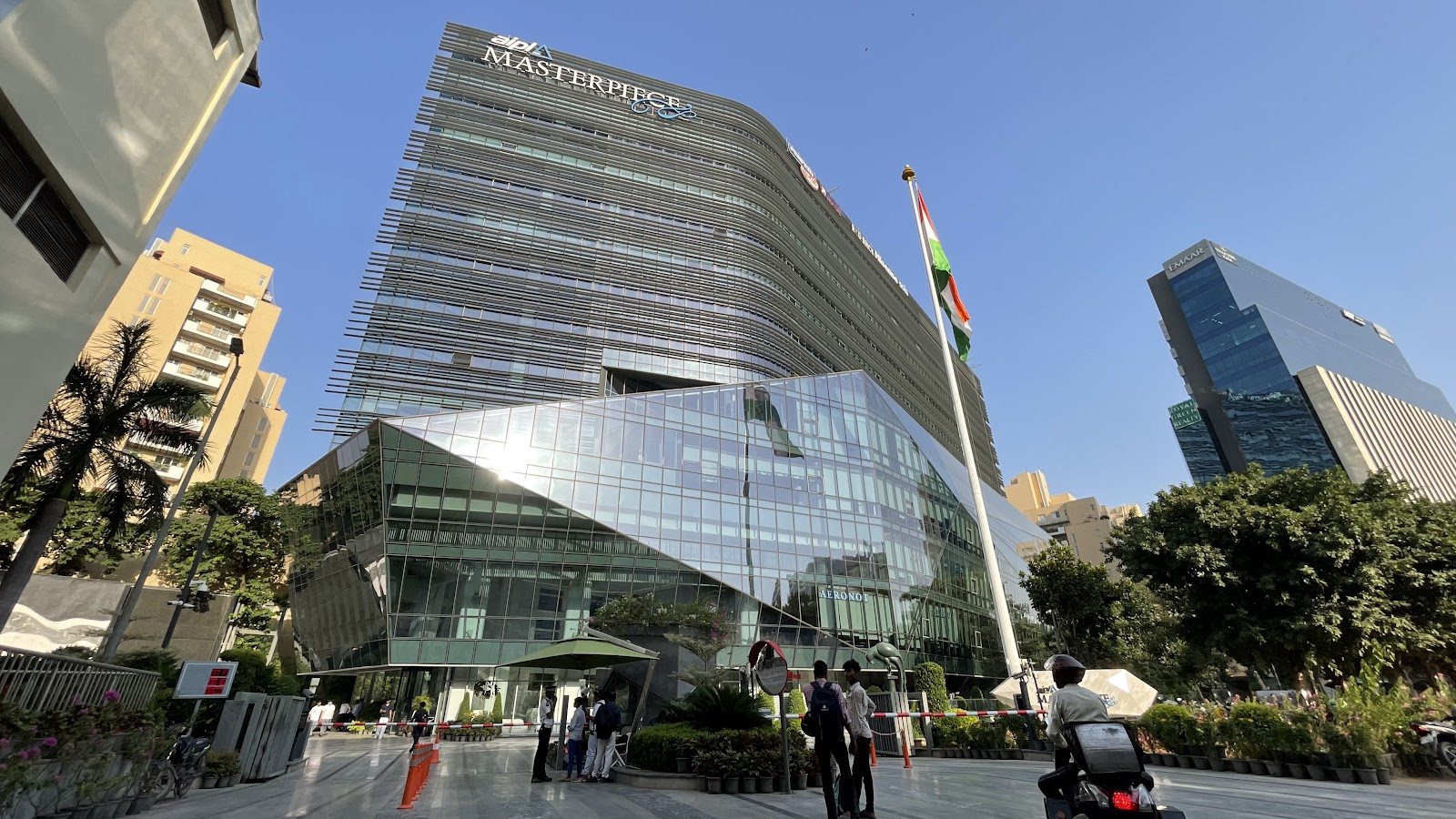
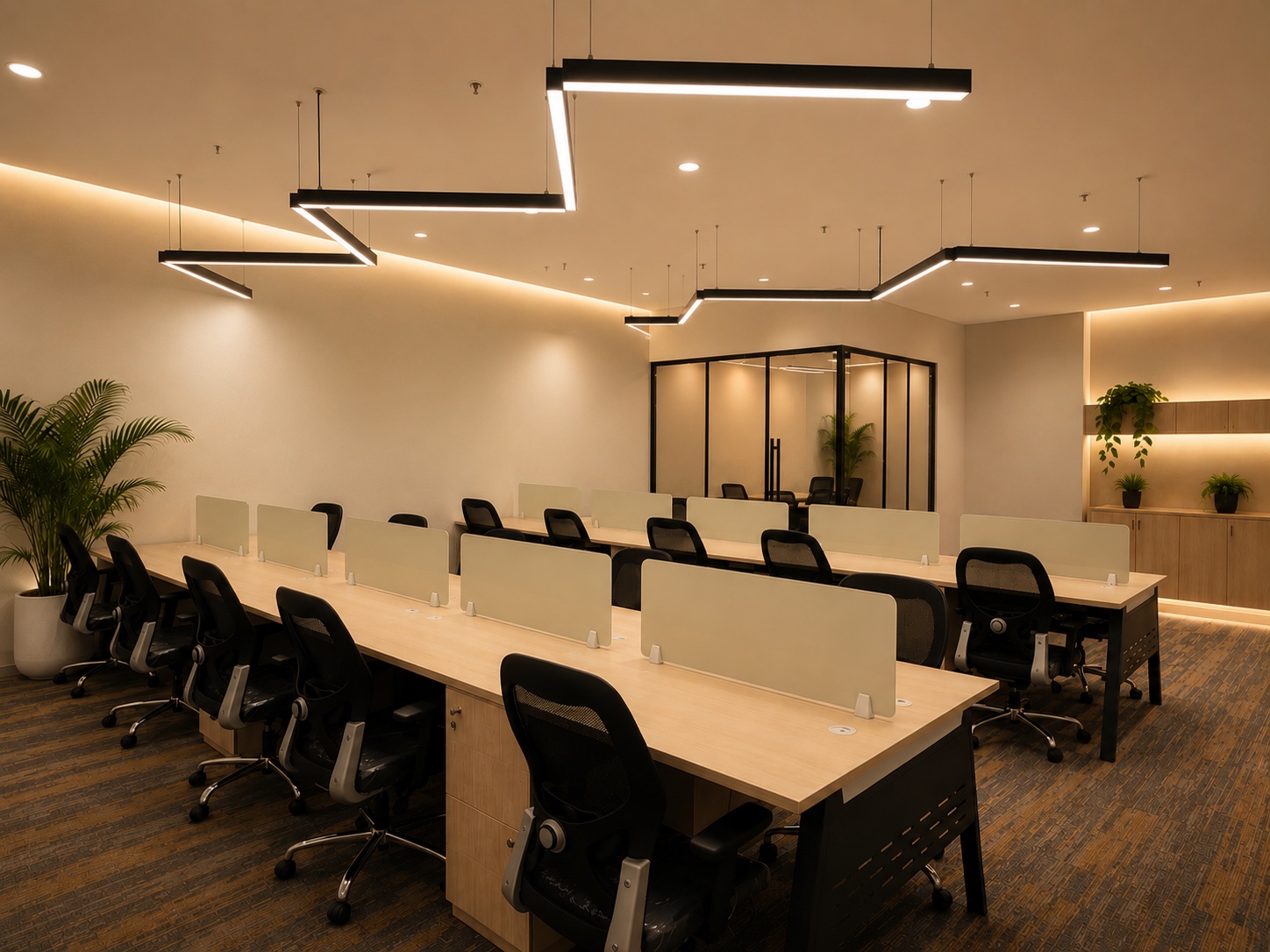
For a GCC building in Gurugram, the flex layer is a practical starting point. QAARYA offers private offices in three corridors. Cabins at M3M IFC on Golf Course Extension Road, DLF Building 14 in Cyber City and AIPL Masterpiece on Golf Course Road are fit-out ready, with an all-inclusive monthly fee plus GST and 24x7 member access. The standard term is 12 months, with seats scalable up or down afterwards. That structure suits the flex layer well: it is quick to occupy, predictable to budget and reversible.
When the center is ready to build a core, the policy context also matters. Haryana’s 2026 GCC policy, summarised by JLL, includes capital, rent and operating support whose application depends on your facts, so involve your adviser before you choose the structure of the core. Our post on the Haryana GCC Policy 2026 and office space sets out the questions to ask.
The Nano GCC as the flex layer
In a core-plus-flex portfolio, a Nano GCC is the flex layer in its purest form. High-impact compact teams sit in serviced, private space, with no long lease and no fit-out capex, while the mandate is still being proven. The decision to build a leased core comes later, when the team has been stable for several quarters and headquarters has confirmed its future.
Large GCCs also use the pattern internally: a new product pod or an acquisition integration starts as a nano-sized compact team in flex space, then either graduates to the core or is wound down without leaving a stranded lease.
Measuring the portfolio: three numbers worth tracking
A core-plus-flex strategy needs a few simple metrics, reviewed on a schedule, or it drifts. Three are enough to start.
- Utilization: the share of seats actually occupied on a typical day, measured over weeks. Low utilization in the core suggests over-commitment; consistently full flex suggests it is time to convert.
- Cost per occupied seat: total monthly occupancy cost divided by occupied seats, for both layers. This is the number that reveals empty-seat costs.
- Time to add a seat: days from request to a person sitting down. Flex should be fast; if it is not, the layer is not doing its job.
Review them quarterly, with finance and the centre leader in the same room. The review turns real estate from a one-time decision into an operating discipline.
An illustration of the conversion decision
Suppose a team of 30 has sat in flex space for five quarters, stable at between 28 and 32 people, with a mandate confirmed by headquarters for the next three years. That team has met the test for core: it would remain if growth stopped. The decision to convert is then a comparison. On the flex side, the fee per seat, with no capex and the ability to leave after notice. On the core side, rent per seat, fit-out capex amortised over the lease, deposits and the cost of any empty seats at the edges.
If the core is clearly cheaper per occupied seat over the horizon, and the team accepts the commitment, convert. If it is close, stay flex a few more quarters and keep the option open. Neither is wrong; the mistake is making the choice without the numbers. Remember too that conversion does not have to be all or nothing: a team may keep a small flex allowance for additions and move the stable base into a leased floor.
What does not belong in the core
- Teams whose mandate is under review or tied to a single project.
- Headcount that depends on a hiring plan not yet approved.
- Functions that may move to another city or another entity.
- Seats for visitors, contractors and short-term specialists.
Bringing it together
If this series has a single argument, it is this: the office for a global capability center should be chosen to preserve options for as long as the plan is uncertain, and to commit only as fast as the evidence arrives. Choose the city for talent, the corridor for your hiring map, the first office for speed and security, and the structure for flexibility. Then review, convert and expand as the center earns it.
To start the series from the beginning, read why global companies are moving capability centers to India, or compare options in our managed private office vs lease-and-fit-out guide. When you are ready to see the space, review QAARYA’s Gurugram workspaces and book a tour to talk through a core-plus-flex plan for your center.
Planning a global capability center in Gurugram? See QAARYA's private office solutions for GCCs, or talk to the team on +91 96504 98482.
Frequently asked questions
What is a core plus flex office strategy?
Core plus flex is a real estate approach in which a company holds a stable base of long-term leased space for its certain headcount and adds flexible, serviced space for uncertain, temporary or fast-growing needs. CBRE describes it as an emerging long-term strategy among Indian occupiers.
Why are GCCs adopting core plus flex?
GCC headcount is hard to forecast, mandates expand quickly and parent companies review budgets often. Flexible space lets a center add capacity without long lock-ins, while a leased core provides cost efficiency and identity for stable teams.
How much of a GCC's space should be flex?
There is no fixed ratio. A practical rule is to hold as core only the seats the center would still need if growth stalled, and to keep the rest flexible. A new center with no proven base may be mostly flex in year one.
How much flex space is being leased in Delhi NCR?
According to CBRE's Q2 2026 India Office Figures, flex operators accounted for about 45% of Delhi NCR's 3.6 million sq ft of leasing, around 1.6 million sq ft, compared with about 0.3 million sq ft a year earlier.
When should a GCC convert flex seats to a leased core?
A GCC should consider converting when a team has been stable for several quarters, when headcount fills a floor, and when the cost per seat of a direct lease, including fit-out and empty seats, is clearly lower than the flex fee.
Is a Nano GCC all flex space?
Typically, in its first months. A Nano GCC of high-impact compact teams usually sits entirely in flexible, serviced space while it proves its mandate, and only considers a leased core when headcount and mandate are stable for several quarters.