Premium Managed Offices
Key takeaways
- A bare-shell lease needs design, approvals, vendors, fit-out and handover before the first employee sits down, a sequence that commonly takes several months.
- A managed private office is built, furnished, serviced and priced as one monthly fee, so the first hires can start while the legal entity and hiring plan are still being finalized.
- Lease-and-fit-out wins when headcount is high, certain and stable for 5+ years. Managed wins when headcount is uncertain, growth is phased or speed matters.
- The cost comparison must include fit-out capex, furniture, IT cabling, housekeeping, power backup, reception and the cost of empty seats, not just rent per sq ft.
- Many GCCs use both over time: a managed office to start, then a leased core later, which is the “core plus flex” pattern CBRE describes.
- For a Nano GCC built on high-impact compact teams, a bare-shell lease is usually the wrong size: you pay for and fit out a floor the team will not fill for a year or more.
The most expensive office decision a new GCC makes is usually not the rent. It is the three to six months between signing a lease and seating the first engineer, a period in which hiring is ready and the building is not. Whether that gap exists at all depends on a single early choice: lease and fit out your own floor, or move into a managed private office.
Both are legitimate. We run managed offices, so we have an obvious interest, which is why this post tries to say clearly where a direct lease is the better answer. The right choice depends on four variables: how certain your headcount is, how fast you need to start, how much control you need over the environment, and how much capital you want tied up in a building you do not own.
What each option actually is
Lease and fit-out
You sign a lease on a floor or part of a floor, usually in a bare-shell or warm-shell condition. You then hire a design consultant and contractors, get landlord and authority approvals, build the interior, install IT and security, buy furniture and appoint housekeeping, facilities and reception. The result is a space designed entirely around your needs, held on a multi-year commitment, typically with a lock-in and a security deposit.
Managed private office
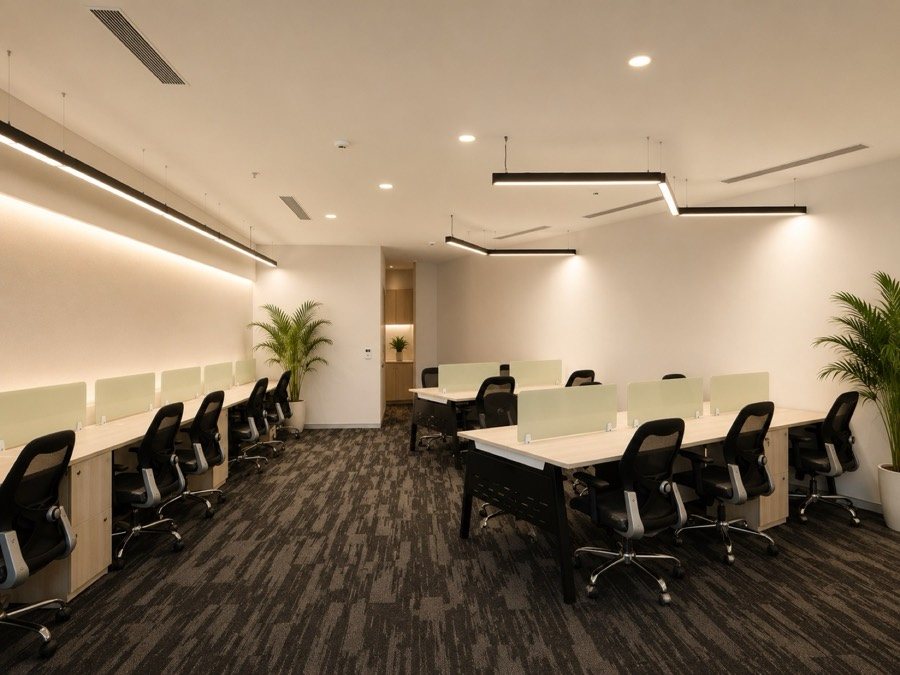
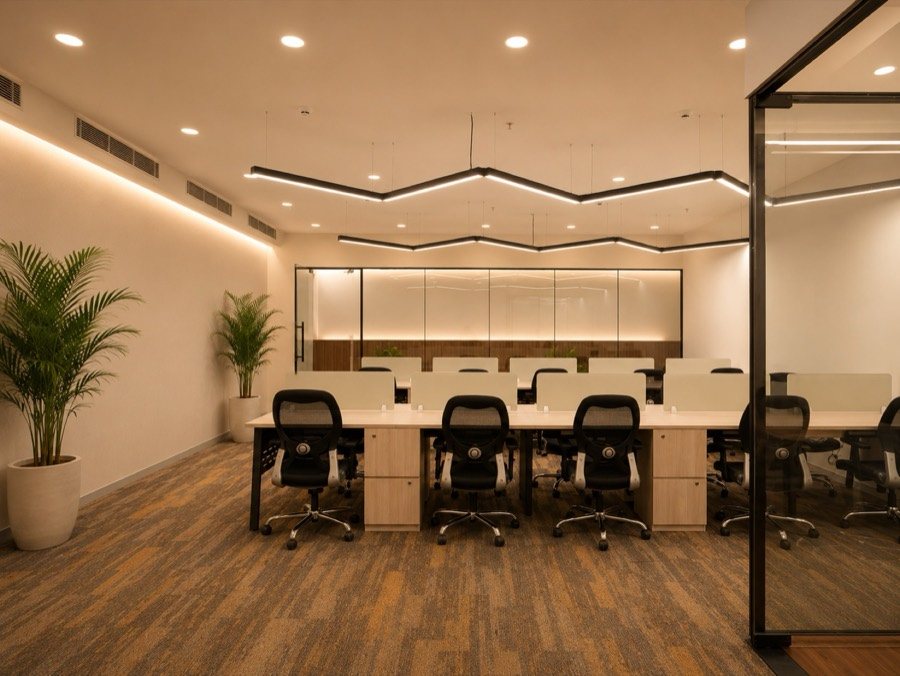
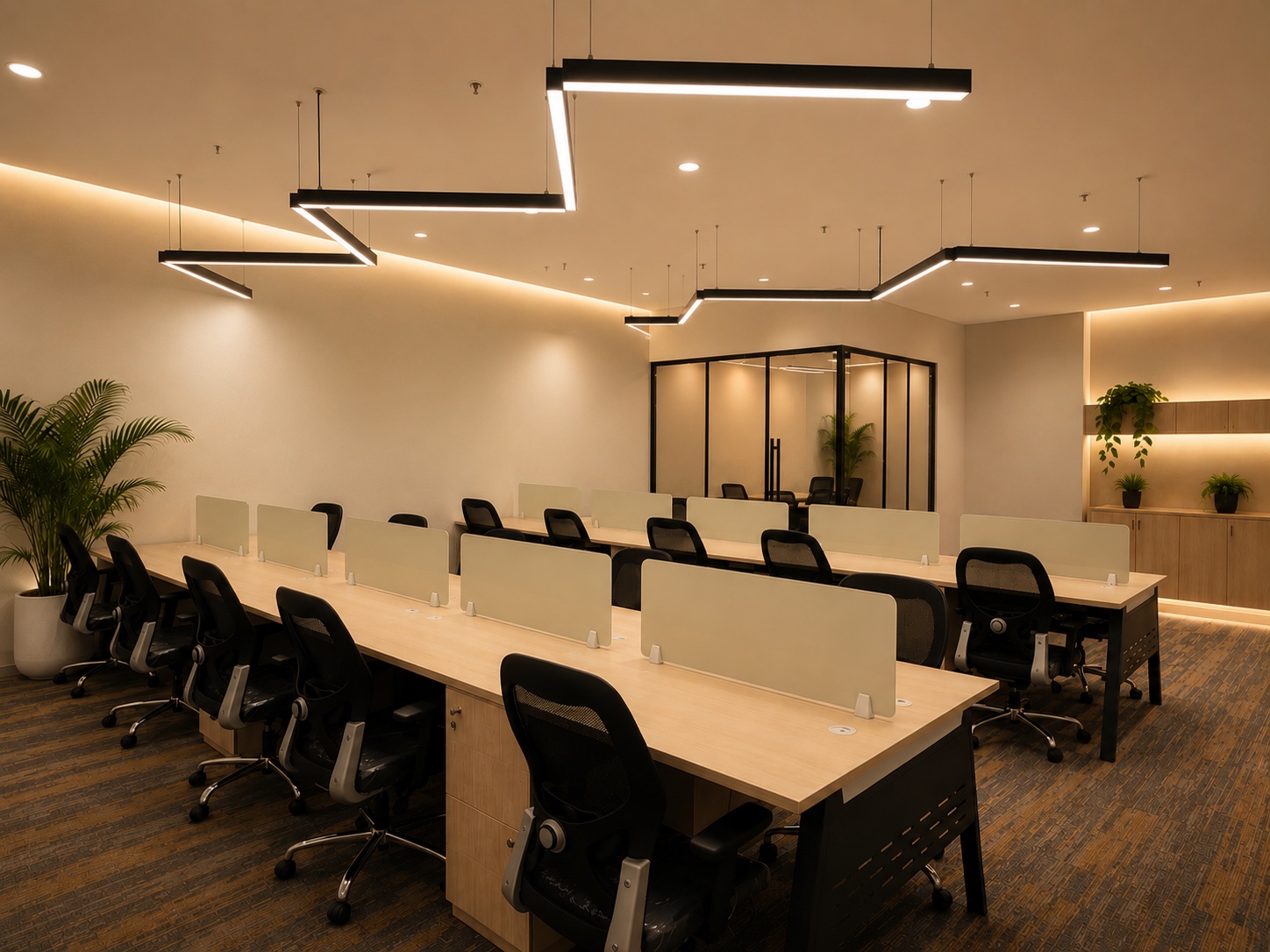
You take private, lockable office space inside a building where the operator has already built, furnished and staffed everything. Wi-Fi, power backup, housekeeping, reception, meeting rooms and pantry are in the monthly fee. At QAARYA, cabins are fit-out ready and teams can move in within days, with an all-inclusive fee plus GST, a 12-month minimum term and the ability to scale seats up or down afterwards.
The timeline problem
Industry guides on GCC setup commonly describe a captive entity as needing 16 to 24 weeks or more from decision to operations, and a 20 to 50 person center as reaching readiness in roughly four to six months, with workstreams like entity setup, leadership hiring and infrastructure running in parallel. These are vendor estimates and vary by case, but the pattern holds: infrastructure is one of the longest-lead items on the critical path.
A bare-shell fit-out is the part of that path you control least. Design and approvals depend on a landlord and authorities. Contractors depend on materials and labour. Any slip in the floor delays every person who was hired to sit on it. A managed office takes that dependency off the critical path, so the legal entity, banking and hiring can progress without an office that is still a drawing.
The cost comparison most teams get wrong
Comparing rent per sq ft between a lease and a managed office is comparing different things. A fair comparison puts every cost of occupying a seat for the same period on the same sheet.
| Cost item | Lease and fit-out | Managed private office |
|---|---|---|
| Base rent | Separate monthly line | Included in one monthly fee |
| Fit-out and furniture | Upfront capex, often the largest item | Already built and furnished |
| IT cabling, Wi-Fi, security | Procured and installed by you | Provided; customization on request |
| Housekeeping, reception, pantry | Separate vendors and contracts | Included |
| Power backup, air conditioning | Charged separately in most buildings | Included |
| Security deposit | Several months of rent, typically | Typically lower |
| Empty seats while hiring | You pay for the full floor from day one | You pay for the seats you use |
| Exit cost | Lock-in, restoration, write-off of fit-out | Notice after the minimum term |
The line that surprises finance teams most is the empty-seat line. If a center plans to reach 120 people by month 18 but will have 35 in month three, a leased floor sized for 120 means paying for about 85 seats of space that is not yet used, plus the fit-out for all of it. Over a 12-month ramp, that unused portion can outweigh any rent-per-sq-ft premium a managed office carries.
When a managed premium is worth it, and when it is not
- Worth it: uncertain headcount, a ramp longer than 12 months, a hard start date, a first-time India entity, or a team below roughly 100 seats.
- Not worth it: a certain 300-seat team from day one, a stable occupancy plan over five years or more, or a need for a bespoke lab or data environment no operator provides.
Control, security and identity
The honest advantage of a direct lease is control. You choose the layout, the access system, the materials and the brand expression. If your center handles regulated data or customer-facing hardware, a dedicated floor with its own network and entry may be required, and that is where a lease usually wins.
That said, control is not binary. Good managed operators allow customization: team zones, branding, partitions and IT arrangements agreed with your security team. The question to ask is specific: can my security officer sign off on this space, and what exactly is separate from other tenants? Our post later in this series on security and compliance in private offices gives a checklist.
A decision framework in five questions
- How certain is my headcount at month 12? If the range is wider than 2x, lean managed.
- What does a month of delay cost? Multiply hired-but-idle salaries by the weeks of fit-out. That is the price of the lease path.
- How much capital do I want in a building I do not own? Fit-out capex is rarely recoverable.
- What does my security team require? Get the requirement in writing before you choose either route.
- What is my exit plan? A 5-year lease is a 5-year commitment even if the parent reorganizes the strategy in year two.
The Nano GCC test: does your team fill a floor?
The lease-versus-managed decision gets much simpler for a Nano GCC. A center of 10 to 50 people built around high-impact compact teams rarely fills a leased floor, and a floor sized for the future leaves most of it empty while you pay for it and its fit-out. A private office sized to the team you actually have is almost always the better first move.
A practical rule: if your realistic month-12 headcount is below the capacity of a single floor plate in the building you are considering, do not lease the floor. Take private cabins, keep your capital free, and revisit when the compact team has proven its mandate and wants to grow.
A worked example with illustrative numbers
These figures are illustrative, not a quote, and your costs will differ. The point is to show the shape of the comparison that finance should run.
Assume a center plans to grow from 20 people in month 3 to 120 in month 18, adding people steadily. A leased floor for 120 seats is signed in month 0 with fit-out done before opening.
- In month 3, 20 of 120 seats are occupied, so about 83% of the paid-for floor is empty.
- In month 9, say 65 of 120 are occupied, so about 46% is empty.
- In month 18, 120 of 120 are occupied, so nothing is empty.
- Averaged across the first 18 months, roughly half the leased floor is unused, and the fit-out capex for all 120 seats was spent on day one.
A managed private office charges for seats as they are added. Even if the per-seat fee is higher, you pay it only on the occupied seats. The break-even depends on the premium and on how steep your ramp is. Plot both on a month-by-month sheet, include fit-out amortised over the lease term, and the picture is usually clearer than any rule of thumb.
Negotiation points in either path
If you lease
- Ask for a phased handover or phased rent commencement that follows your ramp.
- Negotiate a fit-out contribution or rent-free period to offset capex.
- Secure a right of first refusal on adjacent space.
- Check the restoration clause, which can add cost at exit.
If you take a managed office
- Ask for a written description of what is in the monthly fee, and what is extra.
- Confirm the minimum term, notice period and conditions for adding or reducing seats.
- Agree on customization: branding, partitions, IT, security arrangements.
- Ask how meeting rooms are booked and whether a share is reserved for your team.
The hybrid most large GCCs end up with
CBRE describes the pattern emerging among large occupiers as “core plus flex”: a stable leased base alongside serviced space that absorbs growth, pilots and new teams. For a new GCC, the same logic can run in time rather than in space. Start in a managed private office while headcount is still a hypothesis. Then, when the plan has proven itself and the number is stable, take a leased core and keep managed space for the next team, the next project or the next function.
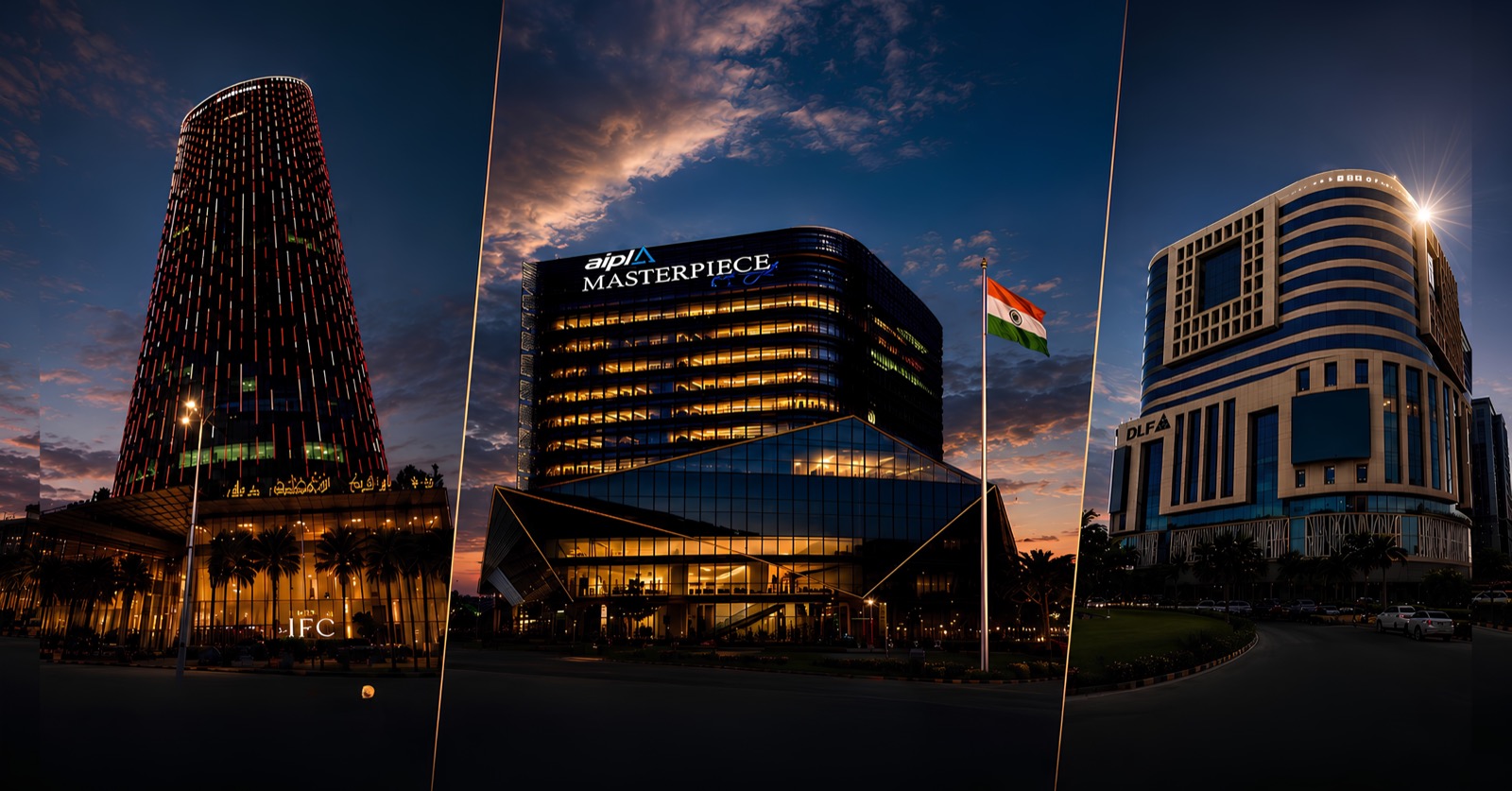
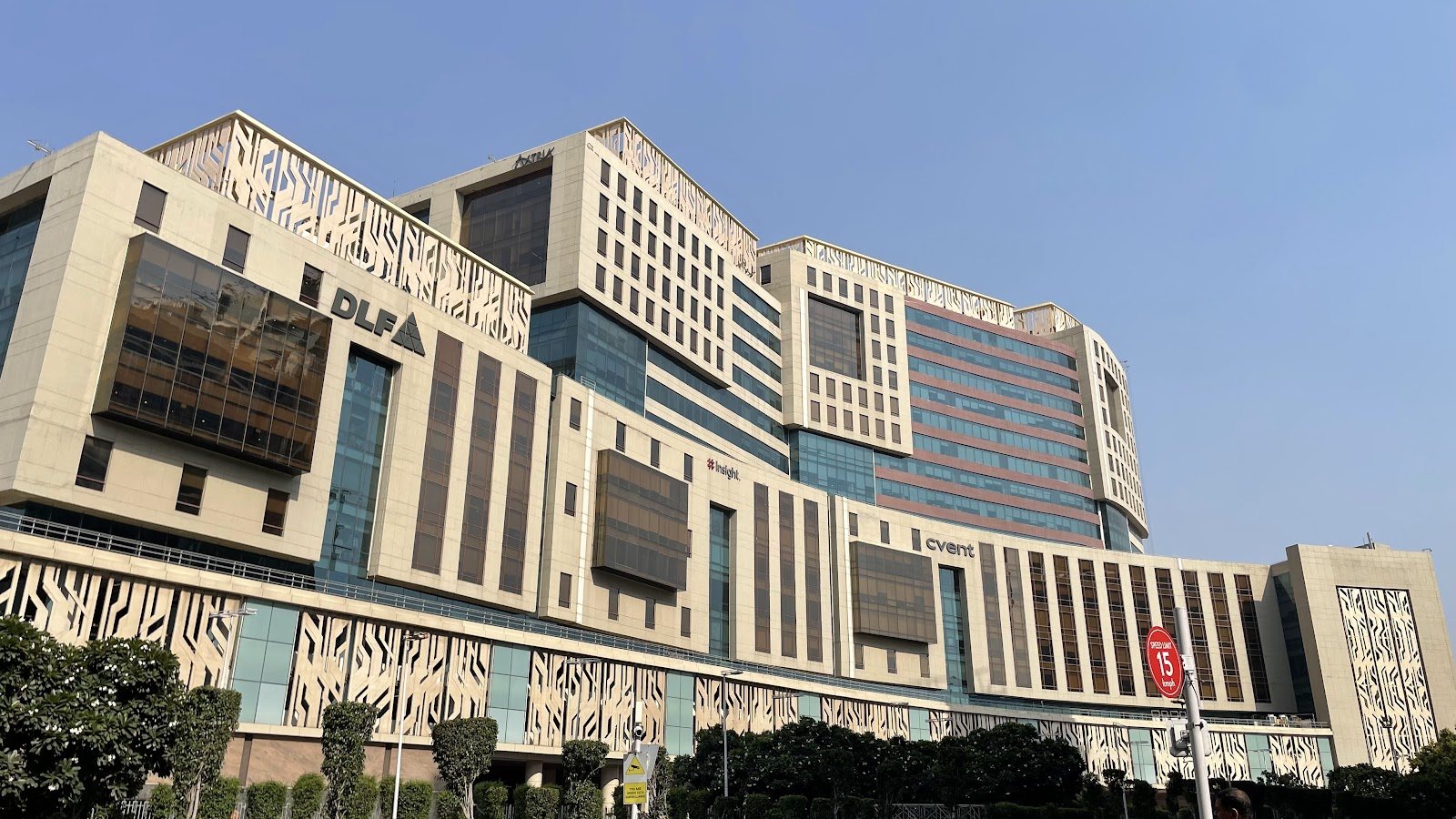
If that sounds like your situation, explore QAARYA's private offices at M3M IFC, DLF Building 14 and AIPL Masterpiece, or read how growing teams decide between private offices and coworking for the smaller-team version of this decision.
Planning a global capability center in Gurugram? See QAARYA's private office solutions for GCCs, or talk to the team on +91 96504 98482.
Frequently asked questions
Should a new GCC lease its own office or use a managed office?
A new GCC with uncertain or phased headcount should usually start in a managed private office, because it avoids fit-out capex and delay and allows seats to be added as hiring progresses. A GCC with certain, large and stable headcount may be better served by a direct lease and custom fit-out.
How long does a bare-shell office fit-out take?
A bare-shell fit-out typically involves design, landlord and authority approvals, vendor selection, construction, IT cabling and handover, and commonly runs several months. A managed private office is usually occupied within days or weeks because the space is already built.
What costs are hidden in a traditional office lease?
Beyond rent, a traditional lease carries fit-out capex, furniture, IT and network cabling, security systems, housekeeping, power backup, air conditioning charges, reception, maintenance, security deposits and the cost of seats left empty while the team grows into the space.
Can a managed office be customized for a GCC?
Yes. Good managed operators allow team zones, branding, partitions and IT arrangements without a full construction project, so a GCC can keep its identity and security posture while avoiding capex.
When should a GCC move from a managed office to its own lease?
A GCC typically considers its own lease when headcount is predictable at a level that fills a floor, when it needs a bespoke security or lab environment, or when long-term cost per seat clearly favours a direct lease.
Is a managed office right for a Nano GCC?
Usually yes. A Nano GCC of roughly 10 to 50 people with high-impact compact teams rarely fills a leased floor, so a managed private office avoids fit-out capex and empty seats while still giving a lockable, secure, customizable space.