Premium Managed Offices
Key takeaways
- GCC headcount tends to arrive in waves. Space plans built on a single number break; plans built on a range and an expansion path hold up.
- A 20-seat pilot and a 200-seat center have different needs. The question is whether the same building, operator or agreement can serve both.
- Ask for expansion in writing: how many additional seats, on which floors, at what price and with how much notice.
- A 12-month minimum term followed by flexible scaling, as QAARYA offers, lets a center add or reduce seats without renegotiating from scratch.
- Moving is expensive. Disruption, IT rework, signage, hiring friction and lost productivity can exceed the rent difference between spaces.
- Plan expansion around the Nano GCC pattern: start with high-impact compact teams and add seats only as each team earns its next wave of hiring.
Nobody plans to move offices in month nine. It happens because the first space was sized for the number in the approval memo, and the real hiring curve arrived faster, slower or in a different shape. A new GCC that outgrows its office mid-ramp pays twice: once for the move and once for the hiring momentum it loses while it happens.
The founders of a start-up can live with a chaotic move. A GCC cannot. It has a parent company watching headcount milestones, a security posture that must be re-approved in every new building, and employees whose commute is about to change. So the most valuable property a GCC office can have is not size. It is room to grow.
How GCC headcount actually behaves
Published setup benchmarks, mostly from advisory and hiring firms, suggest a 20 to 50 person center reaches operational readiness in about four to six months, 50 to 200 people in six to nine months, and larger centers in nine to twelve months or more. They are vendor estimates, but the structural point is clear: growth is staged. A leadership core arrives first, followed by a hiring wave for the first product or function, followed by a second wave once the mandate expands.
Each stage has a different space profile. A pilot of 20 needs a few lockable cabins, a meeting room and good internet. A team of 80 needs more rooms, more phone booths, a pantry that works at lunch and a reception that can handle visitors. A center of 200 needs a floor plate with real circulation, and a security posture to match. If your first office can only serve the first stage, you are already planning your move.
Five ways expansion fails in practice
1. The building has no more space
You take 40 seats on the 11th floor, and six months later the 12th is leased to someone else. Expansion rights that are verbal, or based on a salesperson's optimism, are worth nothing. Ask what is actually available now, and what is already committed.
2. The space is available, but the price is not
Without an agreed pricing mechanism, additional seats are quoted at the market rate on the day you need them. If the market has moved, your growth is the operator's pricing leverage.
3. The space is there but it is not contiguous
Teams that sit on three floors become three teams. If your plan needs one cohesive group, ask whether expansion means adjacent space, the same floor or merely the same building.
4. The agreement locks you into the peak
A multi-year lease sized for 200 seats makes sense only if you reach 200 on schedule. If the plan changes, you carry the difference.
5. Expansion triggers a fresh approval cycle
If each new block of seats needs a new contract, a new security review and a new onboarding round, growth is a project rather than an event.
What to put in writing
| Term | What to ask | Red flag |
|---|---|---|
| Capacity | How many additional seats are available, and where? | “We will see what is free.” |
| Location | Same floor, adjacent floor or same building? | Different buildings with no shuttle or shared services |
| Pricing | Is the per-seat price for additional seats fixed or capped? | Market rate on the day of expansion |
| Notice | How many days from request to occupancy? | Several weeks of fit-out for each block |
| Contraction | Can I reduce seats after the minimum term, and with what notice? | Seats lock in for the full term with no reduction |
| Customization | Can new seats match existing branding and security? | Different finishes and separate access systems |
A planning method that holds up
- Write three headcount scenarios for months 6, 12 and 24: low, base and high.
- Choose the space for the base case and confirm there is a credible path to the high case within the same building or operator.
- Test the expansion promise. Ask to see where those additional seats would be. A floor plan is better than reassurance.
- Set a trigger. For example, when occupancy hits 80%, request additional seats, so that growth never means a week of people sitting in the pantry.
Why the cost of moving is underestimated
When finance compares the rent of two buildings, it compares two numbers. When a team actually moves, it pays for a long list: new fit-out or deposits, IT and network rework, signage, packing and moving, a gap in internet and access, a new security review and a period when part of the team is commuting differently and a few of them reconsider the job. None of this appears on the rent roll, and together it can exceed the rent saved by moving to a cheaper building. For a center trying to hold hiring momentum, it is the disruption that hurts most.
Growing a Nano GCC without a move
Most centers that become large started as a Nano GCC: a small group of high-impact compact teams with one clear mandate. Growth then comes in waves. A second team is added when the first delivers, a third when the mandate widens. The office should be able to absorb each wave without a relocation.
That means treating expansion as a staged commitment. Agree in writing how many extra seats are available, where they are and what they cost, then add them when a team hits a trigger such as 80% occupancy. The compact team stays together, the new team lands nearby and nobody spends a quarter packing boxes.
Room ratios change as you grow
Seat count is only one part of the plan. The ratio of meeting rooms, phone booths and informal spaces to people shifts as a team scales, and it is a common reason that a space that worked at 30 people feels broken at 80. A working baseline we use elsewhere on this site is one bookable meeting room for every 10 to 12 people, leaning toward the higher end for teams with heavy client or interview traffic.
- At 20 people: two rooms, one of them client-ready, and a phone booth or two for calls.
- At 80 people: seven or eight rooms of mixed sizes, several phone booths and a pantry that can absorb a lunch rush.
- At 200 people: a full set of meeting rooms, training or townhall space and enough circulation that the floor does not feel crowded.
When you test an expansion promise, ask not only where the extra seats are but also whether the meeting rooms and shared spaces scale with them. Seats without rooms recreate the friction you were trying to avoid.
Keeping culture intact as the floor grows
A center of 20 builds culture by proximity. A center of 120 needs deliberate design. Teams that expand piecemeal into whichever seats are free end up fragmented, with engineers in one corner and leadership in another.
Practical steps
- Reserve adjacency for the teams most likely to grow, so they can expand without splitting.
- Keep a shared anchor, such as a pantry or lounge, that everyone passes through.
- Standardize the onboarding route so each new cohort sees the same welcome, the same people and the same rules.
- Review the layout every quarter against actual attendance, and adjust the seat plan before the next wave arrives.
Growth is easier to manage when it was anticipated. That is what an expansion plan really buys: not only space, but the calm of having decided in advance.
What expandable looks like at QAARYA
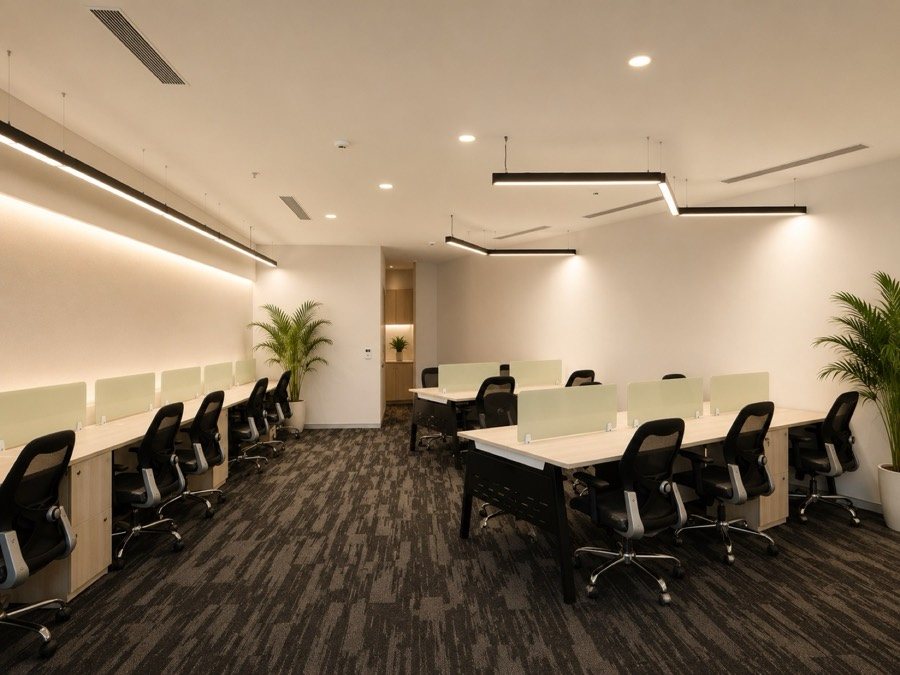
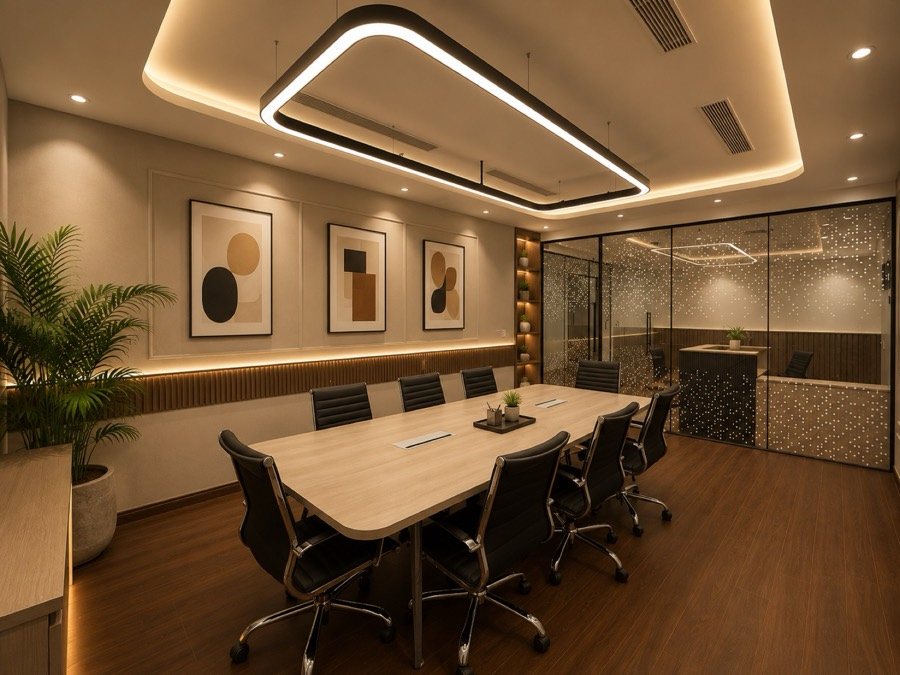
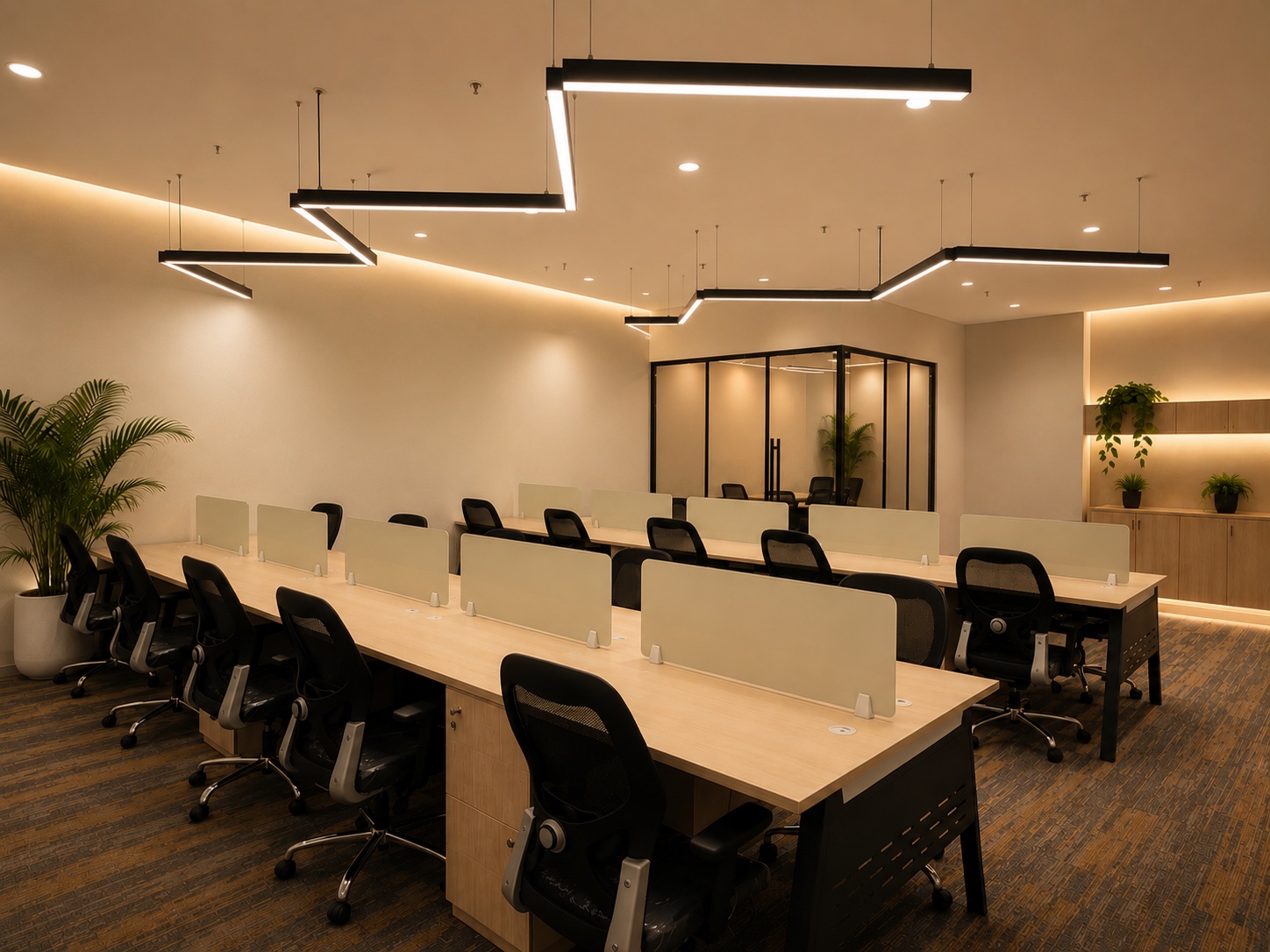
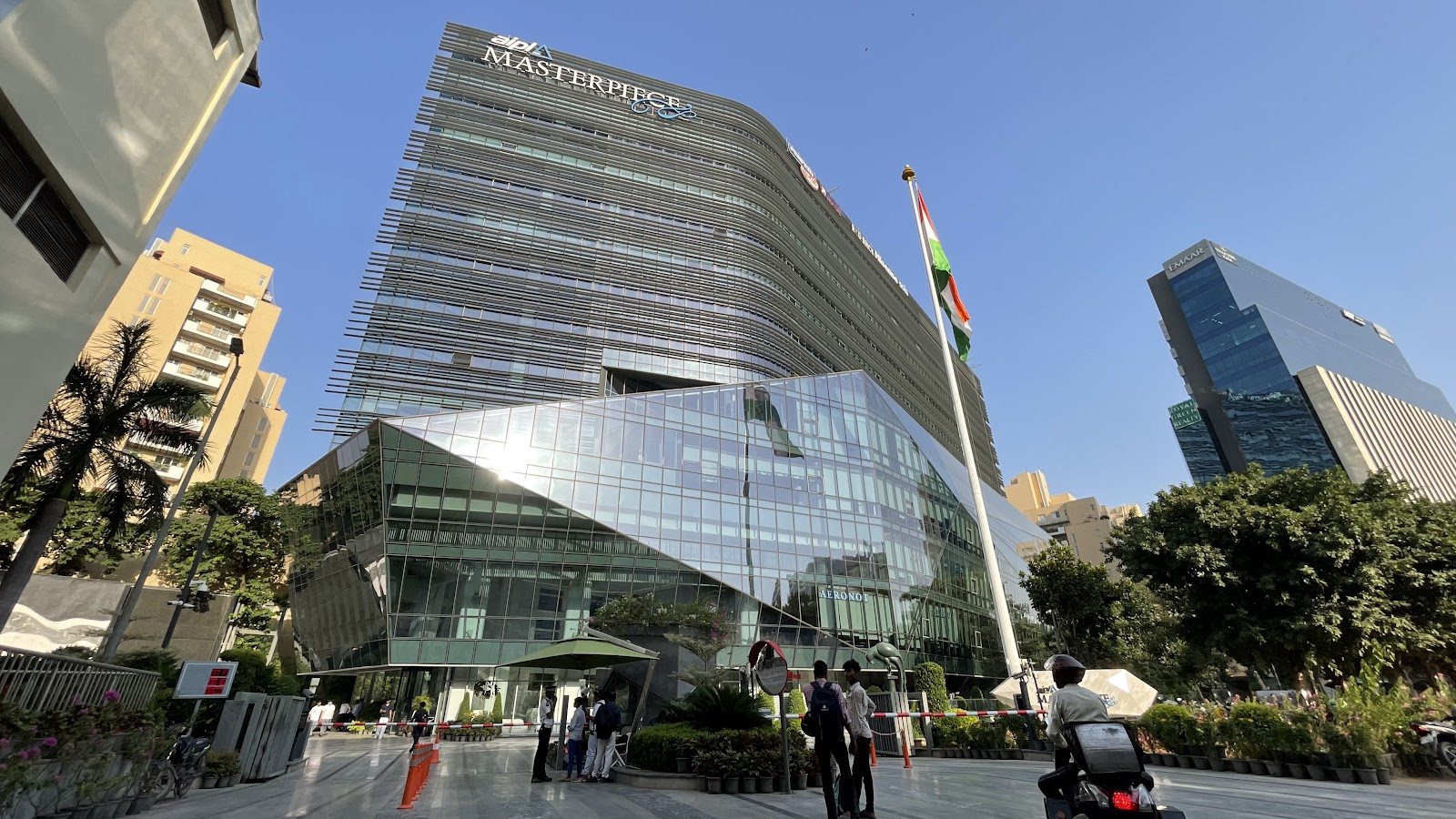
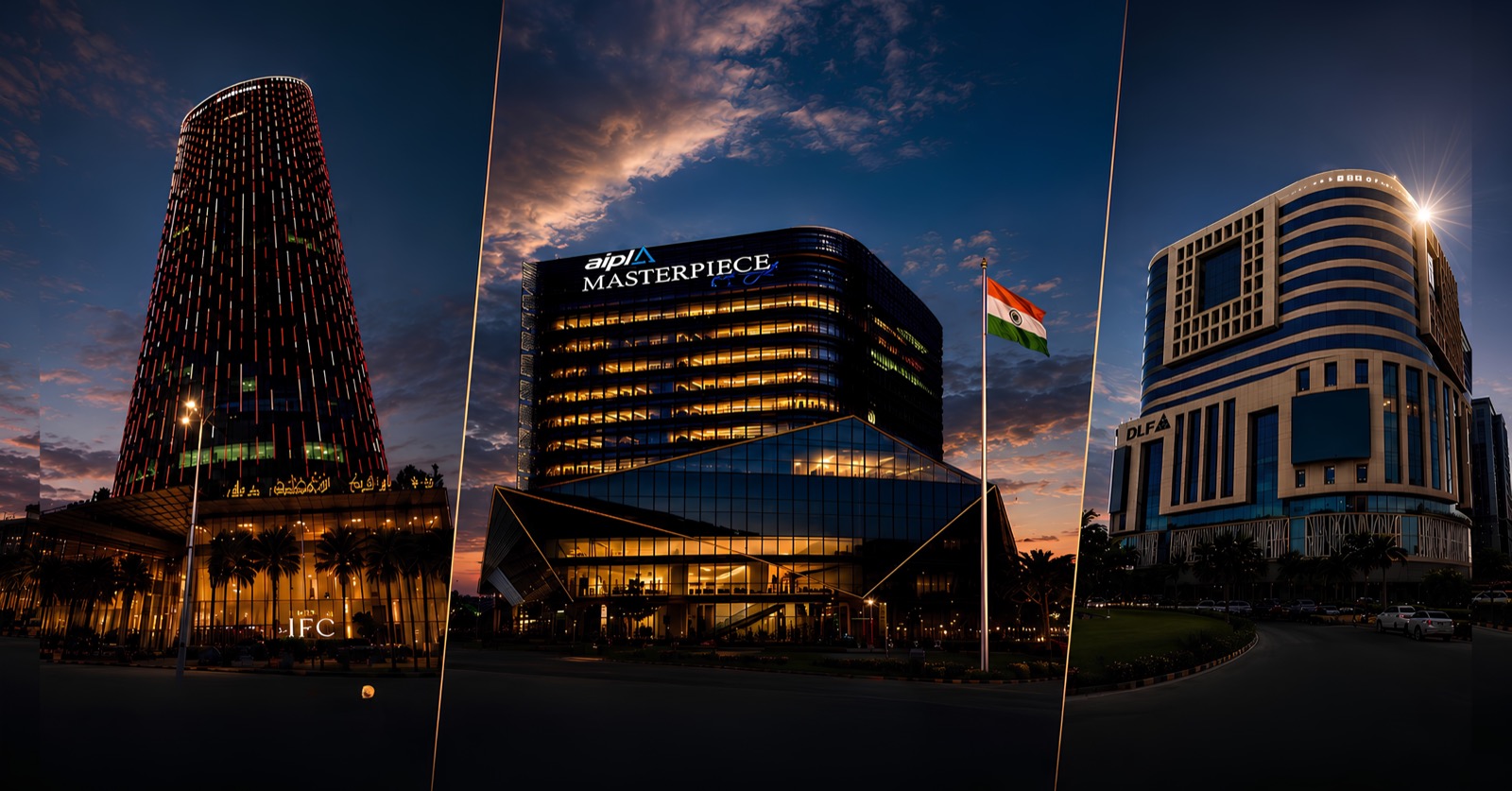
QAARYA runs private offices across the 11th, 15th and 28th floors of M3M IFC on Golf Course Extension Road, at DLF Building 14 in Cyber City, and at AIPL Masterpiece on Golf Course Road. Cabins are fit-out ready, so a team can move in within days. Pricing is one all-inclusive monthly fee plus GST. The minimum term is 12 months, after which seats can be scaled up or down as the team changes. Members have 24x7 access.
We will be specific about the limits. Availability is a live question that depends on the building and the month, and expansion on adjacent space cannot be promised in a blog post. What we can say is that you should ask for the specifics, in writing, before you sign with anyone, including us. If your plan runs from 20 to 200 seats, book a tour and ask exactly where your next 40 people would sit.
For the cost side of this decision, see our comparison of managed private offices and lease-and-fit-out, and review the first-90-days office checklist to see where expansion planning belongs in the launch sequence.
Planning a global capability center in Gurugram? See QAARYA's private office solutions for GCCs, or talk to the team on +91 96504 98482.
Frequently asked questions
What is expandable office space?
Expandable office space is an office arrangement that lets a tenant add seats or rooms as the team grows, usually within the same building and under pre-agreed terms, so the company does not need to relocate when headcount increases.
How do I plan office space for a GCC that will grow from 20 to 200 people?
Plan with a range for each period, choose a building or operator with additional capacity, and negotiate expansion terms in writing, including the number of extra seats, floors, pricing and notice required. Avoid signing for the end state on day one.
Is it better to lease a large floor upfront or expand gradually?
Gradual expansion is usually better when headcount is uncertain, because a large upfront lease means paying for empty seats and fit-out before the team arrives. A large upfront lease is better only when headcount is certain and stable.
Can a managed office scale seats up and down?
Yes. After the minimum term, managed office operators typically allow tenants to add or reduce seats. QAARYA offers a 12-month minimum term, then lets teams scale seats up or down as their needs change.
What does it cost to relocate an office mid-ramp?
Relocation costs include new fit-out or deposits, IT and network rework, signage, packing and moving, downtime and hiring friction for staff whose commute changes. These indirect costs often exceed the rent saved by moving.
How does a Nano GCC grow into a larger center?
A Nano GCC grows by adding seats in waves as its high-impact compact teams prove their mandate. The office should allow that growth through pre-agreed expansion terms, so the center can go from 20 to 200 seats without moving.