Premium Managed Offices
Key takeaways
- Delhi NCR leased 3.6 million sq ft in Q2 2026, and flex operators took 45% of it (CBRE). GCCs are a large part of the demand behind that.
- Gurugram's advantages for a new GCC are experienced talent, access to Delhi's airport and Rapid Metro, and an established multinational ecosystem.
- Haryana notified a GCC Policy in 2026 with capital and operating support, so a Gurugram location can change the economics of the project.
- Gurugram is not automatically the right city: the decision depends on the function, the talent profile and the leadership footprint.
- Within Gurugram, the district matters as much as the city. Golf Course Extension Road, Golf Course Road and Cyber City serve different needs.
- Gurugram suits a Nano GCC: high-impact compact teams of senior people in finance, analytics, operations and leadership functions can be hired here without a large graduate pipeline.
Ask ten heads of engineering where a new India center should go and nine will say Bengaluru. Ask the same people a year later, after they have tried to hire 150 senior people into a single city, and a surprising number will tell you they wish they had looked at Gurugram first. This is not a contrarian take for its own sake. It is what the leasing data, the policy changes and the hiring maps are starting to show.
Gurugram will not suit every GCC. But for finance, analytics, operations, risk, consulting-adjacent and leadership-heavy functions, and increasingly for product and AI teams that want to be close to Delhi's institutions, it belongs on the shortlist from day one. Here is the case, stated plainly.
The demand signal: Delhi NCR is where flexible capacity is being absorbed
CBRE's India Office Figures for Q2 2026 recorded Delhi NCR leasing of about 3.6 million sq ft, with flex operators taking 45% of that, around 1.6 million sq ft. A year earlier, flex take-up in the region was only about 0.3 million sq ft. Nationally, GCCs accounted for a record 42% of leasing in the quarter.
Two readings of this are possible. The cautious one says the market is tight and tenants are taking whatever is available. The more useful one says that sophisticated occupiers, many of them GCCs, now see serviced space as a deliberate part of their portfolio. CBRE's own phrase for the pattern is “core plus flex.” If you are building a center from zero, you get to skip the awkward stage where a company has signed too much space and is trying to fill it.
Five reasons Gurugram keeps making the shortlist
1. Experienced talent, not just graduate volume
Gurugram sits at the centre of Delhi NCR's labour market, which includes Noida, Delhi and Faridabad. It has a long history of hosting multinational operations, consulting firms, financial services and technology companies, which means a large pool of people who have already worked in a global operating model. For a GCC that needs team leads, product managers and domain specialists in the first wave, this matters more than raw graduate numbers.
2. Access for global leadership
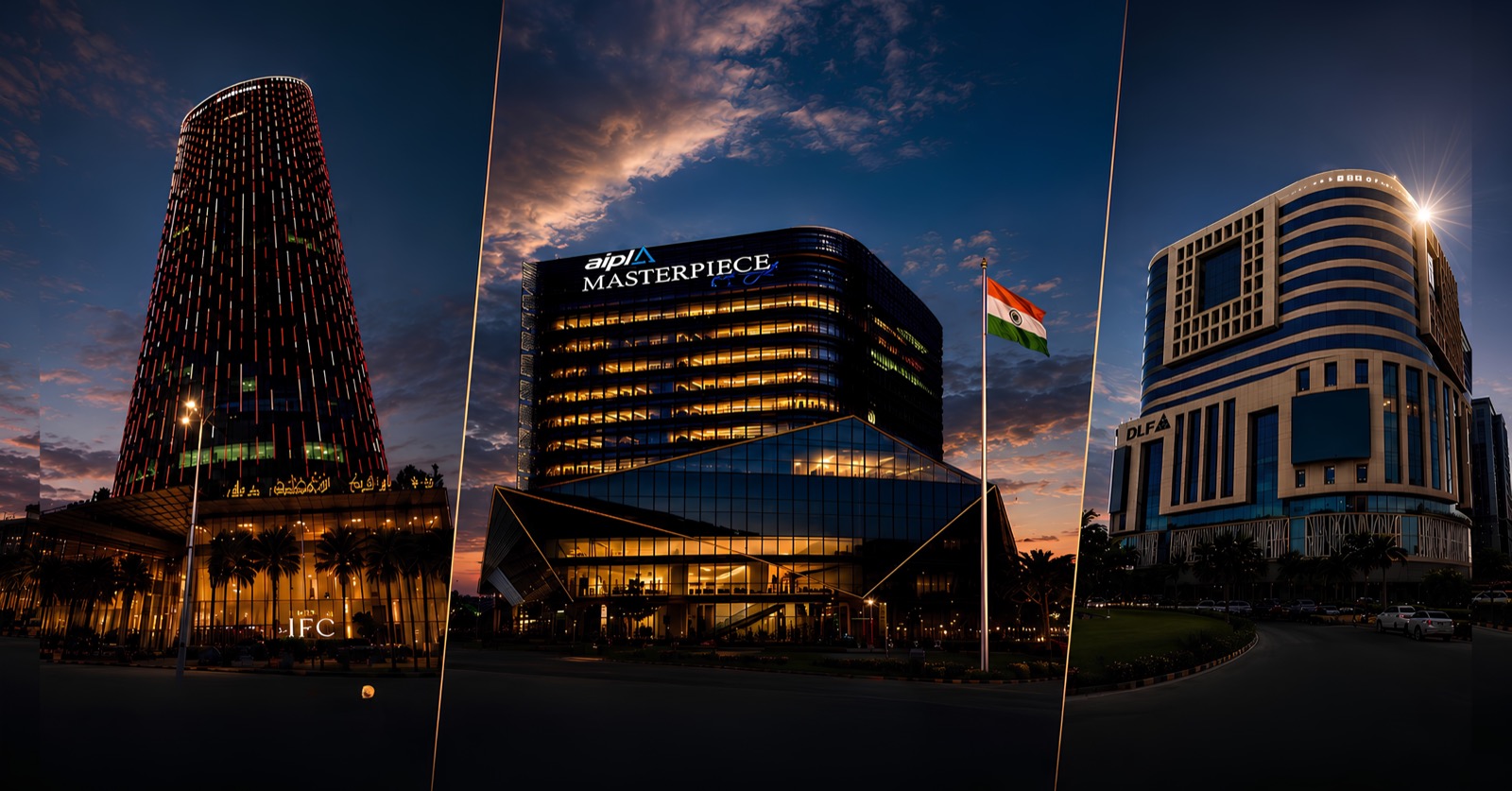
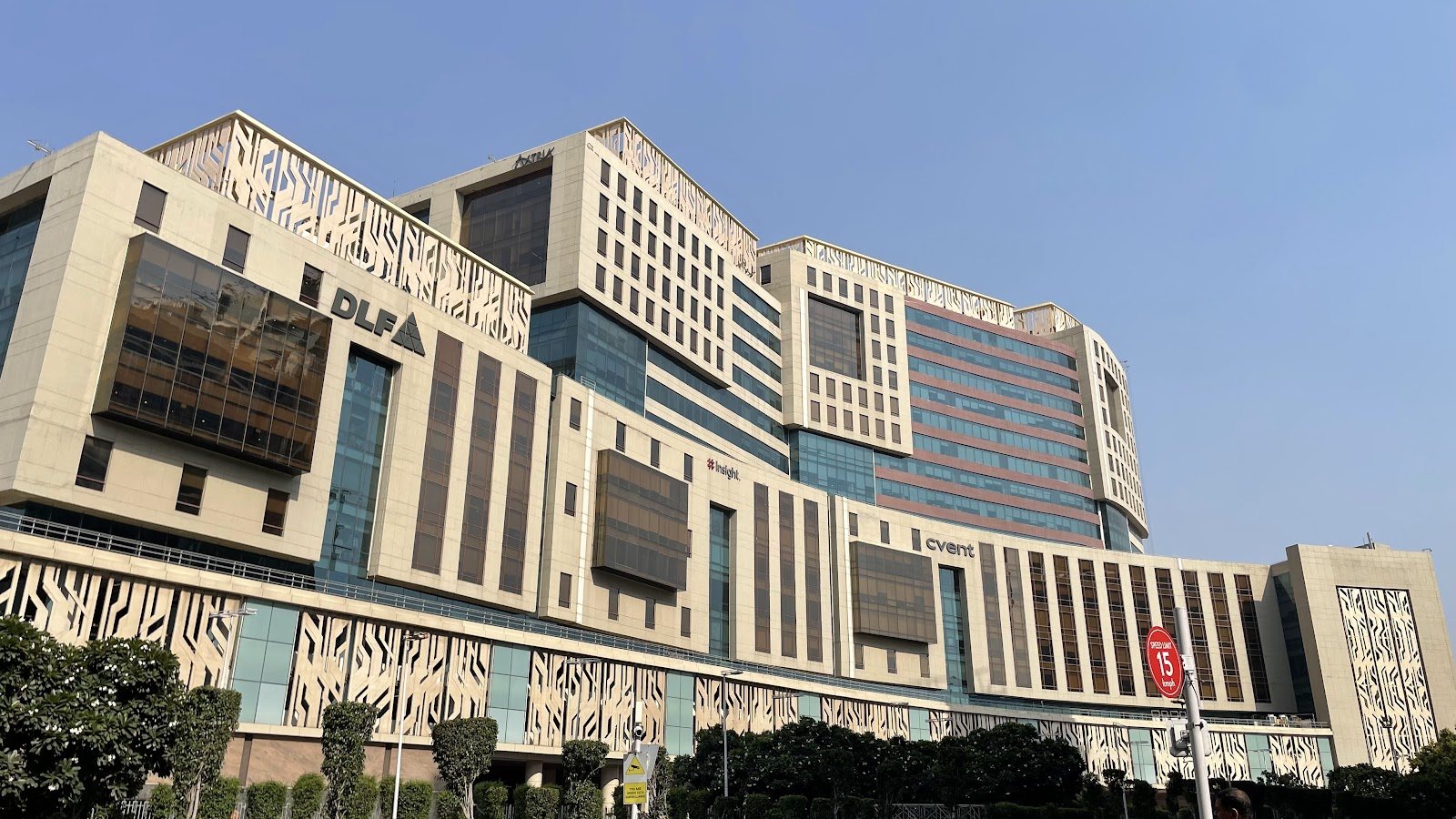
Executives from the parent company will visit often in year one. Gurugram's business districts are within roughly 10 to 15 km of Indira Gandhi International Airport, depending on the building, and are connected by NH-48 and the Rapid Metro. QAARYA's three locations sit in that band: DLF Building 14 in Cyber City is under 10 km from the airport, AIPL Masterpiece about 14 km and M3M IFC about 15 km. A visit that starts with a short, straightforward drive is a small thing that shapes how leadership feels about the center.
3. A policy that is explicitly asking for GCCs
Haryana notified its Global Capability Centres Policy in 2026. According to JLL's summary, capital expenditure reimbursement is 50% in non-transit-oriented Gurugram and 65% in Gurugram's TOD zones, with a cap of ₹150 crore per project, and operating support runs for 5 to 9 years depending on location. Whether your project qualifies depends on your own facts, and we walk through the office-related parts in a dedicated post. The signal is that the state is competing for your decision.
4. A deep stock of prime and new buildings
Gurugram has Grade A towers in Cyber City, along Golf Course Road, on Golf Course Extension Road and on the Southern Peripheral Road. That variety means a GCC can match the building to its stage: an established address for a leadership-heavy team, a newer tower with expansion potential for a growing engineering group.
5. A mature ecosystem of partners
Law firms, auditors, hiring partners, employer-of-record providers and managed workspace operators are all present at scale. Setting up in a market where every partner has done this before for dozens of centers lowers execution risk in ways that rarely appear on a spreadsheet.
Where Gurugram is not the answer
A fair assessment should name the limits. If your center is almost entirely early-career software engineering and you plan to hire hundreds of them in the first year, Bengaluru, Hyderabad or Pune may offer a larger immediate pool. If your center's customers are largely in a particular industry cluster, say pharma or automotive, proximity to that cluster may outweigh general talent depth. And commute is real: Gurugram's traffic is a hiring variable, which is why the choice of micro-market and metro access matters.
The practical test is a simple one. List the ten roles you most need to fill in the first six months. For each, ask a recruiter how many qualified candidates currently work within a 45-minute commute of the building you are considering. The answer will tell you more than any city ranking.
Comparing the three main Gurugram micro-markets for a GCC
| Micro-market | Best for | Trade-off |
|---|---|---|
| Cyber City / DLF Phase 3 | Leadership-heavy centers that want the established corporate address | Generally higher pricing than newer corridors; check contiguous space in the specific building |
| Golf Course Road | Teams that want Rapid Metro access and a mature location | Established location; confirm expansion space in the specific building |
| Golf Course Extension Road | Growing centers that want newer buildings and room to expand | Newer corridor; check commute and surrounding amenities building by building |
Why compact teams suit Gurugram
A Nano GCC, a small center of roughly 10 to 50 people, lives or dies on the seniority of its first hires. That is a point in Gurugram's favour. The city's strength is experienced professionals who have already worked in global operating models, which is exactly what high-impact compact teams require: team leads, product owners, risk and finance specialists who can own a mandate from week one.
It also changes how to read the data. If your centre is built around compact senior teams, you are not asking whether the city can supply 500 graduates. You are asking whether it can supply twelve specific people within six months. Recruiters can answer that directly, and it is a far easier test to run than a city ranking.
How to read talent data for a Gurugram decision
City-level talent statistics tell you a market is large. They do not tell you whether you can hire the specific people you need within your timeline. Four questions turn general data into a usable answer.
- How many people currently hold the role, not how many graduate into it? Experienced engineers, product managers and risk specialists matter more in year one than graduate volume.
- Who else is hiring them? A deep pool with ten competing centers can be harder than a smaller pool with two.
- How long do searches take for comparable roles? Ask recruiters for realistic time-to-fill for your level, not for averages across all hires.
- What are people paid, and how fast does it move? Compensation inflation in a hot segment can erase a cost advantage within a year.
Ask two or three independent recruiters the same questions and compare answers. Where they agree, you have a signal. Where they diverge widely, you have found the risk to plan around.
The commute is part of the compensation package
Employees rarely list the commute in an offer comparison, but it affects acceptance, attendance and attrition. A GCC that sits on a metro line or a major road with predictable travel times has a recruiting edge that does not appear in the salary budget. QAARYA’s AIPL Masterpiece location, for instance, has the Rapid Metro station at the building. A newer corridor like Golf Course Extension Road offers a different trade-off, with newer buildings and the NH-48 and Rapid Metro connectivity noted on our location pages. Neither is universally better, which is why the hiring map should come before the brochure.
If your center plans a hybrid pattern, with part of the week at home, the commute matters a little less, but fixed collaboration days make it matter more on those days. Plan for the peak day, not the average.
Leadership access is a hidden requirement
The first year of a GCC includes more visits from headquarters than any later year: leadership reviews, hiring panels, onboarding of key people. Easy access from the airport to the office makes those visits less costly and more frequent, which tends to improve the relationship. It is not a reason to choose a city, but it is a fair tiebreaker between two otherwise similar options.
What this means for the first office
Once Gurugram is on the shortlist, the office decision follows the same logic as the city decision: fit the stage, not the end state. A GCC in its first two years does not need to own a floor plate. It needs a secure space, in the right district, that it can occupy now and extend later.
QAARYA runs managed private offices across all three of the districts above. M3M IFC is on Golf Course Extension Road, DLF Building 14 is in Cyber City and AIPL Masterpiece is on Golf Course Road, with an IGBC Platinum certified building and the Rapid Metro at the door. A team can tour all three in a single day, compare them on commute, light, cabin size and meeting-room access, and choose the one that matches the roles it is trying to hire.
A one-day shortlist plan
- Morning: call two recruiters and test your ten critical roles against the Gurugram talent pool.
- Midday: drive the commute from the three districts to the homes of your likely first hires, at the hour they will actually travel.
- Afternoon: tour two or three buildings and ask each the same question: where do my next 40 people sit?
If you want to compare options on the ground, browse QAARYA's Gurugram workspaces, read why many teams are drawn to Golf Course Extension Road, or review what separates a premium managed office from an ordinary one before you tour.
Planning a global capability center in Gurugram? See QAARYA's private office solutions for GCCs, or talk to the team on +91 96504 98482.
Frequently asked questions
Why do GCCs choose Gurugram?
GCCs choose Gurugram for its pool of experienced professionals, proximity to Delhi's international airport, Rapid Metro and highway connectivity, an established multinational ecosystem and, since 2026, a dedicated Haryana GCC policy with capital and operating incentives.
Is Gurugram better than Bengaluru for a GCC?
Neither is universally better. Bengaluru has the deepest pool of pure product-engineering talent, while Gurugram is strong in finance, consulting, analytics, operations and leadership-heavy functions, and offers easier access for global executives. The right choice depends on the roles you need to hire.
How much office space did Delhi NCR lease recently?
CBRE reported that Delhi NCR leased about 3.6 million sq ft of office space in Q2 2026, and flex operators accounted for about 45% of it, around 1.6 million sq ft.
What office options exist for a new GCC in Gurugram?
A new GCC can lease and fit out a floor, take a built-to-suit space, or occupy a managed private office. Managed private offices let a team move in within days and expand as hiring grows, which suits centers in their first one to two years.
Which Gurugram micro-markets suit GCCs?
Cyber City suits companies that want the established corporate address, Golf Course Road suits teams that want metro access and a mature location, and Golf Course Extension Road suits growing teams that want newer buildings and more room to expand.
Is Gurugram a good location for a Nano GCC?
Yes, for many functions. A Nano GCC built around high-impact compact teams needs experienced specialists more than graduate volume, and Gurugram has a deep pool of experienced professionals in finance, analytics, consulting-adjacent roles and operations, along with prime office options for small teams.