Premium Managed Offices
“Premium” gets thrown around a lot in coworking marketing. Exposed brick, a neon sign, a beanbag corner — it photographs well for the listing page. In 2026, tenants, and the HR and operations teams evaluating space on their behalf, expect a lot more before they'll actually call an office premium.
Walk into most managed offices today and you'll find a familiar formula repeated at every price point: reclaimed-wood accent wall, a foosball table nobody touches after week three, a coffee machine positioned exactly where the tour photo needs it. It's not that these things are bad. It's that none of them tell you anything about whether the space will actually work for a 40-person team, five days a week, for the next two years.
At Qaarya, across our floors at M3M IFC, AIPL Masterpiece, and DLF Building 14, we think about premium as a set of measurable decisions made long before a single desk gets installed — not a finish palette applied after the fact. Here's what we mean.
1. Air quality isn't a nice-to-have
HVAC systems in most commercial towers are engineered for code compliance, not comfort. They're sized to keep a building within a regulatory band, not to keep a room of forty people alert at 4pm. A genuinely premium managed office audits CO₂ levels, particulate filtration, and humidity control independently of what the base building provides — because employees notice the afternoon fatigue and the low-grade headaches long before anyone thinks to check an air quality monitor.
This matters more in Gurugram than in most cities. Outdoor air quality here can swing sharply through the year, and a building that simply recirculates whatever is happening outside is not offering a premium environment, regardless of how the lobby looks. Independent filtration, fresh-air exchange rates above the bare minimum, and regular monitoring are the unglamorous infrastructure that premium is actually built on.
2. Natural light drives the layout, not the other way around
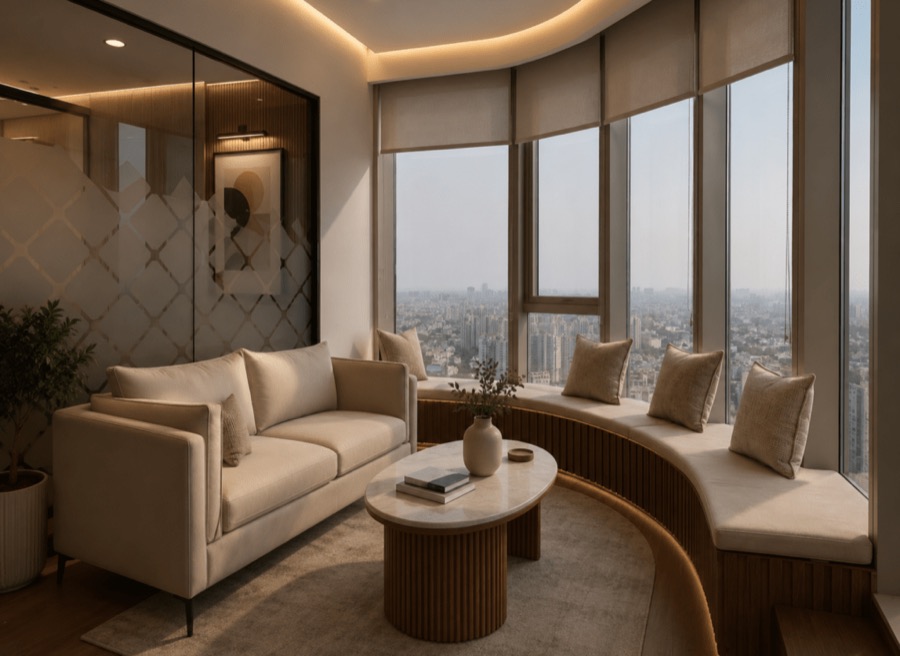
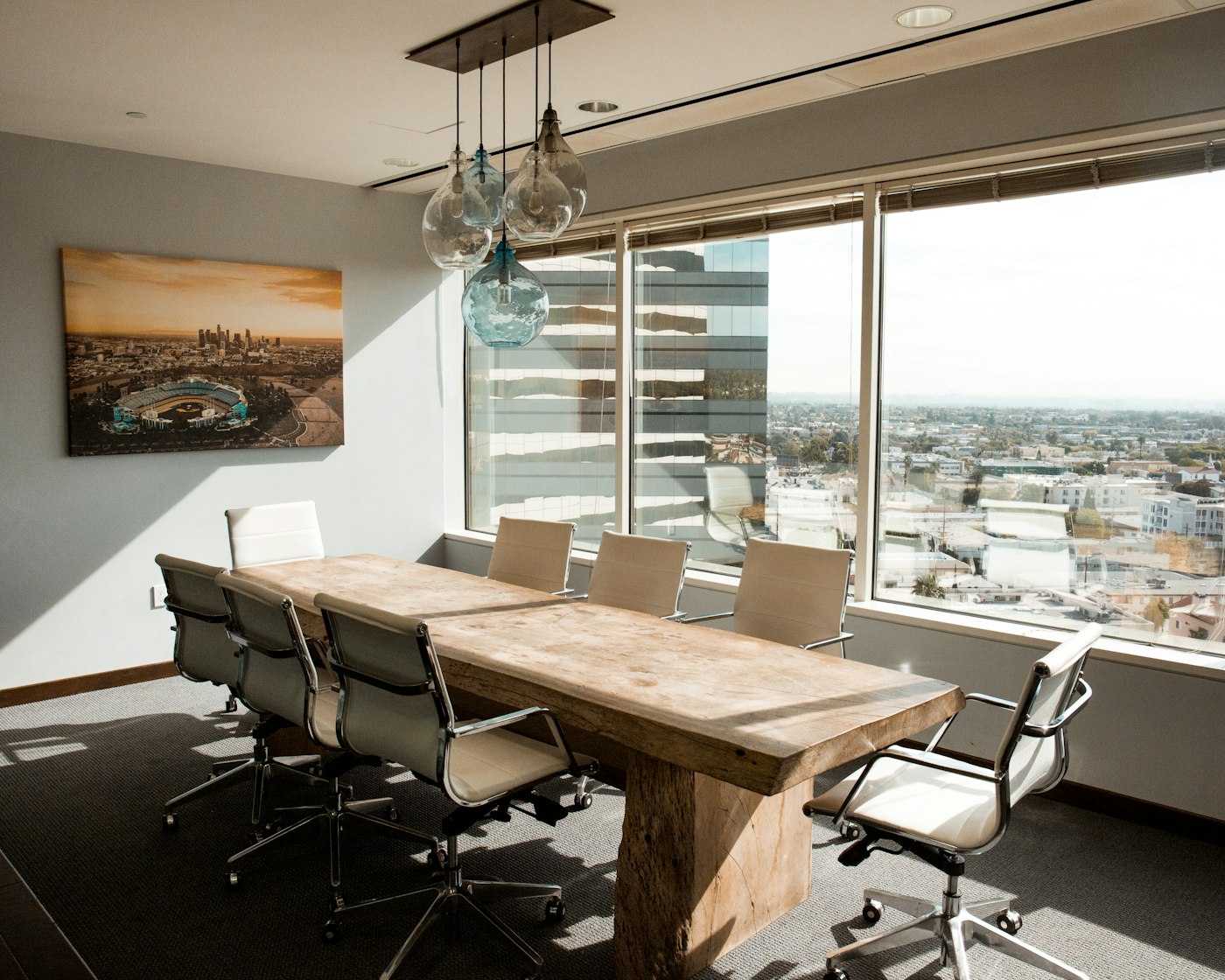
In most fit-outs, cabins and workstation banks are placed first for headcount efficiency, with daylight treated as a secondary bonus for whichever desks happen to end up near a window. We deliberately flip that order. Layouts are drawn around where the light already falls across the floor plate, and desks are fit around that plan, not the reverse.
The result is fewer people stuck in the interior gloom of a deep floor plate, meeting rooms that don't need their lights on at 11am, and a workday that follows the sun instead of fighting it under fluorescent tubes. It's a small shift in process that changes how a space actually feels to sit in for eight hours.
3. Acoustics get engineered, not ignored
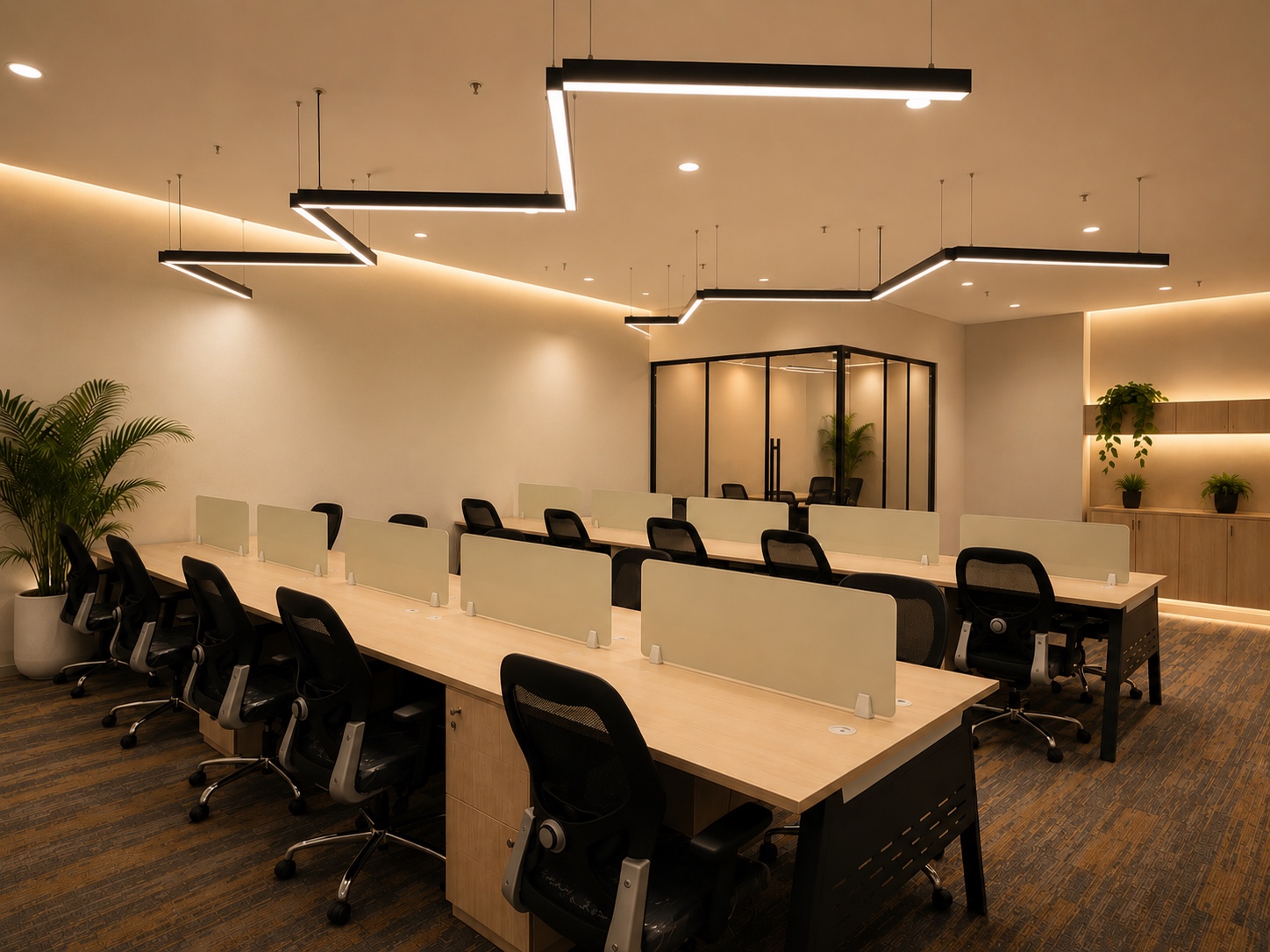
Open floor plans look clean in a render and fall apart the moment two dozen people are on calls simultaneously. Premium managed space treats acoustics as a design input from day one: sound-absorbing ceiling panels, phone booths sized for an actual sales call rather than a five-minute favor, and floor materials chosen partly for how they handle footfall and chair noise, not just how they photograph.
It's an easy thing to skip because it's invisible until it's a daily irritant. Teams that have worked in an under-treated open office know exactly what we mean — and it's one of the fastest ways a "premium" space reveals it wasn't.
What this looks like day to day
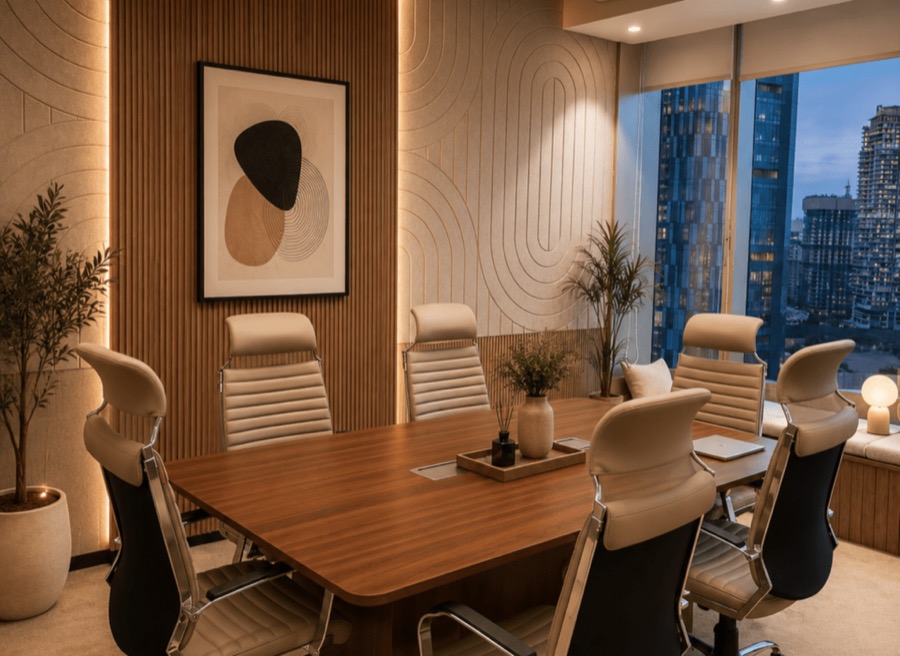
- Enclosed focus rooms sized for one to two people, separate from meeting rooms built for groups.
- Materials chosen for sound — carpet tile or acoustic vinyl in high-traffic zones, not hard flooring throughout.
- Booth placement away from shared desks, so a client call doesn't become ambient noise for six other people.
4. Service means a real point of contact, not a ticketing portal
Premium isn't only what you can see or hear. It's whether a broken AC unit gets fixed within the hour or sits open for a week, and whether raising that issue means filing a ticket into a queue with no visible owner, or sending a WhatsApp message to a person who actually shows up.
This is the part of "managed" that most brands quietly drop once they scale past a handful of locations. Service becomes a call center, then a chatbot, then a form. We've built Qaarya the opposite way: a hands-on, reachable team who knows each location and each member, from the first tour through years of day-to-day requests.
5. The building itself has to earn the address
No amount of interior design compensates for a building with unreliable power, patchy connectivity, or a lobby that undersells every meeting a tenant brings a client to. Premium managed space starts with choosing buildings that already carry weight — Grade A towers with strong infrastructure, backup power, and a commercial address that means something the moment a visitor walks in.
That's why Qaarya operates inside M3M International Financial Centre, AIPL Masterpiece, and DLF Building 14, rather than spreading across a long list of lower-tier addresses. Fewer locations, chosen deliberately, each one able to genuinely support the standard we're claiming.
A quick way to test any space claiming to be premium
- Ask what the fresh-air exchange rate is. If nobody can answer, air quality was never actually engineered.
- Sit in an open desk area for fifteen minutes during a busy hour. Notice the noise floor.
- Ask how a maintenance issue gets resolved, and by whom, not just how it gets logged.
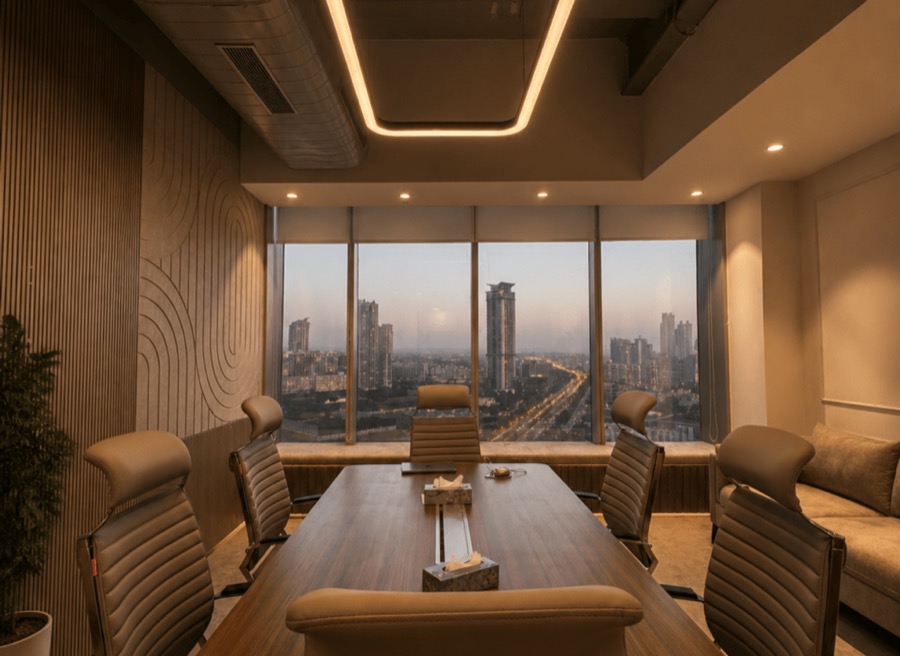
- Check whether meeting rooms have real daylight, or whether every one of them needs the lights on.
None of this shows up in a listing photo. All of it shows up in the first month of actually working there — which is exactly why it's worth checking before signing, not after.
That's the standard we hold every Qaarya location to, across three very different buildings and one consistent bar for what "managed" should mean.