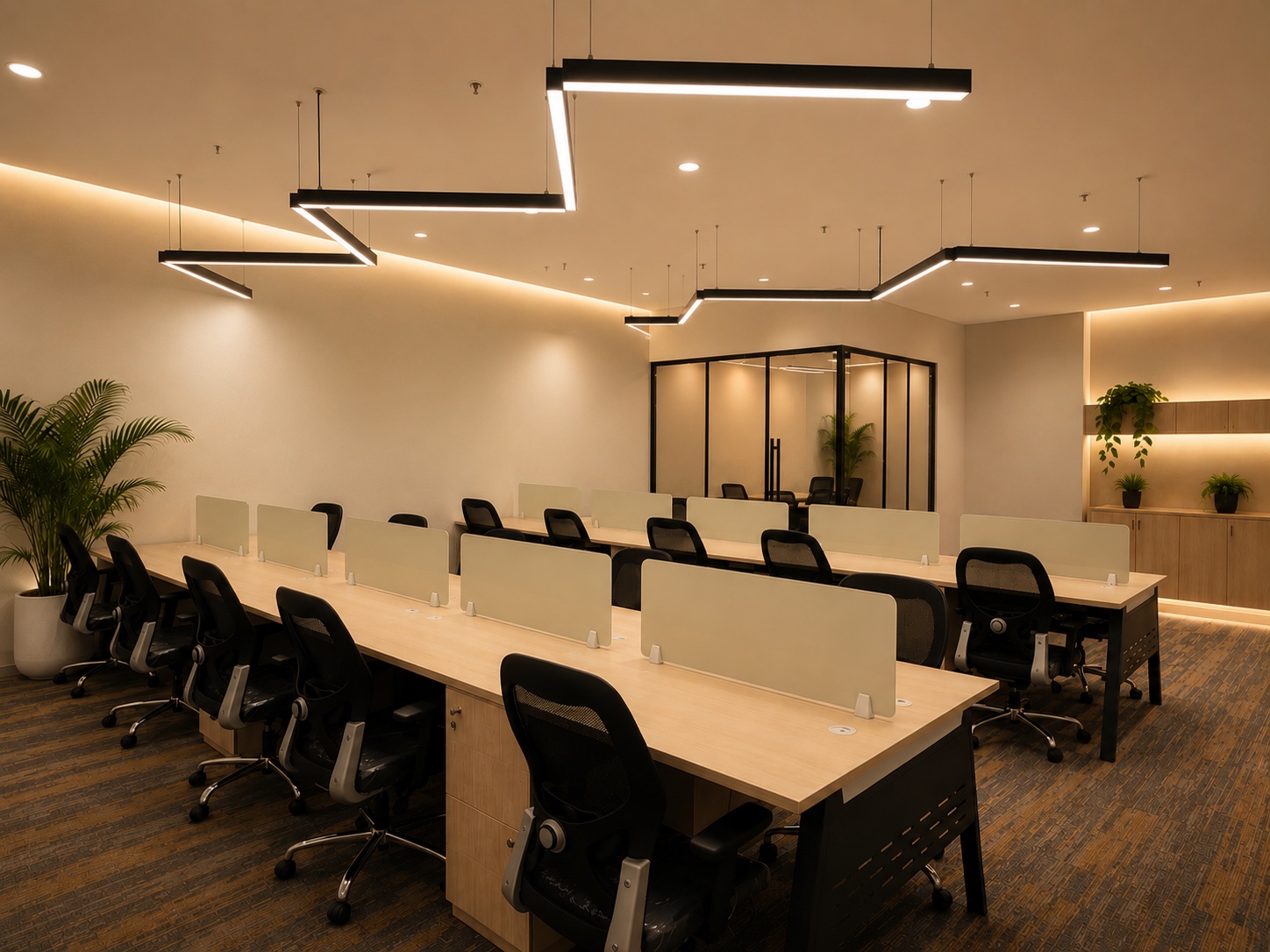
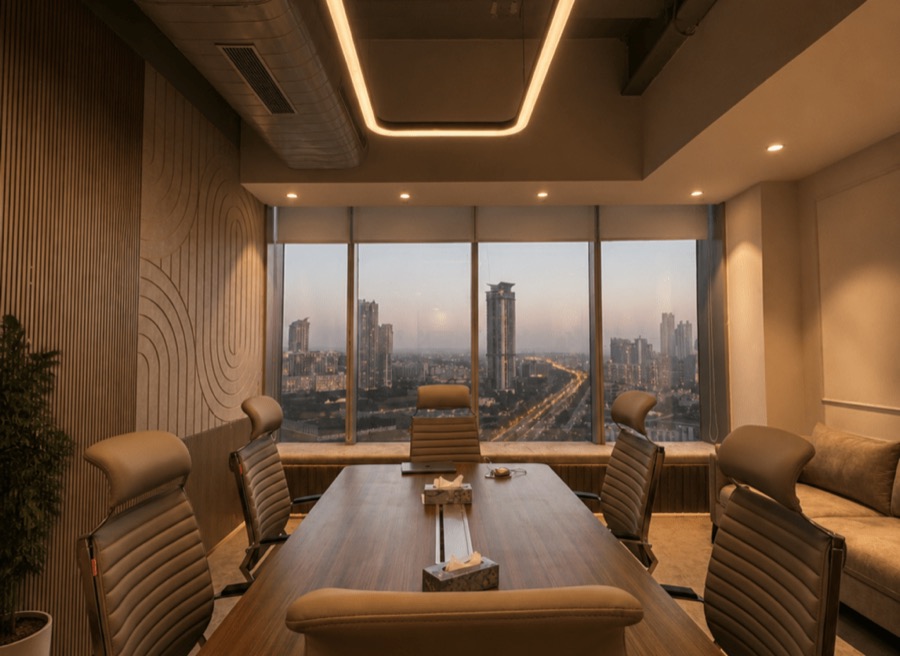
Premium Managed Offices
Key takeaways
- A managed private office is a lockable suite used by one company, furnished, connected and serviced by an operator for one monthly fee.
- The fee typically covers the space, furniture, internet, power, housekeeping, reception, pantry and shared meeting-room access. Customization, extra meeting hours, dedicated IT and printing are the usual extras.
- It suits teams that need private spaces for focus, confidential work or client meetings, but do not want the capex, fit-out time or lock-in of a conventional lease.
- Compare quotes on cost per occupied seat with every line item included, not on the headline seat price.
- Judge a private office on five things: walls and acoustics, air and light, meeting-room access, service response and the building itself.
- Cushman & Wakefield reports flex operators leased about 1.91 lakh seats in India’s top eight cities in H1 2026, with GCCs taking 44%. Private suites are a large part of that demand.
“Private office” is one of the most overused phrases in commercial real estate. It can mean a glass box on a busy coworking floor, a fully enclosed suite with its own entrance, or a bare shell you will spend six months fitting out. In a managed office, it means something specific: a lockable space used only by your company, furnished, connected and run by an operator for one monthly fee. This guide explains what that fee should cover, what usually costs extra, who the format suits, and how to judge one in Gurugram before you sign.
The short version: a managed private office buys you an enclosed, branded, ready-to-use workspace without the capital, the fit-out months or the long lock-in of a conventional lease. Whether it is good value depends on what is inside the fee, and that varies more between operators than most buyers expect.
What a managed private office actually is
A managed private office is a suite of one or more enclosed rooms reserved for a single company inside a building run by a workspace operator. Your team has its own door, its own key or access card and its own desks. The operator has already built the space, furnished it and wired it, and it runs the shared parts of the floor: reception, pantry, meeting rooms, cleaning and maintenance.
Three features separate it from the alternatives.
- Exclusivity. Nobody outside your team sits in your suite. That is the difference from a coworking desk.
- Operator-run. You do not hire contractors, buy furniture or manage a facilities team. That is the difference from a conventional lease.
- One bill. Space, services and most utilities arrive as a single monthly fee, with taxes on top. That is the difference from almost everything else.
The market for this format is no longer niche. Cushman & Wakefield reports that flex operators leased 191,306 seats across India’s top eight cities in the first half of 2026, up 68% year on year, with Delhi NCR at about 21,970 seats. Global capability centers took 44% of those seats. Large occupiers are not choosing flex space for beanbags. They are choosing it for private suites they can occupy quickly.
What is included, and what usually costs extra
The monthly fee is the headline. The inclusions list is the contract. Two operators quoting the same price per seat can be very far apart once you read what each one covers.
Usually included in the monthly fee
- The furnished suite: desks, task chairs, storage and basic lighting.
- Internet on the shared network, with Wi-Fi across the floor.
- Power, air conditioning and building maintenance charges.
- Daily housekeeping and waste removal.
- Reception, visitor handling and mail.
- Pantry access, often with tea and coffee.
- An allowance of shared meeting-room time, in hours or credits.
- Access control to the floor and the suite.
Often charged separately
- Meeting-room hours beyond the allowance, and board or event rooms.
- A dedicated internet line, static IP, or a separate network for your devices.
- Printing, courier and storage beyond a basic locker.
- Custom furniture, finishes, branding or layout changes.
- Parking, which in many Gurugram towers is priced by the building, not the operator.
- After-hours air conditioning in buildings that charge for it.
None of these extras is unreasonable. The problem is discovering them after you sign. Ask for a written inclusions list and a price list for extras, and model a normal month with the extras you will actually use. Our managed office vs traditional lease cost breakdown walks through every line item side by side.
Private office vs lease vs coworking
A private office sits between two better-known options. It is more committed and more private than coworking, and less committed and less work than a conventional lease. The table below is a quick reference.
| Factor | Managed private office | Conventional lease | Coworking desk |
|---|---|---|---|
| Privacy | Enclosed, lockable suite for one company | Entire floor or unit, fully private | Shared floor; private only in booked rooms |
| Upfront capital | Deposit only; no fit-out capex | Deposit plus fit-out and furniture | Small deposit, if any |
| Time to move in | Days to a few weeks | Typically several months | Same day to a few days |
| Commitment | Typically a year or more, negotiable | Typically several years with lock-in | Monthly is common |
| Brand and customization | Moderate to high, operator-led | Full control | Minimal |
| Who runs it | The operator | You | The operator |
| Best for | Teams needing privacy and speed without capex | Large, stable teams on long horizons | Individuals and very small, changeable teams |
The ranges are illustrative; individual agreements vary. If you are still deciding whether your team has outgrown shared space, our post on private office vs coworking sets out where the answer changes as headcount grows.
Who a managed private office suits
The format works best when three conditions hold: the team needs a door, the headcount is uncertain, and the company would rather spend capital on its business than on partitions. In practice, that describes a lot of Gurugram occupiers.
- Funded startups past the first few hires. Calls, hiring conversations and board prep stop fitting on a shared floor.
- Professional firms. Law, CA, consulting and advisory teams handle documents and conversations that should not be overheard.
- Nano GCCs and project teams. High-impact compact teams of a global company need security and identity from day one, but not a ten-year lease for a mandate still being proven.
- Regional and sales offices. A national or overseas company opening a Gurugram presence wants a credible address and a meeting room, not a construction project.
- Teams in transition. Companies between leases, or waiting for a fit-out elsewhere, need a working office for months, not years.
It suits fewer teams at the extremes. A two-person team may not need a door yet. A 300-person team with a five-year plan will usually find a conventional lease cheaper per seat, though even then a private suite often makes sense for the parts of the business that are still changing.
Why private spaces matter: focus, confidentiality and brand
Open plans were sold as a way to increase collaboration. The evidence is less kind. In a 2018 field study published by the Royal Society, Ethan Bernstein and Stephen Turban tracked employees at two companies that moved to open offices and found face-to-face interaction fell by about 70%, while email and messaging rose. People did not talk more. They put on headphones and typed.
Interruptions carry a cost of their own. In a 2008 study by Gloria Mark and colleagues, people who were interrupted completed tasks faster but reported significantly more stress, frustration, time pressure and effort. Work got done, but at a price paid in fatigue.
A private office addresses three problems at once.
- Focus. A door controls the one noise that matters most: other people’s intelligible speech. The team chooses its own norms for calls and quiet time.
- Confidentiality. Salary discussions, client files, deal terms and product roadmaps stay inside the suite. Screens are not visible to strangers walking past.
- Brand. Your name on the door, your colors on the wall and your own meeting space change how candidates and clients read the company.
How to evaluate a private office before you sign
Most office tours are run at quiet times by people paid to show the best corner. Use the visit to test the things that will matter on a Tuesday afternoon six months from now. A simple rule: judge five things, in this order.
- Walls and acoustics. Stand inside the suite with the door shut while someone talks at normal volume in the corridor. If you can follow the words, so can they. Glass fronts are fine; gaps at the ceiling and under doors are not.
- Air and light. Ask how fresh air is supplied and filtered, and whether you can see readings. Check whether the suite gets daylight or borrows it from a corridor. Air, water and lighting quality are things you will feel every day.
- Meeting-room access. Ask how many rooms serve the floor, how booking works, and what the allowance is. Try to book one during the visit. A shortage of rooms is the most common complaint in shared buildings.
- Service. Ask who you call when the internet drops or the air conditioning fails, and how quickly they respond. A named person beats a ticketing portal.
- The building. Look at the lobby, lifts, security, parking and the commute. Your clients will judge you on the walk from the gate to your door.
For a fuller standard, our post on what makes a managed office premium covers the details that separate a good operator from an average one.
The cost angle: compare per occupied seat
A private office almost always looks more expensive than a lease on a per-seat basis, because the seat price bundles things the lease leaves out. The fair comparison is total monthly cost per occupied seat, with every line item included on both sides.
On the lease side, that means rent, maintenance, utilities, housekeeping, reception, internet, furniture and fit-out spread over the term, plus the cost of empty seats you sign for in advance. Fit-out alone is significant: Cushman & Wakefield’s 2026 Asia Pacific Office Fit Out Cost Guide puts India’s major markets at roughly USD 65 to 73 per sq ft. That is capital you spend before the first employee sits down, and it stays with the building when you leave.
On the private-office side, it means the monthly fee, GST, the extras you will use and any customization quoted upfront. Then add the months a lease takes to fit out, during which the team is either somewhere temporary or not hired yet. Treat any comparison as illustrative until you have real quotes, and check the tax treatment with your CA.
Two rules of thumb hold up well. If headcount could move by a quarter in either direction within a year, a private office is usually the cheaper option once empty seats are priced in. If headcount is large, stable and committed for five years or more, a lease usually wins on cost per seat.
Private offices in Gurugram: the location question
In Gurugram, the building and the corridor matter as much as the suite. Commute times, metro access and the address on your visiting card all shape who you can hire and how clients see you.
QAARYA runs private offices in three corridors. M3M International Financial Centre on Golf Course Extension Road, Sector 66, is open now, close to the Sector 55–56 Rapid Metro. DLF Building 14 sits in DLF Cyber City next to Cyber Hub, with Rapid Metro links to the Yellow Line. AIPL Masterpiece on Golf Course Road, Sector 54, is an IGBC Platinum green building with the Sector 53–54 Rapid Metro station next door. Each comes with premium interiors, customisable layouts and a focus on air, water and light quality; fit-out-ready cabins mean most teams move in within a few days of signing, under one clear monthly cost with GST on top.
The right choice depends on where your people live and where your clients are. Ask for current availability, terms and pricing during a tour, and compare all three corridors before you decide. You can see the QAARYA spaces online first.
The bottom line
A managed private office is the simplest way to get a door, a brand and a working office in Gurugram without building one. Its value depends on three things: what the monthly fee actually includes, how the space performs on acoustics, air and service, and whether your headcount is uncertain enough to make flexibility worth paying for. Read the inclusions list, visit at a busy hour and compare on cost per occupied seat. If it still wins after that, it is the right answer.
Looking for private office space in Gurugram? See QAARYA’s private office solutions, or talk to the team on +91 96504 98482.
Frequently asked questions
What is a managed private office?
A managed private office is a lockable, furnished office suite used by a single company inside a building run by a workspace operator. The operator provides the fit-out, furniture, internet, cleaning, reception and shared amenities for one monthly fee, so the company can move in quickly without building or running the office itself.
What is usually included in the price of a private office in Gurugram?
Most managed private offices include the furnished suite, internet, power and air conditioning, housekeeping, reception, pantry access and an allowance of shared meeting-room time. Customization, extra meeting-room hours, dedicated internet lines, printing and after-hours services are often charged separately, so ask for a written list of inclusions and extras.
How is a private office different from a coworking space?
A private office is an enclosed, lockable space used by one company, while a coworking space is a shared floor where members from many companies sit together at hot or dedicated desks. A private office gives more confidentiality, acoustic control and brand identity; coworking gives the lowest commitment and is usually cheapest for very small or highly changeable teams.
Who should choose a private office over a conventional lease?
A private office suits teams that need their own enclosed space but are uncertain about headcount, want to move in within weeks rather than months, or prefer not to spend capital on fit-out and furniture. A conventional lease tends to make more sense for large, stable teams committing for five years or more.
How do you evaluate a private office before signing?
Visit at the busiest time of day, check sound between the suite and the corridor, look at air quality and daylight, test the meeting-room booking system and ask who responds to problems and how fast. Then compare quotes on total monthly cost per occupied seat, including GST and every extra you expect to use.
Can a managed private office be customized?
Usually, yes. Many operators can adjust layout, furniture, finishes and branding within a private suite, and some can match a company’s headquarters standards. Custom work is typically quoted upfront and may affect the move-in date, so raise requirements before you sign.