Premium Managed Offices
Key takeaways
- Compare cost per occupied seat over the full term, not rent per sq ft. Rent is usually less than half of what a leased office really costs in year one.
- Cushman & Wakefield’s 2026 fit-out guide puts Delhi NCR fit-out at roughly USD 65–69 per sq ft, an upfront cost a managed office has already absorbed.
- Large Gurugram leases reported in 2026 carry 15% rent escalation every three years and deposits of several months’ rent, money that is locked up rather than spent.
- Commercial rent attracts 18% GST; a registered business using the space for taxable supplies can generally claim input tax credit, so GST is a cash-flow item more than a cost.
- Rule of thumb: under about 50 seats, or with headcount you cannot forecast 3 years out, a managed office usually wins on total cost. Above about 100 stable seats over 5+ years, a lease usually does.
- Price the months before move-in. A fit-out that takes a quarter means a quarter of rent, a quarter of temporary space or a quarter of delayed hiring.
Most office cost comparisons in Gurugram start and end with one number: rent per sq ft. A landlord quotes a rate for a bare floor, a managed office quotes a monthly fee per seat or per cabin, someone divides one by the other, and the lease looks cheaper. It usually is cheaper, on that line. The trouble is that rent is rarely more than half of what a leased office costs in its first year.
This post puts every line item on one sheet: deposit, fit-out, furniture, IT, maintenance, power backup, housekeeping, GST, escalation, the months before you can move in and the capital you tie up along the way. It is written for founders, CFOs and operations leads at SMEs, startups and growing teams who need a number they can defend, not a brochure.
The short answer
A managed office costs more per sq ft and less per occupied seat for most teams under about 50 people. A traditional lease costs less per seat once headcount is large, stable and committed for five years or more. Between those two, the answer depends on how certain your hiring plan is.
The reason is structural. A lease unbundles the office into a dozen separate costs, several of them paid upfront. A managed office bundles them into one monthly fee and spreads the build cost across many occupiers and many years. You pay a margin for that bundling. Whether the margin is worth it depends on what the unbundled version really costs you, and that is the sheet most teams never build.
Every line item, side by side
Here is the full list. Use it as a checklist when you collect quotes: if a line is missing from a lease proposal, it has not disappeared, it has moved to your budget.
| Line item | Traditional lease | Managed office |
|---|---|---|
| Base rent | Monthly, per sq ft of chargeable area | Part of one monthly fee |
| Security deposit | Several months’ rent, interest-free, refundable at exit | Usually smaller; ask during a tour |
| Fit-out (civil, MEP, ceilings, lighting) | Upfront capex; roughly USD 65–69 per sq ft in Delhi NCR | Already built |
| Furniture and fixtures | Upfront capex | Included |
| IT cabling, Wi-Fi, firewall, AV | Procured, installed and maintained by you | Provided; customization on request |
| Common area maintenance (CAM) | Separate monthly charge per sq ft | Included |
| Electricity and power backup | Metered and billed separately | Usually included; confirm the policy |
| Housekeeping, reception, security staff | Separate vendors and contracts | Included |
| Meeting rooms, pantry, lounge | Built inside your own area, paid as sq ft | Shared, included or on demand |
| GST | 18% on rent and on most services | On the monthly fee |
| Rent escalation | Typically a fixed step every few years | Set by the contract; ask during a tour |
| Empty seats while hiring | Paid from day one for the full floor | Pay for the seats or cabins you take |
| Time to move in | Months of design, approvals and build | Days |
| Exit | Lock-in, notice, restoration, fit-out write-off | Notice after the agreed term |
The upfront costs: what leaves the bank before day one
- Security deposit. Refundable, but locked up for the whole term. In Google’s 2025 lease at DLF Atrium Place in Gurugram, lease records reported by The Tribune show a deposit of about ₹63.65 crore against monthly rent of about ₹10.55 crore, roughly six months. Smaller deals vary, but several months’ rent is the norm.
- Fit-out. Cushman & Wakefield’s Asia Pacific Office Fit Out Cost Guide 2026 puts Delhi NCR and most major Indian cities at roughly USD 65–69 per sq ft. India is among the cheapest fit-out markets in the region, but it is still the single largest upfront cost of a lease.
- Furniture and IT. Workstations, chairs, cabins, cabling, access points, a firewall, meeting-room screens and video bars. Some of this sits inside fit-out estimates and some does not; check what your contractor’s number includes.
- Professional fees. Design consultant, project manager, legal review of the lease and broker fees where applicable.
The running costs: what rent does not include
- CAM charges for lobbies, lifts, common washrooms and building security, billed per sq ft on top of rent.
- Electricity and power backup, metered separately in most Gurugram towers, with diesel or backup charges that rise with your load.
- Housekeeping, reception and security staff, each a vendor contract with its own invoice, attendance and replacement problem.
- Repairs and replacement of air-conditioning units, lights, chairs and network equipment, which age from the day you install them.
- Insurance and consumables: pantry stock, printing, water, pest control.
A worked illustration: 25 people, three years
Numbers make this concrete. The figures below are illustrative assumptions, not quotes: plug in your own rent, area and fit-out estimate. The point is the shape of the sheet, not the totals.
Assume a team of 25 needs about 2,500 sq ft of chargeable area (a planning rule of thumb of about 100 sq ft per seat, including a meeting room and pantry). Assume rent of ₹150 per sq ft per month, a six-month deposit and a three-year horizon.
- Rent: about ₹3.75 lakh a month, before CAM, power and GST.
- Deposit: about ₹22.5 lakh, refundable but locked up for three years. At an assumed 10% cost of capital, that is roughly ₹6.75 lakh of opportunity cost over the term.
- Fit-out: at USD 65 per sq ft, about USD 162,500, which is well over ₹1 crore at recent exchange rates. Written down over three years, that is around ₹3.5–4 lakh a month, close to the rent itself.
- Running costs: CAM, power, housekeeping, reception, IT support and repairs add a further monthly layer you must estimate from your building’s schedule and your vendor quotes.
Even before running costs, the effective monthly cost in this example is roughly double the headline rent once fit-out is spread over the term. Stretch the horizon to seven or nine years and the fit-out line shrinks per month, which is exactly why long, stable occupiers favour leases. Shorten it, or leave some seats empty while you hire, and the managed fee starts to look modest.
Now compare that against a managed office quote for 25 seats over the same term, including GST on both sides. That is a fair comparison. Rent against fee is not.
GST, escalation and the costs that arrive later
GST is mostly a cash-flow question
Renting of commercial property is generally taxed at 18% GST, split into CGST and SGST for an intra-state lease. Managed office fees are invoiced with GST too. For a GST-registered business using the space for taxable supplies, the tax paid can generally be claimed as input tax credit, so it is less a cost than a timing item. For a business that cannot claim credit, such as one making exempt supplies, the 18% is a real cost on both options. If your landlord is unregistered, reverse-charge rules may put the payment on you. Confirm the treatment for your entity with your CA.
Escalation compounds quietly
Gurugram leases usually carry a fixed rent step. The Google lease mentioned above stipulates a 15% increase every three years, and a fixed step of that kind is the structure to expect in your own term sheet. On a nine-year lease, a 15% step every three years means the final three years cost about 32% more than the first three. Model it in your sheet rather than in a footnote.
The exit is a cost too
At the end of a lease, most landlords expect the space restored to its original condition. Any fit-out not yet written down is lost. If you leave during a lock-in, you may owe rent for the rest of it. None of this appears in a rent quote, and all of it belongs in a total-cost comparison.
Time to move in is the cost nobody prices
A bare-shell floor has to be designed, approved, built, furnished and connected before anyone can sit down. That commonly takes several months, and the clock usually starts after the lease is signed and rent-free periods are negotiated. During those months you are paying for something: temporary space, delayed hiring, or a team working from home while the business waits.
Price it. If the build takes a quarter, ask what a quarter of delay costs the business: revenue from people not yet hired, a launch that slips, a client meeting held in a café. For a fast-growing team that number is often larger than any rent difference. A managed office takes the build off the critical path entirely, because someone else has already done it.
When a traditional lease is the right answer
We run managed offices, so we have an interest in this argument. That is why it matters to say plainly when a lease wins. It wins when:
- Headcount is large and certain. Roughly 100 or more seats that you are confident of filling for five years or longer.
- You need something bespoke. A lab, a server room, a trading floor or a security posture no operator offers.
- You have the capital and the people. Fit-out cash you are happy to sink, and an admin or facilities team to run vendors.
- The building itself is the brand. A full floor or a tower presence that you want to own the look of.
For everyone else, especially teams under 50 or with a hiring plan that depends on the next funding round or the next client, the managed route usually wins on total cost and almost always wins on risk. Our comparison of private office vs coworking covers the next decision down: once you have chosen managed space, which format fits your team.
How to compare quotes: six rules of thumb
- Compare cost per occupied seat per month over the full term, including GST, capex written down over the term and the opportunity cost of the deposit.
- Count empty seats honestly. If you will be at 15 people in month one and 30 in month eighteen, a lease sized for 30 has paid for 15 empty seats for a long time.
- Ask what the managed fee excludes. Meeting-room hours, printing, after-hours air-conditioning, parking and additional power are the usual suspects.
- Ask what the lease excludes. CAM, power backup, maintenance of the landlord’s systems, and restoration at exit.
- Price the move-in gap as a real cost, not a project-plan detail.
- Match the commitment to the forecast. Do not sign a nine-year lease for a headcount plan you trust for eighteen months.
The same logic, applied to a global capability center with a longer ramp, is set out in our guide to a managed private office vs lease-and-fit-out for a GCC.
What this looks like in Gurugram
Gurugram makes the comparison sharper than most cities. Flex operators have become a mainstream part of the market: CBRE’s Q2 2026 figures show them taking about 45% of Delhi NCR’s leasing in the quarter. That means occupiers have real managed options in Grade A towers, not only in secondary buildings, and that a lease is no longer the only way to get a premium address.
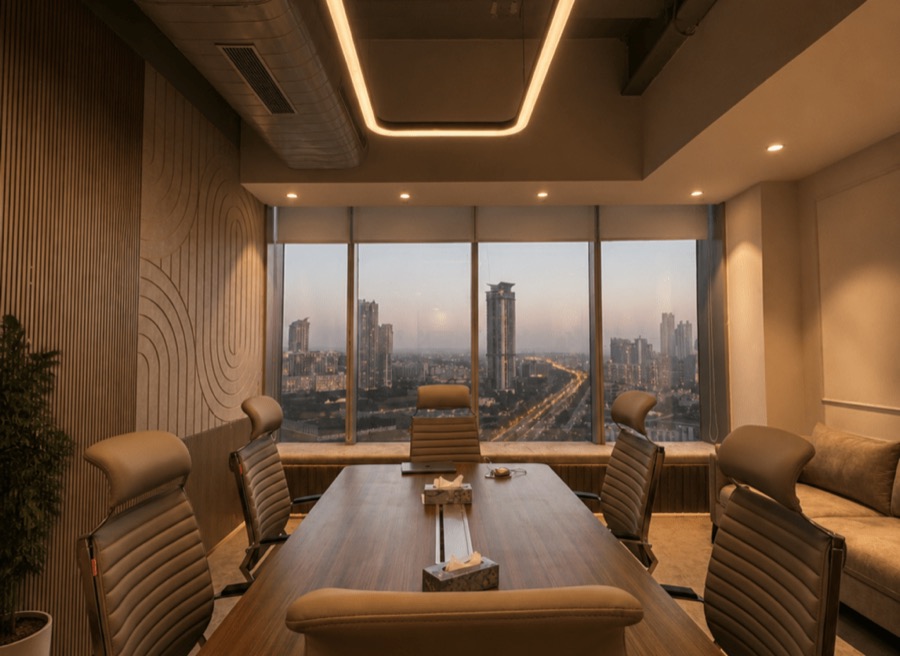
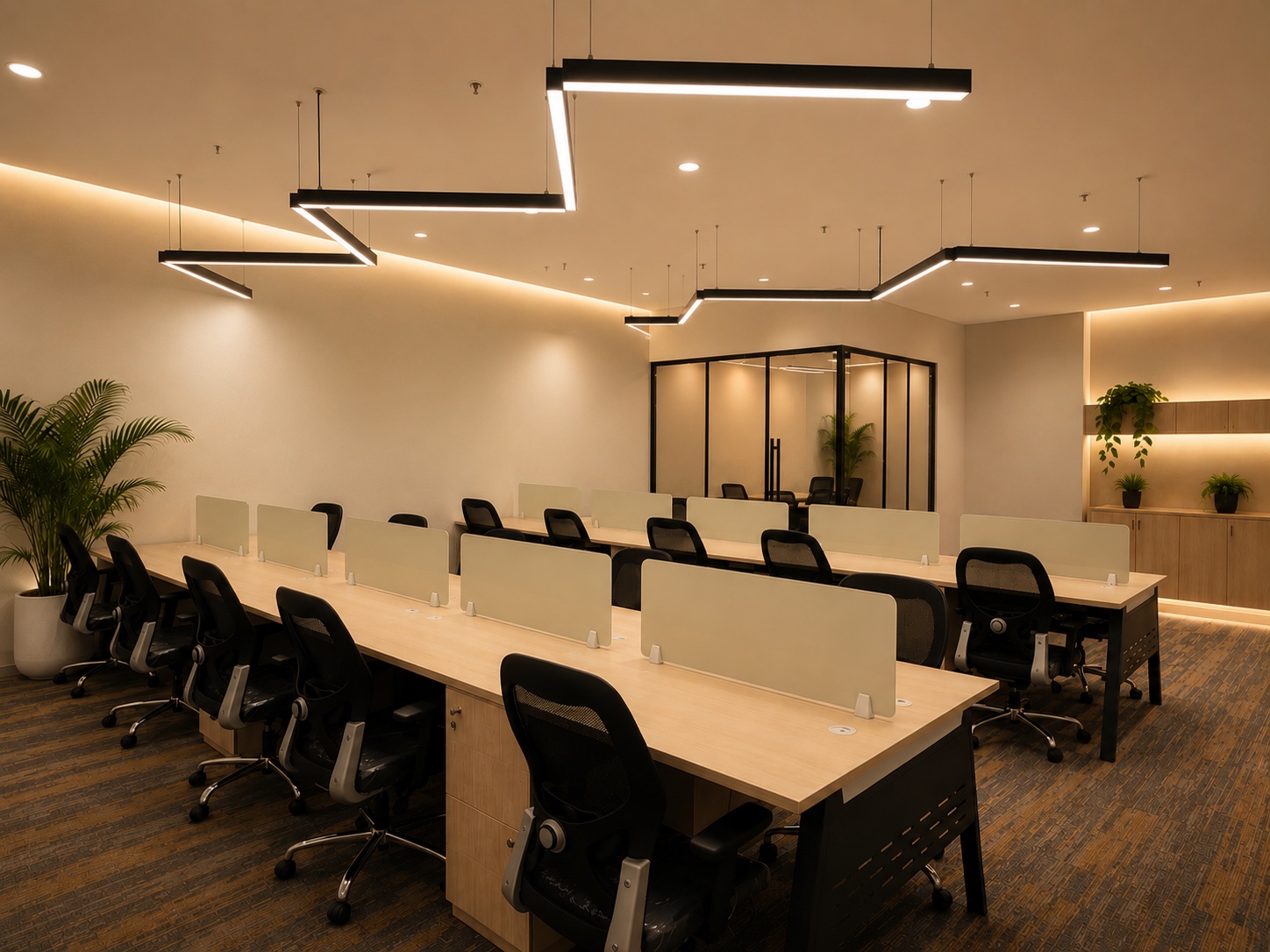
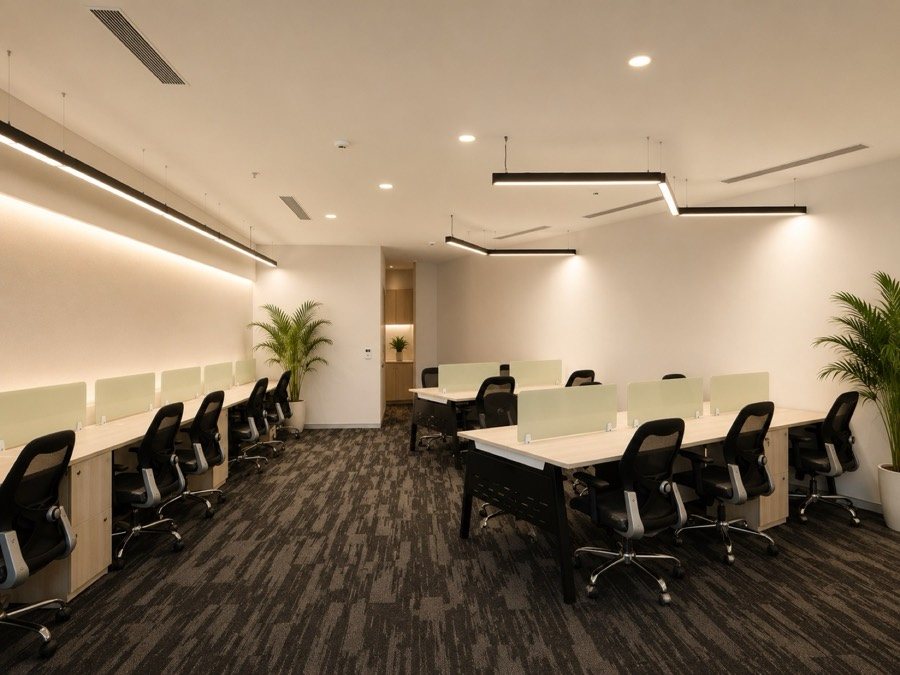
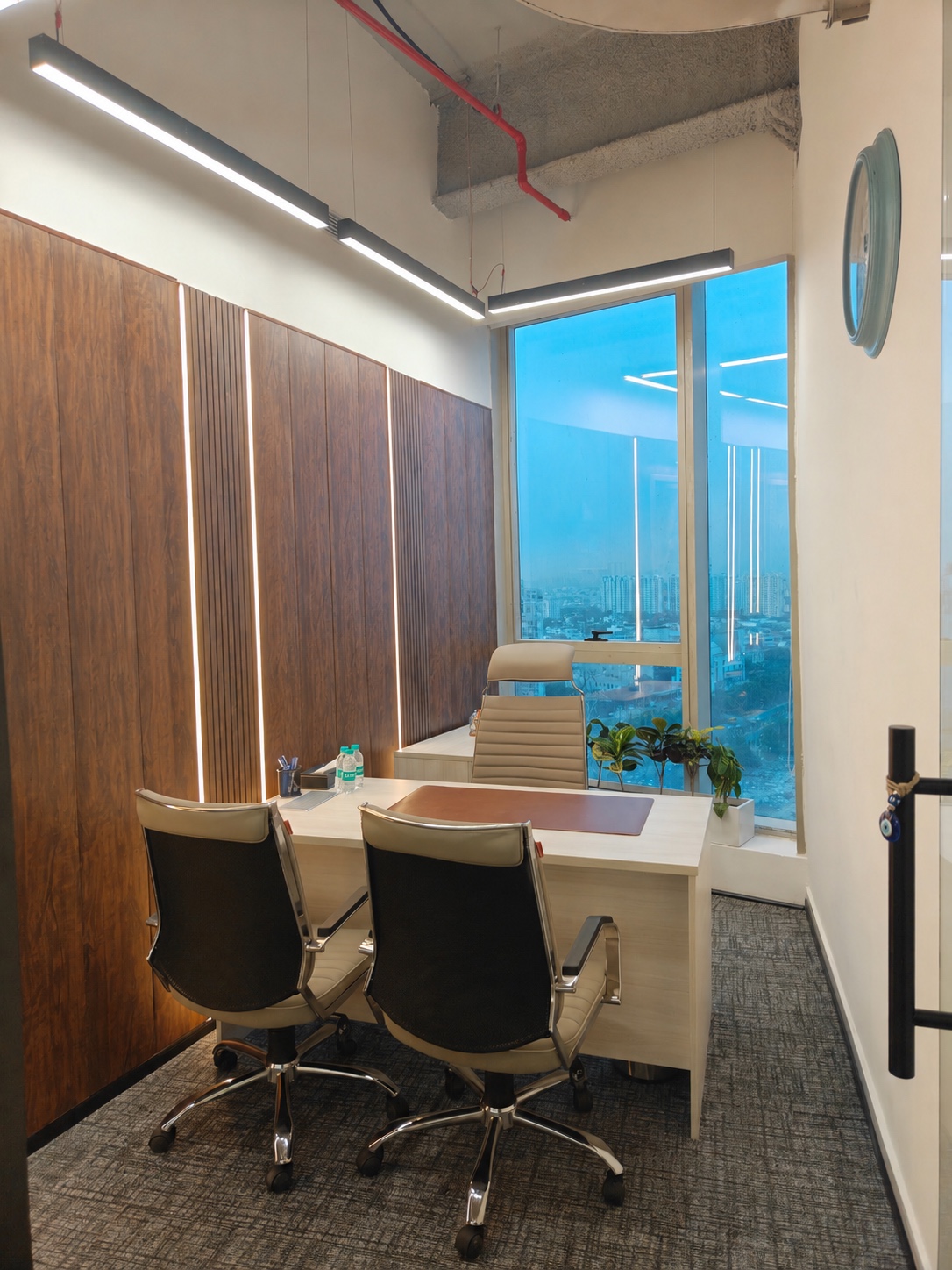
QAARYA’s managed offices sit in three of those towers: M3M International Financial Centre on Golf Course Extension Road, DLF Building 14 in Cyber City and AIPL Masterpiece on Golf Course Road. Each is built, furnished and serviced, with customisable layouts and attention to air, water and lighting quality, so the fit-out, furniture, IT and housekeeping lines in the table above are already handled. Pricing and terms depend on the space and the team; ask during a tour and put the answer next to your lease quote, line by line. If you are still working out what premium should mean for those lines, read what makes a managed office premium, or browse QAARYA’s office solutions.
Whichever way the sheet comes out, you will have made the decision on the whole cost, not the headline. That is the only comparison worth defending to a board.
Comparing a lease quote with a managed office in Gurugram? See QAARYA’s managed office solutions, or talk to the team on +91 96504 98482 for a like-for-like quote.
Frequently asked questions
Is a managed office cheaper than a traditional lease in Gurugram?
Per sq ft, a managed office usually costs more than bare rent. Per occupied seat over a 2–3 year term, it is often cheaper for teams under about 50 people, because the lease route adds a security deposit, fit-out capex, furniture, IT, maintenance, power backup, housekeeping and empty seats. Above about 100 stable seats over five years or more, a lease usually wins.
What does office fit-out cost per sq ft in India?
Cushman & Wakefield’s Asia Pacific Office Fit Out Cost Guide 2026 puts fit-out in Delhi NCR and most major Indian cities at roughly USD 65–69 per sq ft, with Mumbai at about USD 73. Actual cost depends on specification, size and how much of the base building is already in place.
What hidden costs come with an office lease in India?
Beyond rent, a lease typically adds a refundable security deposit of several months’ rent, fit-out and furniture capex, IT cabling and Wi-Fi, common area maintenance charges, power backup and electricity, housekeeping and security staff, insurance, periodic rent escalation, and restoration costs when you leave. GST applies to the rent as well.
Is GST charged on office rent and managed office fees?
Yes. Renting of commercial property is generally taxed at 18% GST, and managed office fees are also invoiced with GST. A GST-registered business using the space for taxable supplies can generally claim input tax credit, subject to conditions. Confirm the treatment for your business with your CA.
How long does it take to move into a leased office vs a managed office?
A bare-shell or warm-shell lease needs design, approvals, construction, furniture and IT before anyone can sit down, which commonly takes several months. A managed office is already built, furnished and connected, so a team can usually move in within days of signing.
When does a traditional lease make more financial sense than a managed office?
A traditional lease usually makes more sense when headcount is large and stable, typically 100 or more seats with a 5-year horizon or longer, when you need a bespoke layout or infrastructure no operator provides, and when you have the capital and team to manage fit-out and facilities yourself.