Premium Managed Offices

Key takeaways
- The best first function for a Nano GCC has a clear owner at headquarters, measurable output within two quarters, and work that a team of 10 to 30 senior people can own end to end.
- Technology still leads: ANSR’s chief executive estimates 60 to 70% of new GCC activity is in technology, with the rest across marketing, design, customer success, IT and procurement.
- Six functions fit well as a first team: engineering pods, data and analytics, finance and accounting operations, customer success, cybersecurity and SOC, and niche R&D.
- Each function asks different things of the office: security operations and finance need tighter access control; customer success and SOC need late or round-the-clock hours; engineering needs focus space and meeting rooms for stand-ups.
- Rule of thumb: plan one bookable meeting room per 10 to 12 people, more for functions that live on client or headquarters calls.
- Do not start with three functions at once. One mandate, one leader and one office you can occupy in days is how high-impact compact teams prove the case.
Once a company decides to open a Nano GCC, the next question arrives quickly: which work goes first? The tempting answer is “whatever is cheapest to move.” That answer builds a cost center. The better answer is “whatever a small senior team can own and prove fastest.” That builds a capability.
This post covers the six functions that most often work as a first Nano GCC team, a simple test for choosing between them, and what each one actually needs from the office. It assumes you already know what a Nano GCC is; if not, start with our explainer on what a Nano GCC is.
What makes a good first function
The best first function is the one with the shortest path from hiring to visible results. India’s capability centers now do far more than back-office work. Business Today, summarizing the Nasscom-Zinnov FY26 report, describes a shift from traditional delivery and support toward AI, engineering, product development, cybersecurity and enterprise transformation, and notes that India added more than 500 new GCCs over the last five years. The range of possible first functions is wide. The constraint is the size of a Nano GCC: roughly 10 to 50 people, built around high-impact compact teams.
That size rewards functions with four traits.
- A single owner at headquarters who wants the work done and will judge it.
- Measurable output within two quarters, such as features shipped, reports delivered, tickets resolved or alerts handled.
- Work that can be owned end to end by a small team, rather than a slice of a process that depends on five other groups.
- A senior talent pool in the chosen city deep enough to hire the first ten people quickly.
Six Nano GCC use cases that work
Technology remains the most common starting point. ANSR’s chief executive told Business Today that 60 to 70% of new GCC activity is in technology, with the remainder across marketing, design, customer success, IT and procurement. The six use cases below cover most first teams we see discussed.
1. Engineering pods
A team of 8 to 20 engineers that owns one product component, platform service or internal tool. It has the clearest output and the deepest talent pool. The risk is becoming a ticket-taking extension of headquarters; give it ownership of a component, not a backlog.
2. Data and analytics
A team that owns reporting, data engineering or modelling for one business unit. Senior analysts can produce results quickly, and the work is easy to measure. It handles sensitive data, so access control matters.
3. Finance and accounting operations
Reconciliations, close support, FP&A and reporting. These are well-defined processes with clear quality measures. They need a strong controls mindset and a private space, because the documents on screen are confidential.
4. Customer success and technical support
A team that extends coverage into hours other regions cannot staff cheaply, or that owns a customer segment end to end. It is visible to customers from week one, which is both its value and its risk.
5. Cybersecurity and SOC
A security operations or threat analysis capability. It suits a Nano GCC because a small, skilled team adds real coverage. It is also the most demanding function for the office: physical security, network separation and round-the-clock access.
6. Niche R&D and AI
A small team working on one technical problem, such as a model, a simulation or a prototype. Output is harder to measure on a quarterly cycle, so this works best when headquarters has a specific problem and patience.
How to pick the first function: a four-question test
Score each candidate function from one to three on each question. The highest total usually wins; a score of one on the first question rules a function out.
- Is there a named sponsor at headquarters? No sponsor means no one will defend the team when budgets tighten.
- Can results be shown within two quarters? A Nano GCC needs an early proof point to earn its second team.
- Can 10 to 30 people own it end to end? If the work depends on hand-offs to many groups at headquarters, it will move slowly.
- Can you hire the first ten senior people within three months? Check the talent market in the city you are considering before you commit.
Gurugram scores well on the last question for finance, analytics, operations and technology roles. Our post on why Gurugram is one of India’s strongest GCC destinations sets out the talent and connectivity case.
What each function needs from the office
Most office checklists for capability centers treat every team the same. They are not the same. A finance team and a SOC team in the same building need different things, and a Nano GCC has no spare space to absorb a poor fit.
| Function | Security level | Hours | Meeting rooms and space |
|---|---|---|---|
| Engineering pod | Standard: lockable office, badge access | Daytime, with evening overlap for headquarters calls | Daily stand-up room, focus space, one room per 10 to 12 people |
| Data and analytics | Elevated: controlled access, clean-desk policy | Daytime, some evening overlap | Rooms with screens for reviews; phone booths |
| Finance and accounting ops | Elevated: private room, controlled printing and shredding | Daytime, peaks at month-end close | Small rooms for confidential calls |
| Customer success and support | Standard to elevated, depending on customer data | Extended or shift-based to cover other regions | Phone booths and quiet zones; fewer large rooms |
| Cybersecurity and SOC | High: separate lockable room, strict visitor control | Often round the clock | Dedicated operations room; a private briefing room |
| Niche R&D and AI | Elevated, to protect IP | Flexible | Whiteboard rooms, space for visiting researchers |
The security column describes common expectations, not a standard. The parent’s own information-security policy applies, and its CISO will decide what is acceptable. For teams handling personal data, note that India notified the Digital Personal Data Protection Rules in November 2025, with core obligations such as security safeguards and breach notification coming into force 18 months later. Confirm with your lawyer how they apply to your work.
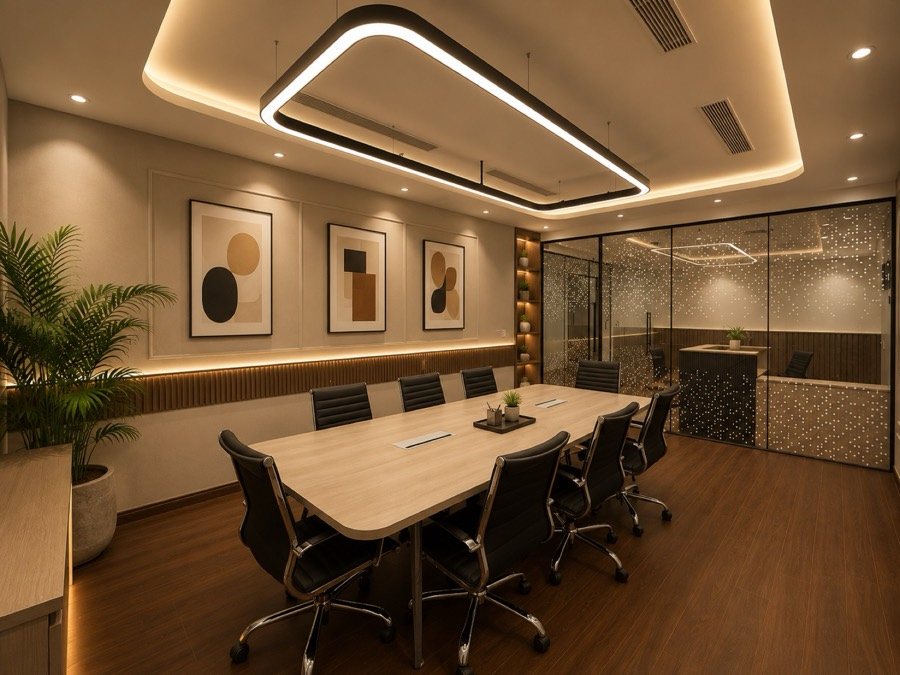
Three office mistakes by function
- Putting a SOC or finance team on an open floor. Fast to arrange, but it will fail the parent’s security review.
- Choosing building hours that end at 7 PM for a team whose real working day includes US or European overlap.
- Under-booking meeting rooms for engineering and analytics teams that spend hours each day on calls with headquarters.
The cost angle: fit the office to the function, not the headcount
A Nano GCC’s office budget is small, but mistakes in it are large relative to the total. The costliest mistakes are not about rent. They are a move forced by the wrong security setup, a second room added in a hurry for a SOC, or lost productivity when a team cannot get a meeting room for its daily headquarters call.
The cleaner approach is to specify the office by function from the start: which rooms must lock, which hours must be covered, how many meeting rooms the team will actually use. Then price that against a single monthly cost rather than rent plus fit-out plus services. A managed private office lets a Nano GCC avoid capex and add space when the second function arrives. The market is moving that way: Cushman & Wakefield reports that GCCs took 44% of all flexible workspace seats leased in India in H1 2026.
Sequencing: what comes after the first function
A Nano GCC that succeeds will be asked for more. The second function should be chosen as carefully as the first, and the best candidates usually sit next to the first team’s work rather than in a new area entirely.
- After an engineering pod: quality engineering, DevOps or a second product component. The same leader can oversee them, and the hiring network overlaps.
- After data and analytics: data engineering or a reporting team for a second business unit, building on the platform the first team created.
- After finance operations: procurement support, FP&A or audit support, which reuse the same controls and the same private-room setup.
- After customer success: technical support tiers or onboarding, which share hours and tooling.
- After a SOC: identity and access management or vulnerability management, which strengthen the same security mandate.
Adjacent functions share leadership, tools and office requirements, so the second team costs less to add and is more likely to succeed. A jump to an unrelated function, such as adding a finance team to an engineering pod, is effectively starting a second Nano GCC under the same roof. That can work, but it needs its own leader and its own sponsor at headquarters.
How the office should change at the second function
When the second team arrives, revisit the office specification rather than simply adding desks. Check whether the new function needs a different security level, whether its hours differ, and whether the meeting-room ratio still holds. Two teams of 15 sharing a single meeting room is a common pinch point. If the building lets you add cabins and rooms in the same address, the change is a configuration update, not a move.
A useful rule: re-specify the office every time the center adds a function or grows by about half. It takes an afternoon and prevents most of the expensive surprises.
Where to house the first team in Gurugram
The corridor choice follows the function. A customer-facing or finance team that hosts headquarters visitors often values the established address of DLF Building 14 in Cyber City, about 10 km from IGI Airport with Rapid Metro to the Yellow Line and Cyber Hub next door. An engineering or analytics team hiring from the newer southern sectors may prefer M3M IFC on Golf Course Extension Road. A team with sustainability commitments, or one that relies on metro commuters, may suit AIPL Masterpiece on Golf Course Road, an IGBC Platinum green building with the Sector 53–54 Rapid Metro station at its door.
Across all three, QAARYA offers fit-out-ready private cabins that most teams move into within a few days of signing, access Monday to Saturday from 9 AM to 2 AM with 24x7 access for members, layout and branding tailored to the headquarters brand, and configurations that can be adjusted as a second function arrives. The Nano GCC page explains the setup. Specific security arrangements, availability and pricing depend on the function and configuration, so ask during a tour.
When the first team has proved its mandate, the question becomes how and when to grow. Our comparison of Nano GCC vs full-scale GCC sets out the triggers. Until then, keep it simple: one function, one leader, one office that fits the work.
Choosing the first team for your Nano GCC? See how QAARYA sets up offices for Nano GCCs in Gurugram, or talk to the team on +91 96504 98482.
Frequently asked questions
Which function should a Nano GCC start with?
A Nano GCC should start with the function that has a clear owner at headquarters, measurable output within about two quarters, and work that 10 to 30 senior people can own end to end. For many companies that is an engineering pod or a data and analytics team, but finance operations, customer success and security operations also work well.
What are the most common Nano GCC use cases?
Common Nano GCC use cases are engineering pods that own a product component, data and analytics teams, finance and accounting operations, customer success and technical support, cybersecurity and security operations centers, and niche research and development or AI teams.
What office does a security operations team in a Nano GCC need?
A security operations team needs a lockable, access-controlled private room, controlled visitor access, a reliable network the parent can secure, and access around the clock if it covers overnight shifts. It is the most demanding Nano GCC function in terms of physical security.
Can a Nano GCC run more than one function?
Yes, but it works best to start with one and add a second only after the first has proved its mandate. Running several functions from day one spreads a small leadership team thin and makes success harder to measure.
Do Nano GCC teams need to work US or European hours?
Many do for part of the day. Teams that collaborate closely with headquarters, such as engineering, customer success and security operations, often need evening overlap or shifts, so the office must offer access hours that cover them.
Do data protection rules affect which functions a Nano GCC can take on?
They affect how the work is done rather than whether it can be done. India notified the Digital Personal Data Protection Rules in November 2025, with core obligations such as security safeguards and breach notification phasing in over 18 months, so teams handling personal data should take legal advice on their controls.