Premium Managed Offices
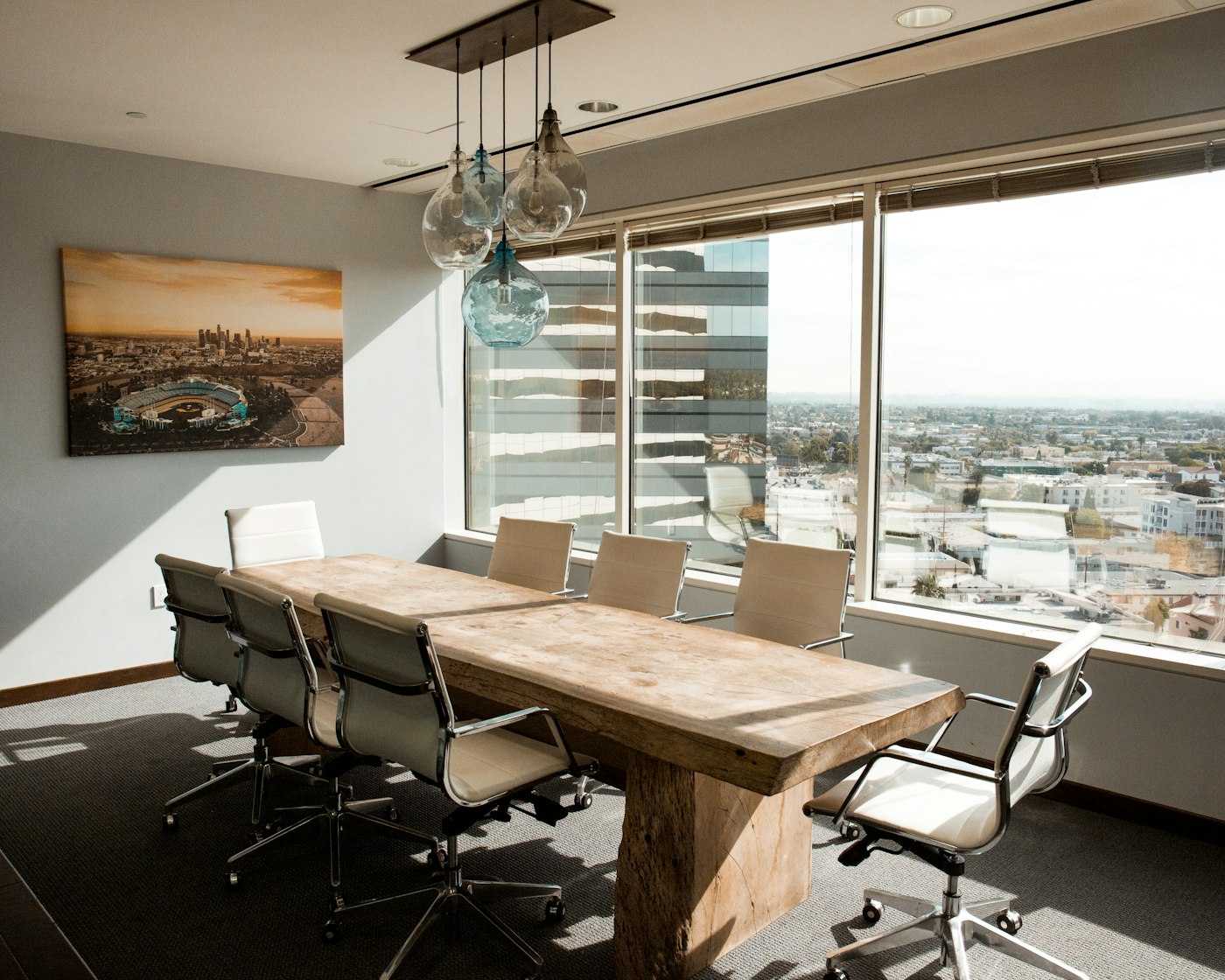
A founder we know once lost a renewal — a real one, six figures — because the client showed up fifteen minutes early and had to wait in a hallway next to the pantry while a room got tidied up. The pitch itself went fine. The client signed with someone else two weeks later anyway. Nobody put "waited in a hallway" on the decision memo, but it was in the room the whole time.
Meeting rooms get treated as infrastructure — a box to tick, a line item on the office tour. They're actually one of the highest-leverage, least-discussed variables in whether a deal, a hire, or a renewal goes your way. Not because a nice room closes a bad pitch, but because a bad room adds friction to a decision that was already going to be close, and most B2B decisions are closer than the winning side likes to admit.
The room talks before anyone in it does
Clients form an impression of an organization within the first sixty seconds of entering its space, and that impression anchors how they interpret everything said afterward. This isn't a design platitude — it's how judgment actually works. A prospect who walks into a room with tangled cables, a whiteboard covered in someone else's half-erased notes, and a broken blind is primed to hear "we're not quite in control here," and no slide in the deck fully undoes that priming. A prospect who walks into a clean, well-lit room with working AV and water already on the table is primed to hear "these people have their act together" — and that primes them to trust the numbers on the slide that follows.
This matters more, not less, as deal sizes grow. A ₹50,000 purchase might survive a scrappy room. A ₹50 lakh annual contract, the kind that gets signed after multiple stakeholders sit in that same room over several meetings, accumulates small negative signals until they add up to real doubt about whether the vendor can actually deliver at scale.
Availability is a silent deal-killer
Quality gets the attention, but availability quietly does more damage. A growing team that's outgrown its meeting room count doesn't usually notice the cost directly — it shows up as a string of smaller failures that never get connected to each other. A client call gets pushed fifteen minutes because the only open room is still occupied. An investor update happens at a hot desk because every room is booked with internal syncs. A candidate interview gets rescheduled twice because the hiring manager couldn't find a private slot, and the candidate quietly accepts another offer while waiting.
None of these look like a real estate problem from the inside. They look like scheduling bad luck. But scheduling bad luck that happens every week, for months, is not luck — it's a capacity shortfall, and it's costing more in lost deals, slower hiring, and founder time spent room-hunting than the incremental cost of the space that would have fixed it.
A rough ratio worth checking your team against
- One bookable meeting room per 10-12 people is a reasonable baseline for teams with a normal mix of internal syncs, client calls, and interviews.
- Client-facing or sales-heavy teams should lean toward the higher end — closer to one room per 8 people — since external meetings can't flex the way internal ones can.
- Hiring-heavy stretches (a funding round, a big expansion) temporarily push the ratio further; interviews compete directly with client slots for the same rooms unless capacity is planned ahead of the hiring push.
Not every room needs to be the best room
The mistake growing teams make once they do invest in meeting space is treating every room identically — same finish, same booking priority, same AV setup — and then letting whoever books first take whatever's free. That means the room used for a five-minute stand-up and the room used to close a six-figure renewal are functionally interchangeable, which means the client sometimes gets whichever one is left over.
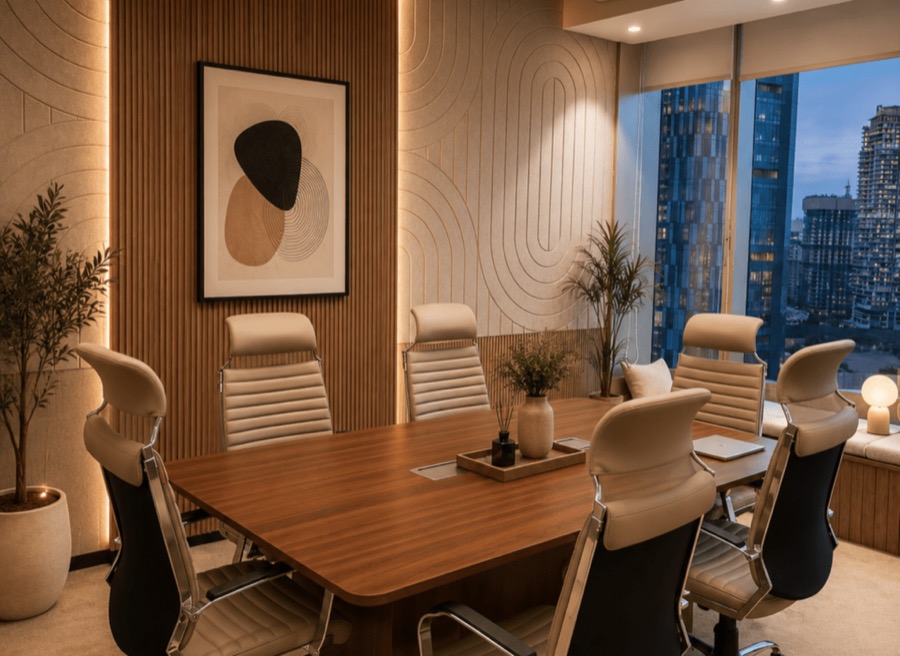
A better approach tiers rooms deliberately. A small huddle space for quick internal syncs doesn't need premium finishes or reliable AV — it needs to exist so it absorbs low-stakes bookings. One or two rooms, meanwhile, should be explicitly reserved as the "client rooms": best natural light, most reliable video conferencing, closest to reception, and — critically — protected from being booked for internal use during business hours. That protection is the part most teams skip, and it's the part that actually prevents the fifteen-minute-hallway-wait problem from happening in the first place.
What a client room should never be missing
- Working video conferencing, tested that morning. A hybrid stakeholder dropping off a call because the room's AV glitched is a worse impression than not having video at all.
- Natural light or warm, non-fluorescent lighting. Harsh overhead lighting reads as utilitarian in a way that undermines a premium pitch, even a strong one.
- Sound isolation. A confidentiality conversation or a hard negotiation shouldn't be audible from the corridor — this is trust, not just comfort.
- A five-minute buffer before and after every booking. The single easiest fix for the "previous meeting ran over" problem, and almost nobody builds it into their booking system by default.
What this looks like inside a managed building
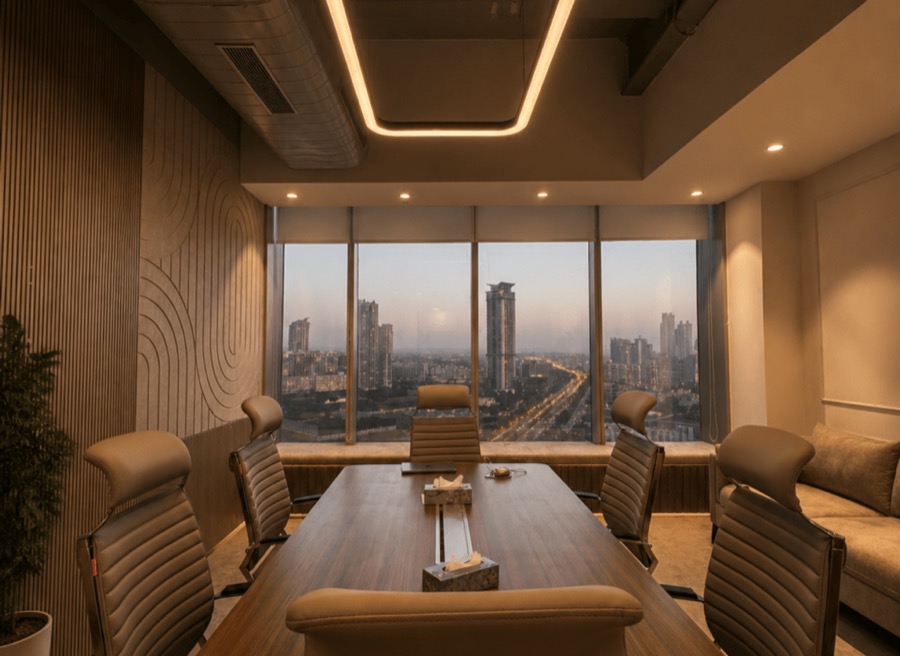
This is precisely the problem a managed office structure is built to remove. At Qaarya's locations across M3M IFC, DLF Building 14, and AIPL Masterpiece, meeting rooms sit outside any single tenant's day-to-day scramble — they're serviced, tested, and available on a booking system that isn't competing with twenty other teams' internal standups, the way a shared coworking floor's room count often is. A tenant with a client walking in at 3pm doesn't need to hope the room's free; the room is part of what's already been planned for their seat count.
We've seen tenants at AIPL Masterpiece specifically request a standing "client room" reservation for weekday afternoons — the exact tiering described above — precisely because it removes the daily coin-flip of whether the good room will be free when a decision-maker is in the building. It's a small operational choice that pays for itself the first time it prevents an avoidable bad impression.
The cost math nobody runs
Founders will negotiate hard over a meeting room's per-hour rate card but rarely calculate what a lost or delayed deal actually costs against it. Take a simple case: a sales team closes four enterprise deals a quarter at an average annual contract value of ₹18 lakh. If poor room availability or quality contributes to even one deal per year slipping to a competitor — a conservative estimate given how often "we felt more comfortable with the other vendor" gets cited as feedback — that's ₹18 lakh in lost annual revenue against a meeting-room shortfall that likely costs a fraction of that to fix properly.
The same math applies on the hiring side. A strong candidate who gets bounced between two rescheduled interviews because no private room was available doesn't always say why they took another offer instead — but delayed, disorganized interview logistics is a consistently cited reason candidates give for withdrawing from a process, especially at the senior level where they have other options.
A quick audit to run this week
- Count how many client meetings in the last month started late, got moved, or happened in a non-ideal room. More than two or three is a signal, not a coincidence.
- Ask your sales team directly whether they've ever felt embarrassed by the room a client ended up in. They'll usually have an answer faster than you'd expect.
- Check your booking system's utilization for your best room specifically. If it's near-constantly booked by internal meetings, your client-facing capacity is effectively zero during peak hours.
- Walk your own meeting rooms as if you were the client. Sit in the chair they'd sit in. Look at what they'd look at. It's a fast way to notice what a daily user stops seeing.
The fix is rarely "build more rooms"
It's tempting to read all this as an argument for adding meeting room square footage, and sometimes that's the right call. But more often, the fix is a mix of protection (reserving the best room from internal use during client hours), tiering (not every room needs to be the best room), and buffer discipline (booking gaps that prevent overruns from cascading). These cost nothing beyond a policy decision and a booking-system rule. They fix the majority of the friction described above without a single new square foot.
The square-footage fix becomes necessary only when the math from the audit above shows a genuine capacity shortfall — not enough rooms at any given hour, regardless of how well they're managed. That's the point at which it's worth evaluating whether your current space, wherever it is, actually has room to add capacity, or whether it's time to look at a managed office built with client-facing meeting space accounted for from the start.
None of this requires a design overhaul or a bigger lease to start fixing. It requires walking your own rooms with a client's eyes, tiering what you already have, and protecting the one or two rooms that matter most from becoming default overflow space. If you want to see what client-facing meeting space looks like when it's planned for from day one rather than retrofitted under pressure, come look at Qaarya's meeting rooms and private suites across our Gurugram locations.