Premium Managed Offices
Sales teams spend enormous effort perfecting the pitch — the deck, the demo, the talk track, the objection handling. Almost none of that effort goes into the fifteen minutes before the pitch even starts: the drive to the building, the walk through the lobby, the wait in the meeting room, the small talk while someone finds a working HDMI cable. That window shapes how the entire meeting is received, and most companies have no idea how badly theirs is performing in it.
This isn't a design opinion. It's a well-documented pattern in how people form judgments: first impressions anchor subsequent interpretation. A client who walks into a chaotic, dated, or poorly run office arrives at the actual pitch already primed to notice flaws, ask harder questions, and negotiate harder on price. A client who walks into a space that feels considered and well-run arrives primed to trust the numbers in the deck a little more, ask fewer defensive questions, and move faster to a decision. The pitch content might be identical. The outcome frequently isn't.
What "bad first impression" actually looks like in practice
It rarely looks dramatic. Nobody loses a deal because the office was visibly falling apart — most Gurugram offices, even mediocre ones, clear that low bar. The damage is subtler and cumulative: a security desk that takes four minutes and two phone calls to issue a visitor pass, a lobby that smells faintly of the building's kitchen exhaust, a lift wait long enough that the client mentions it, a meeting room booked but occupied by someone else, a conference call dropping twice because the room's wifi is oversubscribed. None of these individually derails a deal. Stacked together across a fifteen-minute arrival window, they tell a client something about how the company operates — and it's rarely the message intended.
The insidious part is that internal teams stop noticing these frictions entirely. Staff who walk the same lobby and take the same lift five days a week develop a kind of blindness to friction points that a first-time visitor experiences at full intensity. This is exactly why an honest external audit of the arrival experience — ideally from someone who's never visited before — surfaces problems that nobody currently working in the space would think to flag.
The specific moments that matter most
1. The approach and arrival
Before a client even reaches your floor, the building itself is making an argument. A Grade A tower with a manned lobby, visible security, and a professional check-in process signals stability and seriousness before a single word is exchanged. A building with an unclear entrance, a confusing visitor process, or a run-down common area undercuts that signal regardless of how polished the office itself is two floors up. This is one of the quieter reasons address and building quality matter disproportionately for client-facing businesses — the building is doing pre-sell work the company itself can't fully control once a client is already in the lobby.
2. The wait
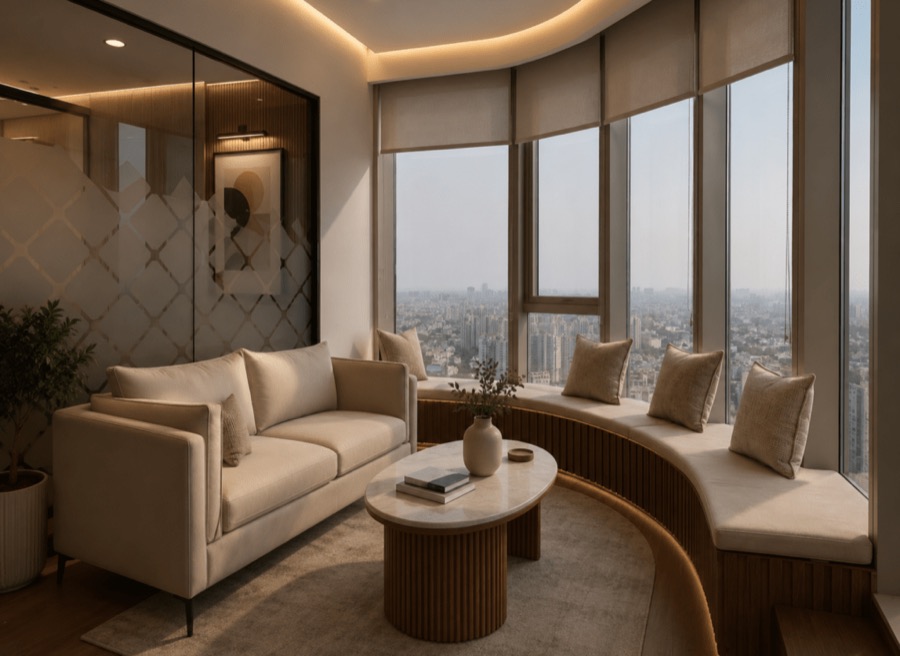
Every client meeting involves some wait — for a badge, for an escort, for the previous meeting to clear the room. How that wait is handled says more about operational competence than almost any other single touchpoint. A comfortable seating area, a offered glass of water without having to ask, a receptionist who knows the visitor's name and company before they've finished introducing themselves — these read as small things and function as large signals. Conversely, a wait spent standing awkwardly near a door because there's nowhere to sit reads as disorganization, even if the actual meeting that follows is flawless.
3. The room itself
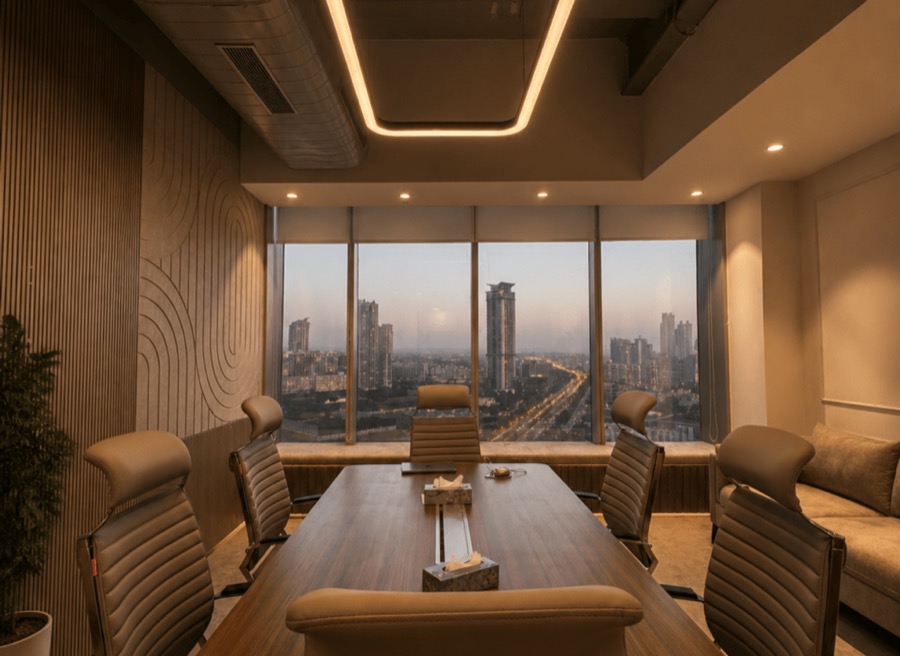
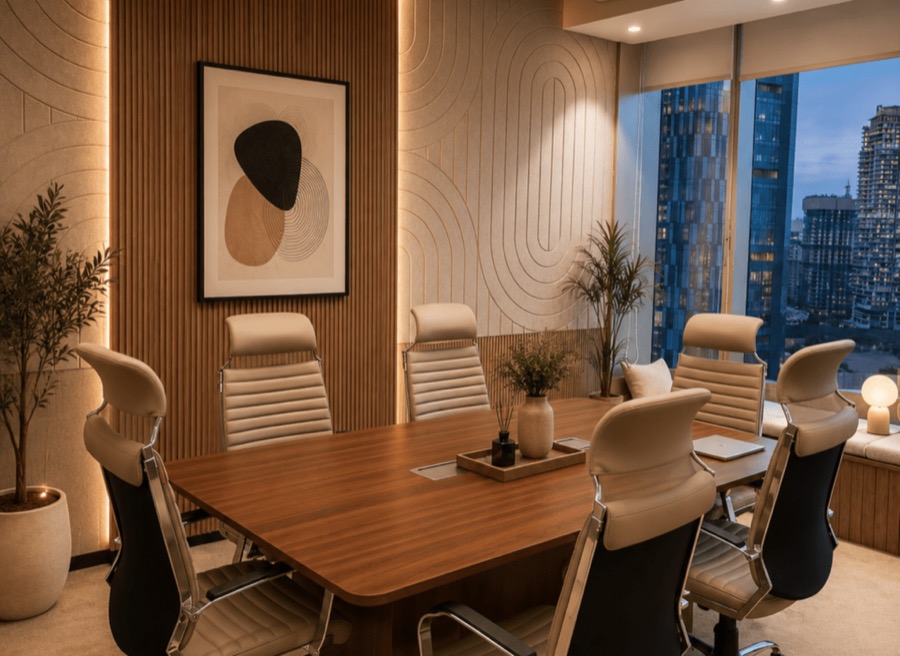
Meeting rooms are where the most direct signal gets sent, because this is the one space a client spends real, sustained time in. A room with visible cable clutter, a whiteboard covered in someone else's half-erased notes, uncomfortable chairs, or acoustics so poor that a conference call participant keeps saying "sorry, can you repeat that" actively degrades the pitch happening inside it — not because the client consciously marks it down, but because attention that should be going to the content is instead going, at a low background level, to processing the room's flaws.
Why this compounds for growing companies specifically
Early-stage and mid-sized companies are disproportionately exposed to this problem for a structural reason: they're the ones most often meeting prospective clients, investors, and partners for the first time, in person, in a space they don't fully control or haven't invested heavily in. A large, established enterprise can absorb a mediocre regional office because its brand and track record precede the visit. A growing company doesn't have that cushion — the office visit often is the primary data point a new counterpart has to evaluate credibility, alongside whatever they found in a five-minute pre-meeting search.
This is also why the calculation shifts as a company scales past its first few client meetings a month into dozens. At low volume, an occasional awkward office visit is a rounding error. At higher volume — say, a services firm running fifteen to twenty client or prospect visits a month — even a modest per-meeting conversion drag from a subpar arrival experience adds up to a measurable number of lost or delayed deals over a year, in a way that's genuinely difficult to attribute after the fact because no client ever says "I hesitated because your lobby smelled like the kitchen."
A short audit any team can run this week
- Walk your own arrival path as a stranger would — from the parking area or drop-off point, through security, to the meeting room, timing every step.
- Ask a colleague from another office to visit unannounced and report back on anything that felt off, confusing, or slow.
- Sit in your primary client meeting room during a real call and note every technical or comfort issue that surfaces.
- Review the last five client visits for any friction anyone mentioned in passing — a badge delay, a wrong room booking — and treat each as a signal, not a one-off.
Why the building and the operator both matter here
A company can control its own meeting room presentation to some degree — tidy cables, working AV, a clean whiteboard. It has almost no control over the lobby, the lift wait, or the general building upkeep unless the building itself is chosen deliberately with this in mind. That's a large part of why growing teams weigh building quality so heavily when choosing a managed office, and why an address with a genuinely professional front-of-house experience — like the reception and lobby standards we maintain across M3M IFC, AIPL Masterpiece, and DLF Building 14 — functions as a real, if invisible, sales asset rather than a cosmetic nice-to-have.
The teams that get this right tend to treat the arrival experience with the same rigor they apply to the pitch deck: reviewed periodically, tested from a first-time visitor's perspective, and fixed the moment a friction point is identified rather than left to accumulate. It's a smaller effort than most sales-enablement initiatives and, for a client-facing business, arguably a higher-leverage one — because it affects every single meeting, not just the ones where the deck happens to land well.
The investor-meeting version of this problem
Everything above applies with even higher stakes to fundraising conversations, where the office visit often functions as informal diligence whether or not anyone calls it that. An investor walking through a portfolio company's space before or after a pitch meeting is, consciously or not, forming an impression about operational discipline, growth trajectory, and whether the team's stated headcount and stage match what the space suggests. A ten-person "Series A" team working out of a visibly empty, oversized floor sends an unintended signal about burn and planning. A twenty-five person team crammed into a space clearly built for twelve sends a different, but equally unhelpful, signal about growth outpacing infrastructure decisions.
This is a specific, practical reason growing companies benefit from managed office arrangements that can flex with headcount rather than locking into a fixed footprint years ahead of the team that will eventually fill it. A space that looks appropriately sized for the team currently in it, with visible room to grow rather than either emptiness or overcrowding, reads as a company that's planned its growth deliberately — which is exactly the impression worth making in a room full of people deciding whether to write a check.
What client-facing teams get wrong about fixing this
The most common mistake, once a company does decide to address its arrival experience, is over-indexing on decor at the expense of operations. A beautifully designed lobby with a receptionist who takes four minutes to locate a visitor's name in the system fixes nothing — the operational friction is what actually registers with a client, far more than whether the reception desk is marble or laminate. The fix that moves the needle is almost always procedural before it's aesthetic: a clear visitor pre-registration process, a named point of contact who's notified the moment a guest arrives, water and seating ready before anyone has to ask, and a meeting room that's tested and ready five minutes before the scheduled time rather than being unlocked as the client walks in.
A second common mistake is treating this as a one-time fix rather than an ongoing standard. Facilities and reception staff turn over, processes drift, and a system that worked well six months ago quietly degrades without anyone noticing internally — again, because the people running the process every day stop seeing its rough edges. Building a habit of periodic, honest review — quarterly at minimum, more often for a business running frequent client visits — keeps the standard from eroding invisibly.
Where responsibility usually falls through the cracks
- Nobody owns the end-to-end arrival experience. Reception is often outsourced to building management, meeting rooms are booked by an admin, and AV is IT's problem — meaning no single person notices when the pieces don't add up to a coherent experience.
- Visitor management gets treated as a security function only, when it's equally a first-impression function that deserves the same scrutiny as anything customer-facing.
- Feedback rarely reaches the right person. A client who mentions a minor frustration to their account manager rarely has that comment routed back to whoever could actually fix the underlying process.
None of this argues for spending lavishly on décor. It argues for treating the fifteen minutes before the pitch as part of the pitch — auditing it as deliberately as the deck itself, assigning clear ownership for the handful of moments that make it up, and fixing the small, unglamorous frictions that quietly shape how receptive a client is by the time anyone actually opens a laptop.