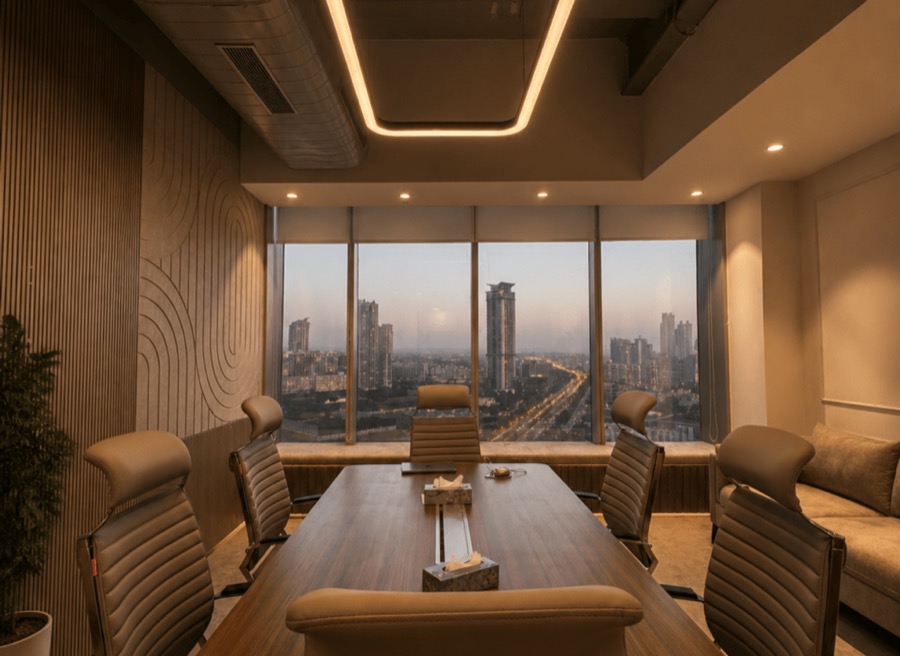
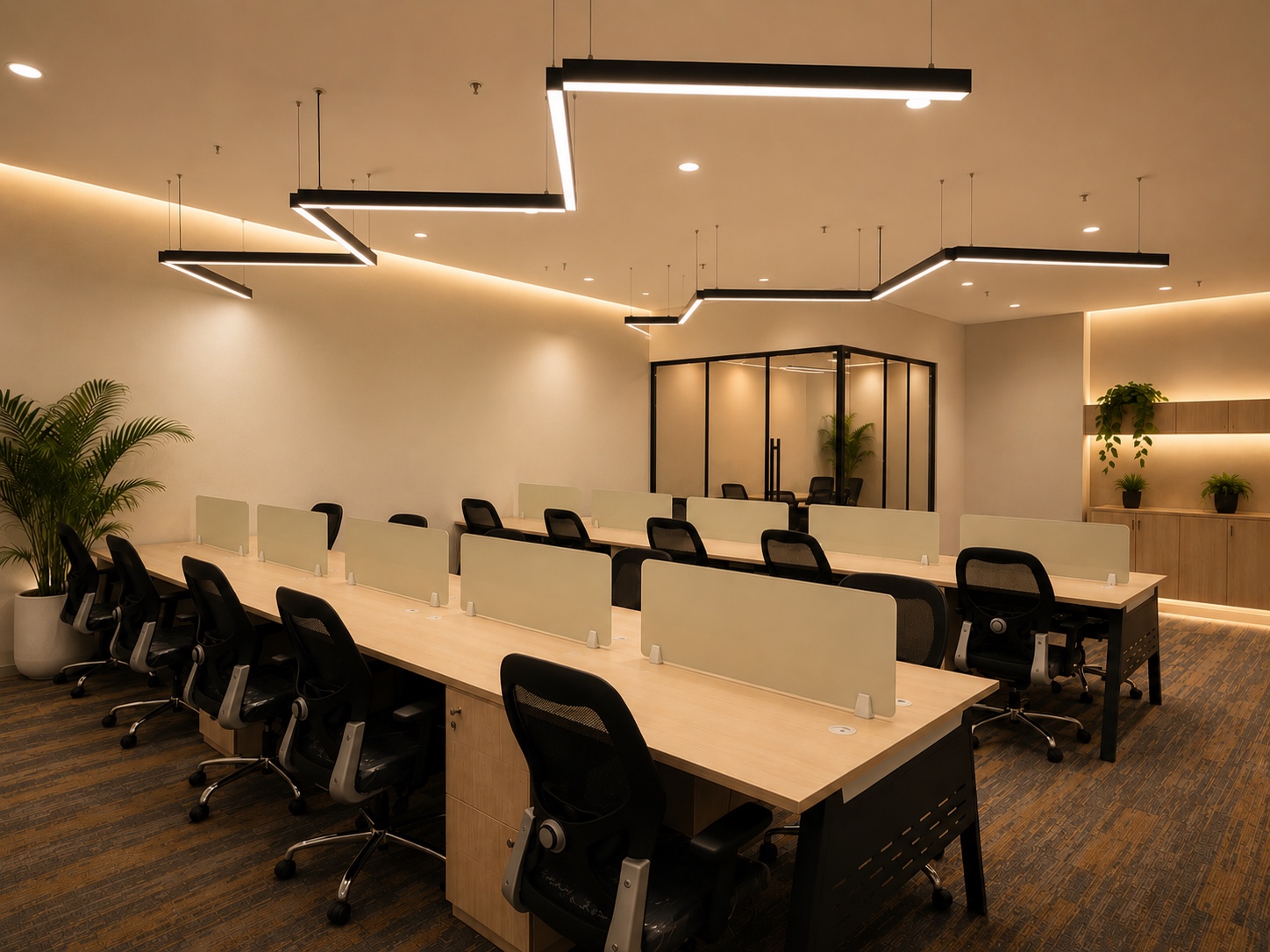
Premium Managed Offices
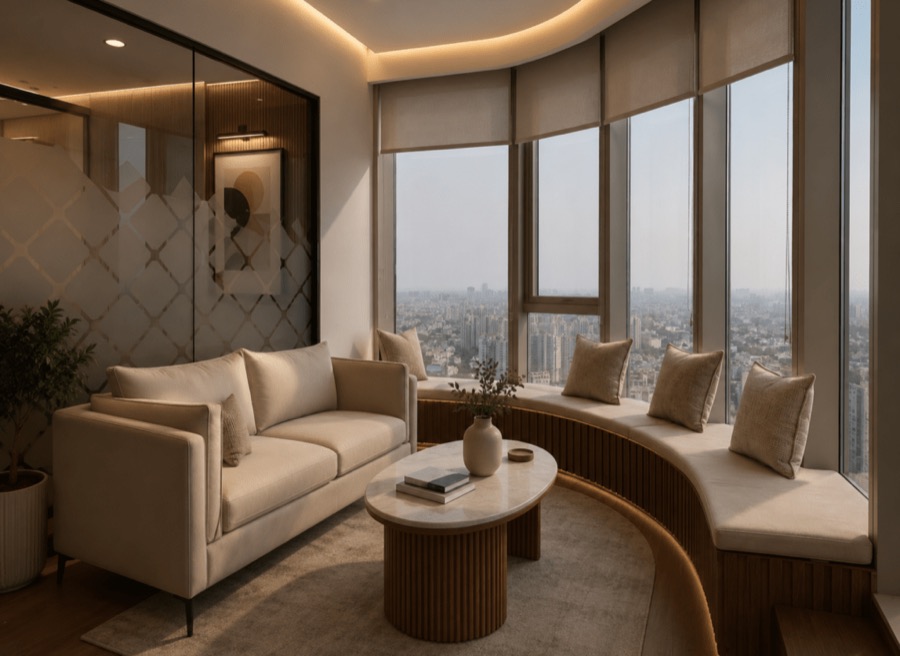
Ping pong tables, cold brew on tap, and beanbag corners are easy for any office to copy — they're a line item and a weekend of setup. Genuinely clean, monitored, well-ventilated air is not something a competitor can replicate by placing an order. It requires engineering decisions made at the building and fit-out stage, ongoing monitoring, and a level of investment that most offices simply skip because nobody can see air quality the way they can see a lounge. That invisibility is exactly why it's become one of the more meaningful differentiators between a genuinely well-run office and one that only looks the part.
What the research actually shows
The most widely cited study on this topic, a 2015 Harvard T.H. Chan School of Public Health collaboration with SUNY Upstate and Syracuse University, tested cognitive performance of office workers under varying levels of CO₂ and volatile organic compound (VOC) concentration in an otherwise identical simulated office environment. The results were stark: cognitive scores across categories including information usage, strategy, and crisis response dropped significantly as CO₂ levels rose from roughly 550 parts per million — comparable to good outdoor air — to levels of 1,400 ppm, a concentration not unusual in a poorly ventilated, fully occupied conference room after an hour-long meeting. Crisis-response scores in particular fell by more than half at the higher concentration.
This isn't a fringe or contested finding. Follow-up studies, including field research conducted across real commercial office buildings rather than simulated environments, have consistently found the same directional effect: elevated indoor CO₂ and poor ventilation correlate with measurably reduced cognitive performance, more reported headaches, and higher rates of the vague afternoon fatigue that gets blamed on everything except the room itself. The mechanism is straightforward — CO₂ buildup in a poorly ventilated space is a direct proxy for how much exhaled air is being rebreathed, and rebreathed air carries elevated CO₂ that measurably affects alertness well before it reaches levels anyone would describe as dangerous.
Why Gurugram specifically makes this harder to ignore
Outdoor air quality in the Delhi NCR region, including Gurugram, swings through a wide range across the year, with particulate matter (PM2.5) levels during the worst weeks of winter regularly exceeding safe thresholds by a large multiple. A building that simply draws in outdoor air without meaningful filtration is importing that variability directly into the workplace — meaning indoor air quality on a bad pollution day can end up nearly as compromised as the street outside, regardless of how well-designed the office otherwise looks.
This makes independent, engineered filtration a materially bigger factor for a Gurugram office than it would be in a city with more consistently clean outdoor air. HEPA or equivalent filtration stages, fresh-air exchange rates that go beyond bare code minimums, and continuous monitoring rather than a one-time compliance check are the difference between an office that's protected from the city's air quality swings and one that simply reflects them, floor by floor, week by week.
What "good" actually looks like, in numbers
Air quality is one of the few workplace factors that can be measured precisely rather than debated subjectively, which makes it unusually easy to hold an office accountable to a standard rather than an impression. The benchmarks worth asking about:
- CO₂ concentration under roughly 800–1000 ppm during full occupancy, measured continuously rather than spot-checked once during a slow period.
- PM2.5 filtration capable of maintaining indoor particulate levels meaningfully below outdoor levels during high-pollution periods, not merely "filtered" as a general claim.
- Fresh-air exchange rates that exceed the bare regulatory minimum, since code compliance is a floor, not a target.
- Humidity maintained in a comfortable range (roughly 40–60%), since both very dry and very humid air affect comfort and, at the extremes, respiratory irritation.
- Real-time monitoring with visible or reportable data, rather than a static claim made once at fit-out and never verified again.
Why this rarely shows up in how offices market themselves
Air quality is a hard sell precisely because it's invisible in a walkthrough. A prospective tenant touring a space can see a lounge, touch the furniture, and photograph the lighting — none of that is possible for CO₂ concentration or filtration efficiency without pulling out a monitor. That asymmetry means offices have historically been able to under-invest in the unglamorous infrastructure of air quality while over-investing in the visible finishes that actually drive tour conversions, because the gap between "photographs well" and "performs well" simply isn't visible to a buyer in the room.
That's beginning to shift as more tenants, particularly HR and workplace-experience leads who hear directly from employees about afternoon fatigue and stuffy meeting rooms, start asking pointed questions during evaluation rather than taking a general "premium building" claim at face value. The offices responding to that shift are the ones treating air quality as measurable infrastructure — independently monitored, reported, and engineered to a specific standard — rather than an assumed byproduct of a modern-looking fit-out.
The productivity case, not just the wellness case
It's worth separating two arguments that often get collapsed into one. The wellness argument — clean air is good for people — is true but easy to deprioritize against harder near-term costs. The productivity argument is the one that should actually move a budget decision: measurably degraded cognitive performance during exactly the hours a team is meant to be doing its best work is a direct cost, even if it never appears as a line item. A conference room where CO₂ climbs steadily over a ninety-minute strategy session is a room where the quality of that strategy session's output is quietly declining in real time, regardless of how sharp the people in it are on a fresh morning.
For a company evaluating office space, this reframes air quality from an amenity to check off to an operational input worth the same scrutiny as internet reliability or meeting-room availability — because, like those, its absence doesn't announce itself. It shows up instead as a slow accumulation of afternoon fog, slightly worse decisions in the 3pm meeting than the 10am one, and headaches that get attributed to screen time or stress rather than the actual room.
There's also a retention and hiring dimension that rarely gets connected to air quality explicitly but is increasingly relevant. Employees who've worked in a genuinely well-ventilated space and then move to a stuffier one tend to notice the difference quickly, even without the vocabulary to describe why — and that noticing shows up in small, cumulative dissatisfaction that contributes to attrition alongside more commonly cited factors like compensation and growth opportunities. As remote and hybrid work have given employees more comparison points for what a good in-person day actually feels like, the bar for what counts as an acceptable physical workplace has quietly risen, and air quality is one of the harder-to-fake components of that bar.
How this factors into an actual site visit
Unlike most of the other checks discussed on this site, air quality can be verified with a portable monitor in under ten minutes, which makes it one of the easiest infrastructure claims to hold a provider accountable to on the spot rather than taking on faith. A basic consumer-grade CO₂ and PM2.5 monitor, carried into a meeting room during a genuinely busy hour rather than an empty showcase slot, gives a far more honest picture than any brochure claim. Providers confident in their air quality engineering will welcome this kind of scrutiny; providers relying on a general "premium building" impression tend to discourage or deflect it.
This is a small, low-effort addition to any office tour that most prospective tenants simply never think to bring — largely because air quality isn't yet a standard line item on most workplace evaluation checklists the way internet speed or meeting-room count already are. That's changing, gradually, as more HR and workplace-experience teams start treating it with the same rigor. Until it becomes universal practice, bringing a monitor to a tour is one of the highest-leverage five minutes a prospective tenant can spend before signing a multi-year commitment.
Questions worth asking before choosing a space
- What's the building's fresh-air exchange rate, and how does it compare to the regulatory minimum?
- Is CO₂ monitored continuously, and can that data be shared or shown on request?
- What filtration stage handles PM2.5, and how is it validated or serviced?
- How does the building perform during Gurugram's worst pollution weeks specifically, not just on an average day?
Plants, greenery, and where they actually fit
Greenery gets folded into "air quality" marketing more often than the science supports. The well-known NASA Clean Air Study from the late 1980s, frequently cited to justify office plants as an air-purification strategy, tested plants in sealed laboratory chambers under conditions that don't resemble a real, ventilated office — the air exchange rate in an actual commercial space vastly exceeds what a reasonable number of desk plants could meaningfully filter. That doesn't mean plants are pointless; there's separate, credible research linking visible greenery and biophilic design to reduced stress and improved subjective wellbeing, which is a real and worthwhile benefit. It does mean plants shouldn't be mistaken for a substitute for mechanical filtration and fresh-air engineering — they're a complement to good air quality infrastructure, not a replacement for it.
This distinction matters practically because it's tempting for a budget-conscious fit-out to lean on visible greenery as an air-quality signal while skipping the more expensive, invisible infrastructure that actually does the filtering work. A well-planted lounge with poor mechanical ventilation looks the part without solving the underlying problem — which circles back to the same asymmetry discussed earlier: the things that look like air-quality investment and the things that actually are air-quality investment are frequently not the same thing.
What employees actually report, informally
Beyond the controlled studies, the anecdotal pattern from HR and workplace-experience teams is remarkably consistent: complaints about "stuffiness," afternoon headaches, and difficulty concentrating in late-afternoon meetings cluster heavily around specific rooms and specific times of day — almost always meeting rooms at the end of a long occupied stretch, or open floors during the hottest, most crowded parts of a summer afternoon when HVAC systems are working hardest and often falling short. Employees rarely connect these complaints to air quality explicitly; they describe it as tiredness, low energy, or "just needing a coffee," because CO₂ buildup doesn't produce an obvious, nameable sensation the way a bad smell or a cold room does.
This is exactly why the case for air quality has to be made proactively by whoever's choosing the office, rather than waiting for it to surface as a clearly identified employee complaint — by the time people are explicitly naming "the air in here" as a problem, the condition has usually been degrading unnoticed for months.
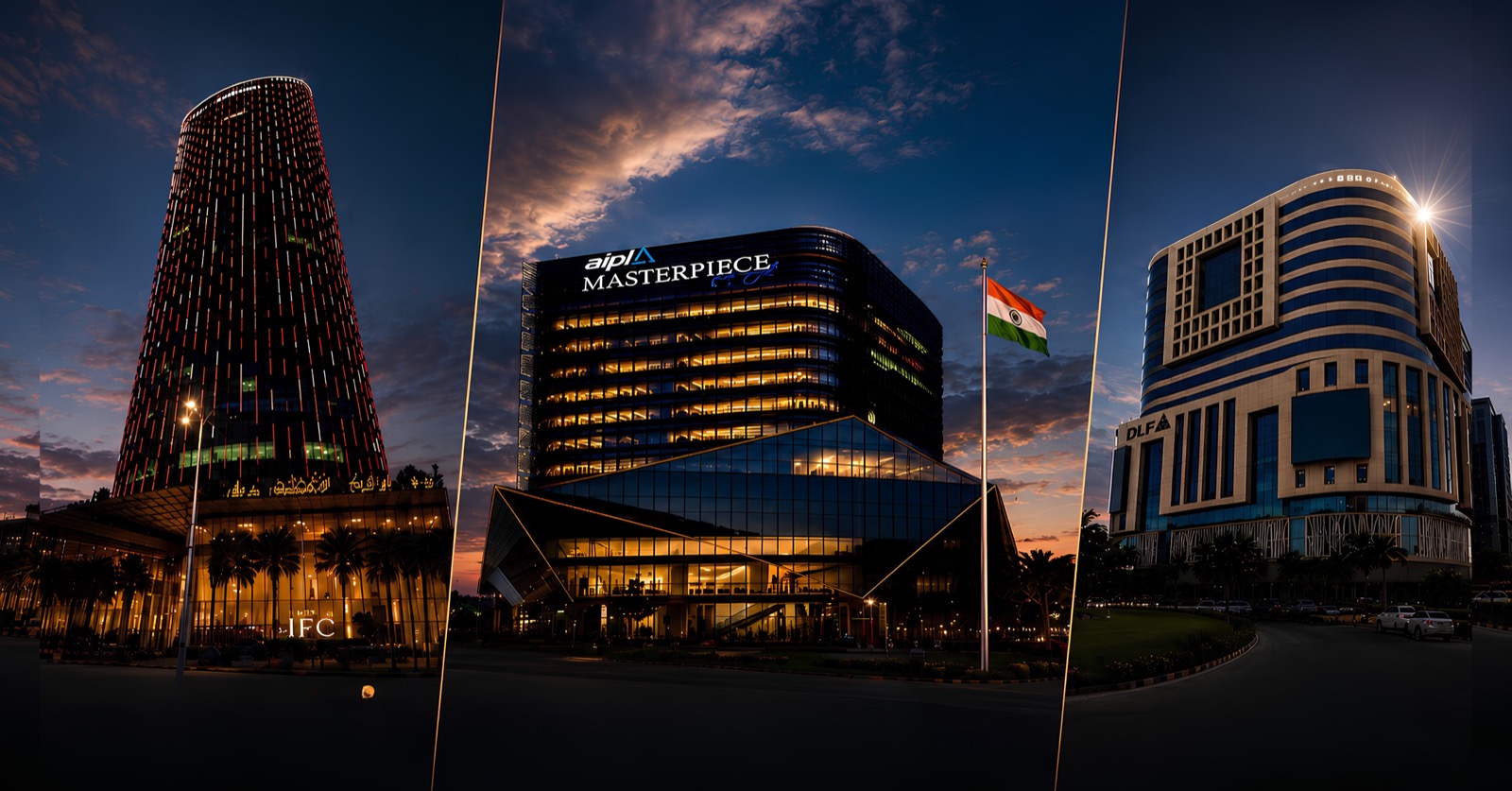
At Qaarya, this is treated as core infrastructure rather than an add-on across our floors at M3M IFC, AIPL Masterpiece, and DLF Building 14 — filtration and fresh-air exchange engineered independently of base-building minimums, because the research on what bad air does to a working brain is specific enough, and the Gurugram outdoor air context volatile enough, that "the building probably handles it" isn't a standard worth trusting on faith.