Premium Managed Offices
Key takeaways
- A hot desk is any free seat on the day; a dedicated desk is your own seat in a shared area; a private cabin is an enclosed room for you or your team.
- Choose a hot desk if you are in the space fewer than three days a week and need nothing left on the desk overnight.
- Choose a dedicated desk if you are in most days, work with a second monitor or files, and rarely take confidential calls.
- Choose a private cabin once you have three or more people who work together, take frequent calls or handle client-confidential work.
- Compare options on cost per productive hour, not cost per seat: an hour lost each day to noise or seat-hunting usually outweighs the price gap.
- Pick a coworking office that offers all three, so moving up means changing rooms, not changing addresses.
Once you have picked a coworking office, a second decision follows that gets far less thought: what kind of space to take inside it. Most operators offer three. A hot desk is any free seat on the day. A dedicated desk is a seat that is yours. A private cabin is an enclosed room with a door. The price gap between them is easy to see. The productivity gap is not, and it is usually larger.
This guide explains who each option suits, how they compare on privacy, storage and call-taking, how to think about the cost, and the signals that tell you it is time to move up. The short version: buy the cheapest option that does not cost you an hour a day.
The three options, defined
Hot desk
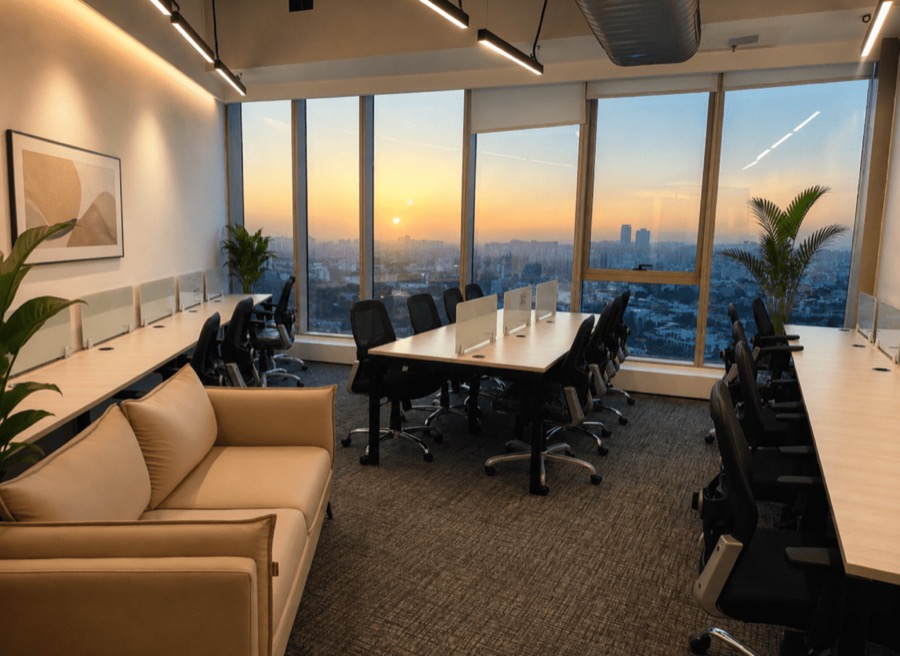
A hot desk is a seat in a shared area that you take on a first-come basis. You arrive, find a free spot, plug in and leave nothing behind. Hot desks are the cheapest way into a coworking office and the most flexible: you are paying for access, not for a particular chair.
Dedicated desk
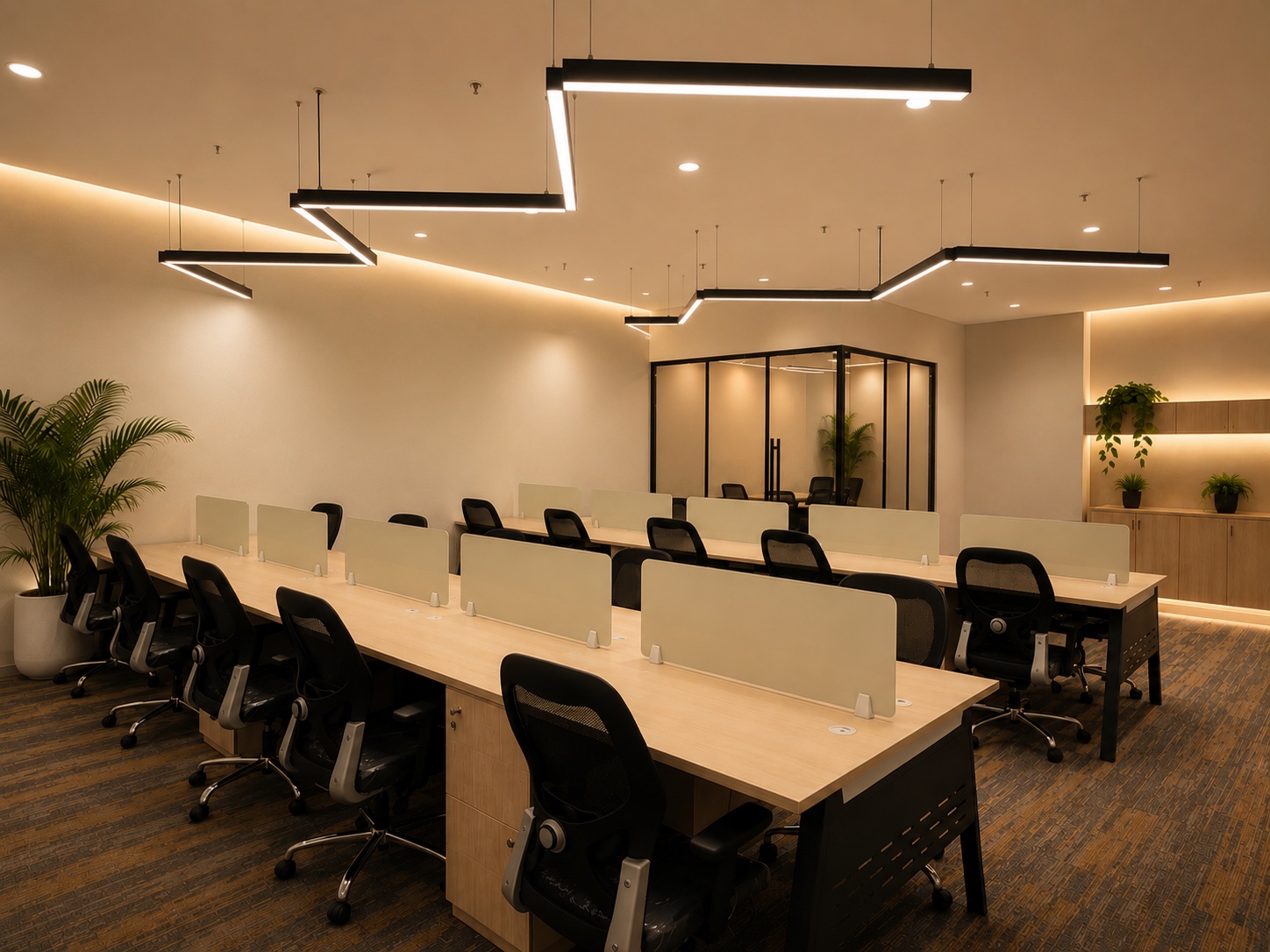
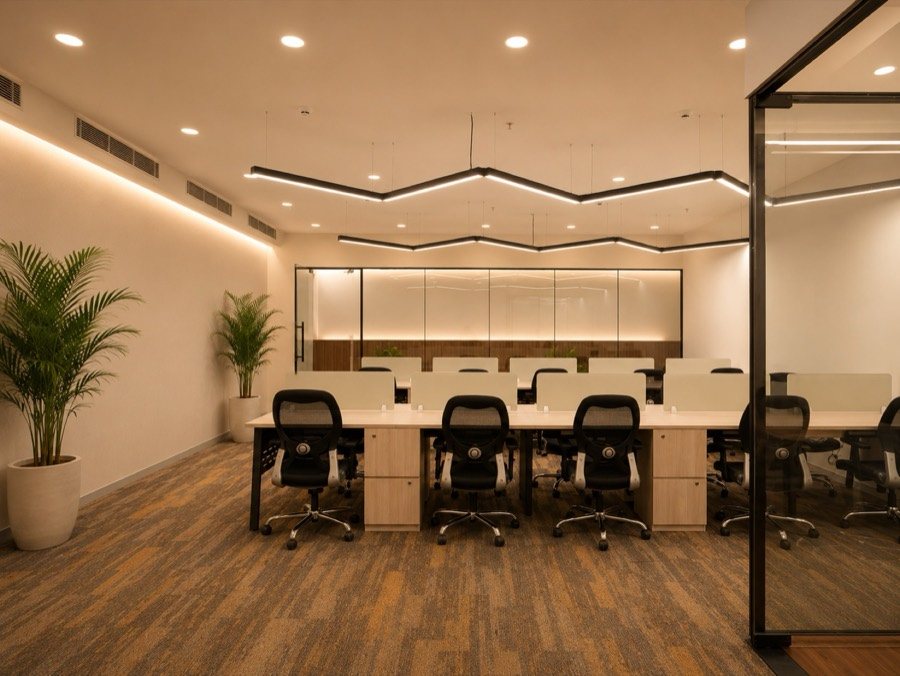
A dedicated desk is a specific seat in a shared area, reserved for you. You can leave a monitor, a keyboard and a few files in place, usually with a lockable drawer or pedestal. You still sit in an open area alongside other members, so you share the noise and the visibility.
Private cabin
A private cabin is an enclosed room for one person or a small team, inside the coworking office. It has a door, walls and usually space for storage. You still share the building’s meeting rooms, pantry and reception, but your working day happens in a room that is yours.
Side by side: privacy, storage, calls and cost
The table below compares the three options on the factors that decide most choices. Cost is shown as relative, not as rupees, because prices vary by building, floor and term.
| Factor | Hot desk | Dedicated desk | Private cabin |
|---|---|---|---|
| Best for | 1 person, in 1 to 3 days a week | 1 person, in most days | Teams of 2 or more, or anyone taking frequent calls |
| Privacy | Low: screen and calls visible to neighbors | Low to medium: same open area every day | High: enclosed room with a door |
| Storage | None, or a day locker | Lockable drawer or pedestal | Room for cabinets and equipment |
| Taking calls | Phone booth or meeting room needed | Phone booth or meeting room needed | From your own room |
| Daily setup | Every day | Once | Once |
| Team identity | None | Limited | Strong: your room, your team |
| Relative cost per seat | Lowest | Medium | Highest |
| Upgrade trigger | In most days, or carrying equipment | Frequent calls, confidential work or a second hire | Team outgrows the room |
Who each option actually suits
Choose a hot desk if
- You come in fewer than three days a week and have a home base for the rest.
- Everything you need fits in a laptop bag.
- Your calls are short and rarely confidential.
- You value the option to stop paying quickly more than you value a fixed seat.
Freelancers, consultants between client sites and hybrid employees of companies based elsewhere are classic hot-desk users. The hidden cost is time: 10 to 15 minutes each day to find a seat, set up and adjust, and the occasional morning when the good seats are gone.
Choose a dedicated desk if
- You are in the office most working days.
- You work with a second monitor, a proper keyboard or physical files.
- Your work is mostly heads-down, with calls you can take in a booth.
- You want a stable routine without paying for a room.
A dedicated desk is the right default for a solo founder or an individual contributor who is in daily. It removes the setup cost and gives you a place, while keeping the price below a cabin.
Choose a private cabin if
- You have three or more people who work together most days.
- You take frequent calls, especially with clients, investors or candidates.
- You handle confidential information: client files, financials, legal or HR matters.
- You want to host visitors in your own space rather than a booked room.
Why privacy and noise decide more than price
Open areas are designed for flexibility, not for concentration or confidentiality. The best-known study of open-plan offices, by Ethan Bernstein and Stephen Turban of Harvard Business School, published in 2018, tracked employees at two companies before and after a move to open-plan layouts. Face-to-face interaction fell by roughly 70%, while email and messaging rose. People did not talk more without walls. They protected themselves with headphones and screens.
In a coworking office the effect is stronger, because the people around you are not your colleagues. You cannot comfortably discuss a client’s numbers, a hiring decision or a term sheet at a dedicated desk. So you book a phone booth, walk to a meeting room, or hold the conversation later. Each of those is a small tax on your day. We look at the mechanics of speech and focus in more depth in our post on open-plan noise and office acoustics.
For a single person on a few calls a week, the tax is small and the desk is the right choice. For a team of four running sales, recruitment or client service, the tax is paid many times a day, and the cabin pays for itself.
The cost logic: price per productive hour
The usual way to compare options is cost per seat per month. A better measure is cost per productive hour: what you pay divided by the hours of useful work the space actually supports.
Here is an illustration with made-up numbers, purely for the arithmetic. Say a dedicated desk costs 100 units a month and a cabin seat costs 140. A person on a dedicated desk who loses 45 minutes a day to booking rooms for calls, walking to booths and recovering from interruptions loses roughly 15 hours over a 20-day month. If that person’s time is worth more than about 3 units an hour to the business, the cabin is cheaper. For almost any salaried professional in Gurugram, it is.
The same logic works in reverse. A person who is in two days a week and rarely takes calls gains little from a cabin and should not pay for one. The point is not that the most expensive option wins. It is that the cheapest seat is not always the cheapest choice.
Three cost checks before you decide
- Count your calls. Log a typical week. If you take more than two hours of calls a day, price the cabin seriously.
- Count your meeting-room bookings. If you book rooms mainly for privacy rather than for meetings, the room hours belong in the desk’s cost.
- Ask for the full bill. Compare all three options including meeting-room quotas, storage and GST, not the headline seat price.
When to upgrade, and how to do it without moving
Most teams move up in a predictable sequence: hot desk, then dedicated desk, then a small cabin, then a larger cabin or private office. The signals to move up are consistent too.
- From hot desk to dedicated desk: you are in most days, or you are tired of carrying a monitor and setting up every morning.
- From dedicated desk to private cabin: you regularly book rooms just to take calls, your second hire sits beside you, or you handle confidential work.
- From small cabin to larger space: people are taking calls in the corridor, or you have started rotating who comes in because the room is full.
The cost of upgrading is low if the building offers all three options and high if it does not. That is why the range of private spaces available should be part of your first choice of coworking office, as we explain in our guide on how to choose a coworking space in Gurugram. If you are weighing a cabin against a full private office for a larger team, our private office vs coworking guide covers the next step.
Mixing options: the setup most small teams end up with
The choice does not have to be all or nothing. Many small teams combine options: a private cabin for the core team that works together daily, plus one or two hot desks for people who come in occasionally, such as a part-time finance lead or a sales hire who spends most days with clients. This keeps the cabin sized for the people who use it every day, rather than for the full headcount.
A useful rule: size the cabin for your typical daily attendance, not your total team, and cover the rest with desks. Review the split every quarter. If the hot-desk users are in most days, they belong in the cabin; if cabin seats sit empty, you have over-bought.
Demand for flexible space makes this planning more important. Cushman & Wakefield counted 191,306 flex seats leased across India’s top eight cities in the first half of 2026, up about 68% on a year earlier, and JLL put flex operators at about a quarter of all office leasing in the first quarter of 2026. In busy buildings, cabins of the size you want may not be free the week you need them, so tell the operator early when you expect to upgrade.
Applying this in Gurugram
In Gurugram, the decision often depends on who visits you. Client-facing teams, firms that host candidates and founders who meet investors tend to move to private cabins sooner, because a booked meeting room every time someone arrives quickly becomes awkward.
QAARYA offers coworking spaces and private offices at M3M International Financial Centre on Golf Course Extension Road, DLF Building 14 in DLF Cyber City and AIPL Masterpiece on Golf Course Road. Cabin, desk and meeting-room configurations can be adjusted as a team grows, and fit-out-ready cabins mean most teams move in within a few days of signing. The spaces are open Monday to Saturday, 9 AM to 2 AM, with 24x7 access for members. For what is available at each location right now, and for pricing, ask during a tour. You can see the spaces on our spaces page.
The bottom line
Choose a hot desk for flexibility, a dedicated desk for routine and a private cabin for privacy and team work. Decide on the hours you lose, not the price you pay. And pick a coworking office where moving from one to the next means changing rooms, not buildings.
The best time to plan the upgrade is before you need it. If you can already see the second hire, the client calls or the confidential project coming, ask on your tour which cabins will be free when you get there.
Weighing a desk against a private cabin? See QAARYA’s coworking spaces and private offices in Gurugram, or talk to the team on +91 96504 98482.
Frequently asked questions
What is the difference between a hot desk and a dedicated desk?
A hot desk is any available seat in a shared area, taken on a first-come basis, with nothing left behind overnight. A dedicated desk is a specific seat reserved for one member, usually with lockable storage, so you can leave a monitor and files in place. Dedicated desks cost more than hot desks but save setup time each day.
Is a private cabin worth it in a coworking space?
A private cabin is worth it when you take frequent or confidential calls, work as a team of three or more, or need to store equipment and documents securely. It costs more per seat than a desk, but it removes the noise and privacy problems that cost open-area members time every day.
Who should use a hot desk?
A hot desk suits people who come into the office fewer than three days a week, work from a laptop, carry everything they need and rarely take sensitive calls. Freelancers, consultants and hybrid employees with a home base are typical hot-desk users.
When should I upgrade from a dedicated desk to a private cabin?
Upgrade when you regularly book meeting rooms or phone booths just to take calls, when two or more teammates sit together most days, when you handle confidential client information, or when you need to invite clients to your workspace. Any one of these is a strong signal; two or more usually settle it.
Can a team of 2 or 3 people use a private cabin in a coworking office?
Yes. Many coworking offices offer small private cabins for two to four people. For a small team that works closely together and takes frequent calls, a cabin is often more productive than a row of dedicated desks, because conversations stay inside the room.