Premium Managed Offices

Key takeaways
- Start 90 days out. The long-lead items are the notice on your old space, the internet line at the new one and the paperwork, not the packing.
- Read your current lease before you shortlist anything: notice period, lock-in, restoration clause and deposit refund terms set your real move date.
- Run both internet connections in parallel for at least a week. Never cut over on move day.
- A change of principal place of business must be filed on the GST portal within 15 days of the change and needs officer approval; a company’s registered office change is notified to the ROC in Form INC-22.
- Map where your team lives before you sign. A move that adds 30 minutes each way to a third of the team is a retention decision, not just a real estate one.
- A ready-to-move-in managed office removes fit-out, furniture and network build from the plan, which can turn a quarter-long move into a weekend.
Most office moves do not go wrong on move day. Move day is the part everyone plans: the trucks, the crates, the pizza. They go wrong in the weeks before, when the notice on the old space turns out to be longer than anyone remembered, the internet line at the new office is still “in process”, and the GST address change has not been filed. The team loses a week not to packing, but to things that should have started two months earlier.
This is a working checklist for founders, operations and HR leads relocating an office in Gurugram. It covers the timeline from 90 days out, notice periods, IT cut-over, address-change paperwork, commute impact, how to tell clients and staff, the move-day plan, and the one decision that shortens all of it.
The short answer: plan backwards from the lease, not forwards from the truck
An office move has three long-lead items: the exit from the old space, connectivity at the new one, and fit-out if the new space is not ready. Everything else, including packing and moving furniture, takes days. Start 90 days out for a small or mid-sized team, and six months or more if the new space needs building.
The rule of thumb: your real move date is the latest of three dates. The end of your notice period, the date the new internet line is live and tested, and the date the new space is fully furnished. Plan to that date, not to the date the landlord hands over keys.
The timeline: 90, 60, 30 and 7 days out
| When | What to do | Owner |
|---|---|---|
| 90 days out | Read the current lease: notice, lock-in, restoration, deposit refund. Map staff commutes. Set budget and shortlist spaces. Name one move owner. | Founder, finance, HR |
| 60 days out | Sign the new space. Serve notice on the old one in writing. Order internet at the new address. Book movers. Brief your CA and company secretary on address changes. | Ops, finance |
| 30 days out | Tell clients and vendors. Confirm seating plan and access cards. Audit IT assets and tag them. Plan restoration of the old space. Draft new letterhead, invoices and website address. | Ops, IT, sales |
| 7 days out | New internet live and tested. Printers, screens and Wi-Fi checked. Crates delivered and labelled. Final staff briefing with directions and parking. | IT, ops |
| Move day | Pack, move, set up by floor owner. Test every desk. Walk through the old office and photograph it. | Move owner |
| Within 15–30 days after | File GST principal place of business amendment, ROC registered office change if applicable, and update banks and other registrations. Collect deposit refund. | Finance, company secretary |
For a team of under 30 moving into a space that is already built, the 90-day plan can compress to 30. For a team of 100 moving into a bare floor, add the fit-out period on top of all of it.
Start with the exit: notice periods on the old space
The lease you are leaving sets the outer limits of the move. Read it before you visit a single new office, because three clauses decide what the move really costs.
Clauses to check in your current lease
- Notice period. How many months, from what date, and in what form. Notice served by email may not count if the lease requires registered post.
- Lock-in. Leaving before it ends usually means paying rent for the remainder.
- Restoration. Many leases require the space to be returned to its original condition. Removing partitions, cabling and flooring takes time and money; plan it in the last two weeks.
- Security deposit refund. When it is due and what can be deducted. Deposits in Gurugram are often several months’ rent; in Google’s 2025 lease at DLF Atrium Place, lease records reported by The Tribune show a deposit of roughly six months’ rent. Getting it back promptly matters to cash flow.
The common mistake is overlap. If notice ends on the 31st and the new space is ready on the 1st, you have no margin. If it is ready on the 20th, you pay double rent for ten days, which is usually the cheaper problem. Budget for two to four weeks of overlap and treat anything less as luck.
IT and internet cut-over
Connectivity is the item most likely to cost you a working week. Leased lines and enterprise broadband can take weeks to install in a new building, depending on the provider’s presence in the tower and the landlord’s permissions for cabling. Order early, and order from two providers if you can.
- Order 30 to 60 days ahead. Ask each provider whether they already have fibre in the building.
- Run both offices in parallel. Keep the old line until the last person has left, and have the new one live and tested at least a week before move day.
- Inventory and tag every asset. Laptops, monitors, docks, printers, network gear. Lost equipment is a cost and, for client data, a risk.
- Update whitelists. Client VPNs, bank portals and SaaS tools that restrict access by IP address need the new static IP before day one.
- Move phones and video systems last, after the network is proven.
Our office amenities checklist covers what to test in the new space before you commit, from Wi-Fi under load to meeting-room screens.
Address-change paperwork
An office move changes your address with the government, your bank and every client’s vendor master. Start the list before the move and file promptly after it. Some deadlines are statutory.
- GST registration. According to the GST portal’s FAQs, an amendment must be filed within 15 days of the change. A change of principal place of business within the same state is a core-field amendment and needs approval from the tax officer, with proof of the new premises such as a rent or lease agreement. A move to another state cannot be handled as an amendment.
- Registered office of a company. Section 12 of the Companies Act, 2013 requires notice of a change of registered office to the Registrar of Companies, filed as Form INC-22, within 30 days. A move within the same city, town or village generally needs a board resolution; outside local limits it needs a special resolution.
- Banks and payment gateways, which often need the updated GST certificate before they will change records.
- Other registrations and licences that carry your address, such as shops and establishments registration, Udyam, import-export code and professional tax, as applicable to your business.
- Commercial documents: invoice templates, letterhead, email signatures, contracts with notice clauses, your website, and your Google Business Profile.
This is a general checklist, not legal or tax advice. Confirm the filings that apply to your entity with your CA or company secretary.
Commute impact: the question HR should ask first
In Gurugram, a few kilometres can mean a very different commute. A move from Cyber City to Golf Course Extension Road, or the other way, changes which metro line, which highway and which traffic bottleneck your team lives with every day. Before you sign, map where your people live.
- Plot home locations (by sector or postcode, not exact addresses) and estimate peak-hour travel to each shortlisted office.
- Flag the losers. If a move adds 30 minutes or more each way for a third of the team, treat it as a retention risk and talk to those people before you announce.
- Check transit, not just distance. A building next to a metro station is a different proposition from one a 15-minute auto ride away.
- Check parking for those who drive, and drop-off space for those who use cabs.
QAARYA’s three Gurugram locations make the trade-off concrete. DLF Building 14 in Cyber City is linked by Rapid Metro to the Yellow Line at Sikanderpur, with Cyber Hub next door. AIPL Masterpiece on Golf Course Road has the Sector 53–54 Rapid Metro station abutting the building. M3M International Financial Centre on Golf Course Extension Road is close to the Sector 55–56 Rapid Metro station. The right one depends on where your team already lives.
Telling clients and staff
Communicate earlier than feels necessary, and in a fixed order: staff first, then clients and vendors, then the public.
- Staff, 60 to 90 days out: why you are moving, where, when, and what changes for commute and hours. Answer the commute question before it is asked.
- Clients, 30 days out: a short note with the new address, the effective date and any change to delivery or invoicing details. Send a reminder the week of the move.
- Vendors: couriers, caterers, IT support, payroll and anyone who visits or delivers.
- Public, on move day: website, Google Business Profile, social profiles.
The move-day plan
Move day itself is the easy part, if the work above is done. Keep it to one weekend or one non-working day, and keep it boring.
- Name a move owner and a floor owner for each zone. One decision-maker per area.
- Label everything with a destination desk or room, matched to a printed seating plan.
- Move IT last out and first in. Network gear goes up before desks are unpacked.
- Test every desk before Monday: power, Wi-Fi, monitor, chair.
- Have access cards ready for every employee on the first morning.
- Photograph the old office after the final clear-out, for the deposit refund conversation.
Why a ready-to-move-in office shortens the move
Look back at the timeline and count the items that exist only because the new space is empty: fit-out, furniture, cabling, internet installation, pantry setup, vendor contracts for housekeeping and security. Those are the long-lead items. Remove them and the move compresses to the parts you control: notice, paperwork and a weekend.
There is a cost angle too. Every week of overlap between the old lease and a new space that is not ready is a week of double rent. Every week the team works from home while the build finishes is a week of reduced output. A managed office that is already built, furnished and connected cuts both, and lets you choose a move date based on your notice period rather than your contractor. Our full cost breakdown of a managed office vs a traditional lease puts numbers on the rest of that comparison, and if you are still deciding on format, private office vs coworking covers that choice.
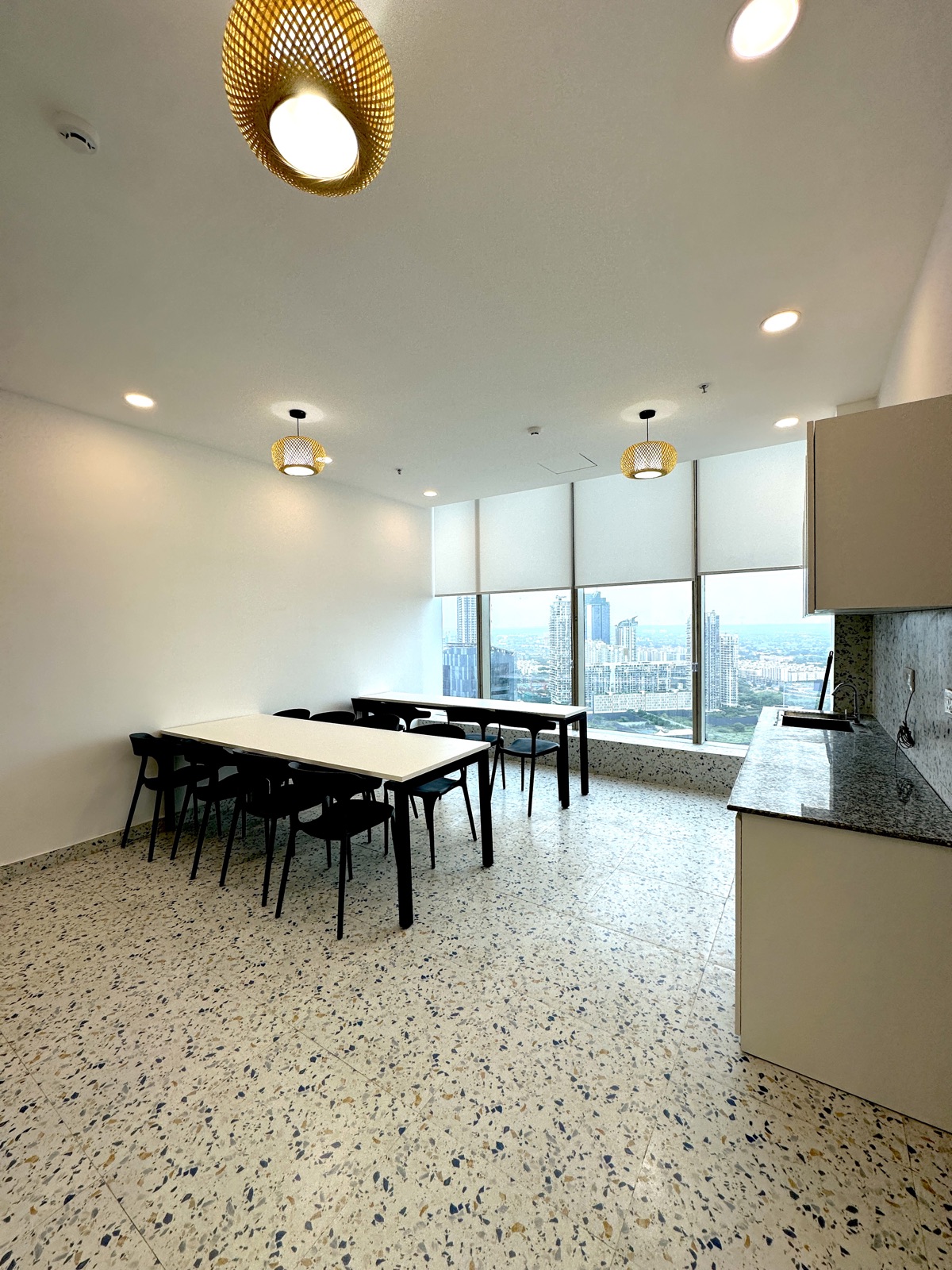
QAARYA’s private offices and coworking spaces at M3M IFC, DLF Building 14 and AIPL Masterpiece are set up for quick, hassle-free moves, with premium interiors and customisable layouts already in place. Move-in timelines and terms depend on the space; ask during a tour, then plan backwards from the answer. You can browse the spaces here.
Moving offices in Gurugram? See QAARYA’s ready-to-move-in workspaces, or talk to the team on +91 96504 98482 about your move date.
Frequently asked questions
How far in advance should you plan an office relocation?
Plan an office relocation at least 90 days ahead for a small or mid-sized team. The longest-lead items are usually the notice period on the old space, the internet connection at the new one and any fit-out. If the new space needs building, start six months or more ahead.
Do you need to update GST registration when you move office?
Yes. A change of principal place of business within the same state is an amendment to a core field of GST registration. It is filed on the GST portal within 15 days of the change, with proof of the new premises, and needs approval from the tax officer. Confirm the steps with your CA.
How does a company change its registered office address in India?
Under Section 12 of the Companies Act, 2013, a company must notify the Registrar of Companies of a change of registered office, using Form INC-22, within 30 days. A move within the same city, town or village usually needs a board resolution; a move outside local limits needs a special resolution. Confirm with your company secretary.
How do you avoid internet downtime when moving office?
Order the internet connection at the new office at least 30 to 60 days ahead, ideally with two providers, and have it live and tested a week before the move. Keep the old connection running until everyone is working from the new space. A managed office with network already in place removes most of this risk.
What should be on an office move-day checklist?
A move-day checklist should cover labelled crates and asset tags, a seating plan, access cards for every employee, tested Wi-Fi and printers, a working pantry, a named owner for each floor, and a final walkthrough of the old office with photographs for the deposit refund.
Is a managed office faster to move into than a leased office?
Usually. A managed office is already built, furnished and connected, so a team can move in within days of signing. A leased bare-shell or warm-shell floor needs design, approvals, construction, furniture and IT, which commonly takes several months.