Premium Managed Offices
Exit interviews almost never say "the office." They say "better opportunity," "compensation," "career growth" — reasons that sound complete and close the conversation cleanly. But talk to the people doing the hiring on the other side of those departures, and a quieter pattern shows up: a meaningful share of the candidates they're placing left roles they otherwise liked because the day-to-day experience of being in the building wore them down first.
Office quality is one of the few retention levers a company controls entirely and directly, yet it's usually the last thing reviewed when attrition ticks up. Comp gets benchmarked quarterly. Manager training gets budgeted annually. The office — where people spend eight-plus hours a day, five days a week — often gets evaluated once, at signing, and then never revisited until the lease itself is up for renewal.
Why the office rarely shows up as "the reason"
Nobody quits a job because the meeting rooms were noisy. But noise, poor air quality, and constant low-grade friction accumulate as stress, and stress accumulates as fatigue, and fatigue is what actually shows up in an exit conversation — dressed up as "I need a change" or "the new role felt like a better fit." The physical environment is rarely the headline complaint because it's rarely framed as a complaint at all. It's just absorbed as "how work feels," and when "how work feels" is consistently a little worse than it needs to be, the threshold for leaving over a genuinely better offer gets lower.
This is exactly why office quality is underweighted in retention conversations: it operates as a background variable, not a foreground one. Comp and management get blamed because they're visible and nameable. The office gets a pass because nobody thinks to name it — right up until a replacement hire mentions, in their first week at the new company, how much better the light and air feel.
The four factors that actually move the needle
Not every office amenity matters equally for retention, and it's worth being precise about which ones do. Cosmetic perks — a fancy espresso machine, a foosball table — generate goodwill in the first month and then fade into the background entirely. The factors that keep affecting people daily, for as long as they work there, are structural: air, light, sound, and privacy.
Indoor air quality
Poor indoor air quality is directly linked to headaches, fatigue, and reduced cognitive performance over the course of a workday — the kind of low-grade physical discomfort that people rarely trace back to its actual cause. An employee who leaves work tired and irritable every single day for months has one more reason to say yes to a recruiter's call, even if they'd never list "the air felt stale" as their reason for looking.
Natural light
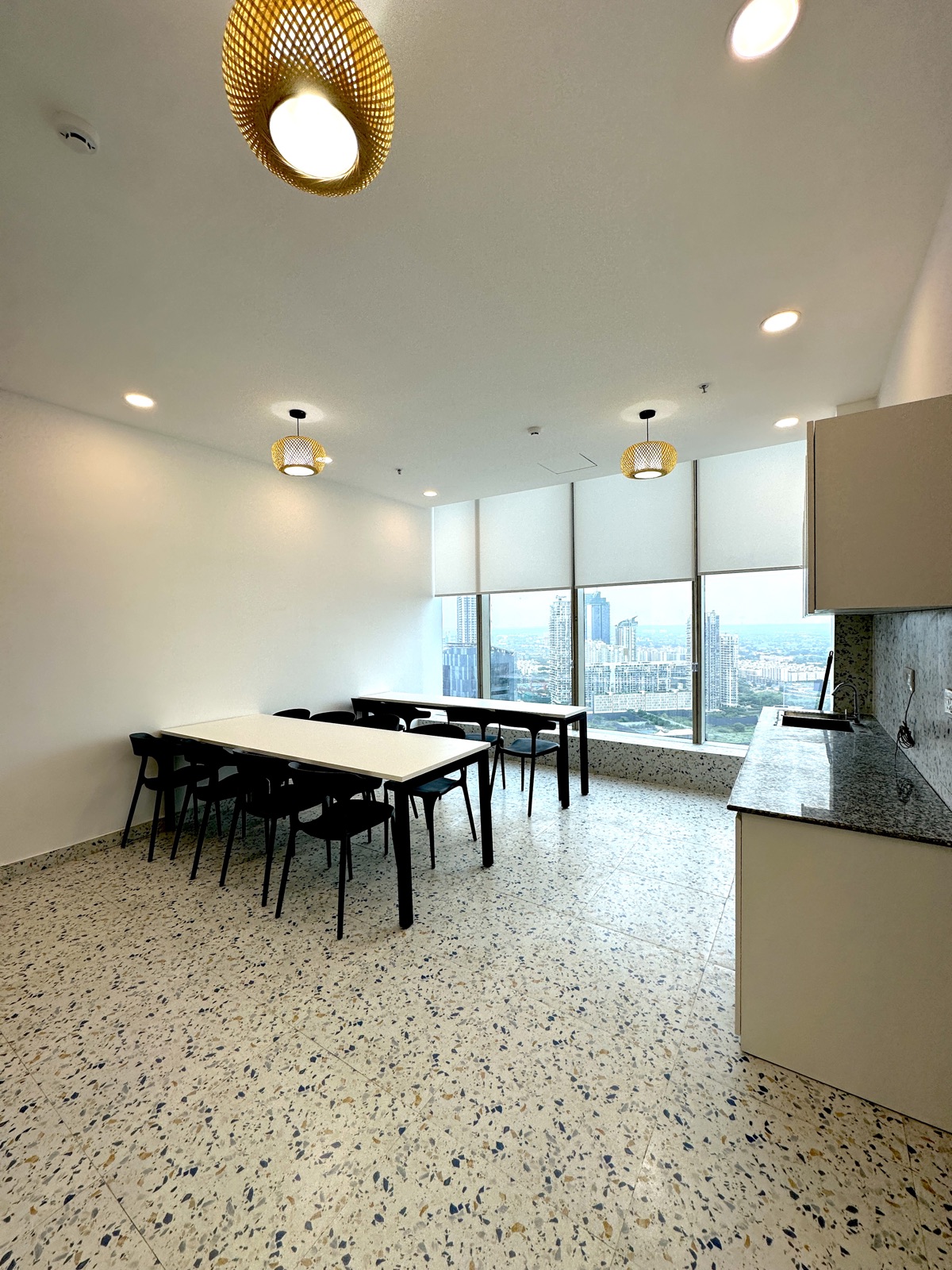
Access to natural light is one of the most consistently requested — and most consistently under-delivered — workplace features. Employees with good daylight access report better mood, better sleep quality outside of work, and lower fatigue than those working primarily under artificial lighting. It's a factor that costs a building nothing to provide once designed for, and enormous retrofit expense to add later, which is exactly why it matters at the point of choosing an office rather than the point of trying to fix one.
Noise and acoustic control
Open-plan offices without adequate acoustic treatment are a well-documented source of chronic low-grade stress — not from any single loud event, but from the cumulative cognitive cost of tuning out other people's conversations, calls, and background noise all day. Employees doing focused, detail-heavy work are disproportionately affected, and they're often the employees a company can least afford to lose.
Access to private or quiet space
The ability to take a sensitive call, have a difficult conversation, or simply concentrate without interruption is consistently cited as a top workplace need — and consistently one of the first things cut when teams try to save space or cost. Its absence doesn't show up as a single bad day; it shows up as a slow erosion of whether work feels sustainable.
What replacing an employee actually costs
The reason this deserves board-level attention rather than a facilities budget line is simple arithmetic. Replacing a mid-level employee typically costs the equivalent of several months to a full year of that employee's salary once recruiting fees, onboarding time, lost productivity during the ramp-up, and the knowledge that leaves with them are all counted. Multiply that by even a modest annual attrition rate across a team of thirty or forty people, and the number gets large enough to make almost any office upgrade look inexpensive by comparison.
Framed this way, the decision to spend more on air handling, better acoustic design, or a wider allocation of quiet rooms isn't a wellness nicety — it's a retention investment with one of the more favorable payback periods available to a growing company, because unlike a comp increase, it's a fixed cost that benefits every employee in the building simultaneously, for as long as they're there.
The signals that your office is quietly costing you people
Because office-driven attrition rarely announces itself directly, it's worth watching for indirect signals rather than waiting for someone to name the building as their reason for leaving.
- Afternoon energy crashes that are consistent across the team, not just individual — often a sign of poor ventilation or air quality rather than workload.
- Complaints about noise clustering around specific desks or zones, which usually means an acoustic design issue rather than a behavior issue.
- High no-show or late-cancel rates for in-office days on a hybrid schedule — a quiet vote about where people would rather be.
- New hires commenting, unprompted, on how the space compares to their last office, in either direction. This is one of the most honest signals available, since new hires haven't yet normalized the space.
- Exit interviews that mention "energy," "environment," or "vibe" in vague terms — often a polite proxy for something more specific the departing employee didn't want to spell out.
Why this is easier to fix inside a managed office
The structural factors above — air handling, daylight, acoustic design, quiet-room allocation — are expensive and slow to retrofit into an existing bare-shell lease, which is exactly why so many companies live with a mediocre environment rather than fixing it: the fix looks like a capital project, not a quick win. A managed office removes that barrier because these factors are designed in from the start and maintained as part of the service, not left to whatever the original fit-out contractor prioritized on a budget five years ago.
At Qaarya's Gurugram locations, air quality systems, daylight-oriented floor plans, and a deliberate mix of open and private space are part of the base offering across M3M IFC, DLF Building 14, and AIPL Masterpiece — not an add-on a tenant has to specify and pay extra for. That matters because it means the retention-relevant factors are consistent for every team in the building, regardless of how much attention any individual company's facilities budget would otherwise get.
A short checklist before your next lease renewal or move
- Ask for the building's air handling and filtration specs — most landlords have never been asked, and the answer is revealing either way.
- Walk the floor at 3pm on a weekday, not during a scripted tour. That's when air quality and light issues are most noticeable.
- Count private and quiet rooms per headcount, using the same logic you'd apply to meeting rooms — a shortage here is a wellbeing shortage, not just a scheduling one.
- Ask current tenants, not just the provider, what they'd change about the space if they could. Their answer will surface what a sales tour won't.
Treat the office as a retention lever, not a facilities line item
The companies that get this right don't treat office quality as separate from people strategy — they treat it as one of its most direct, controllable levers. Comp benchmarking, manager development, and career pathing all matter, and none of them are undermined by also asking a simpler question: does the physical experience of being here, every day, make people want to stay a little longer than they otherwise would?
That question rarely gets asked in a boardroom, but it's answered every single day by every employee who walks in tired versus walks in fine, who can find a quiet room versus can't, who breathes stale air for eight hours versus doesn't. None of it shows up on an exit form. All of it shows up in the attrition number a few months later.
If your current space hasn't been evaluated against air quality, daylight, acoustic design, and private-space access in the last year, that's worth doing before the next round of exit interviews raises the question for you. Take a look at how Qaarya's managed office spaces across Gurugram are designed around exactly these factors, and book a tour to see the difference in person.