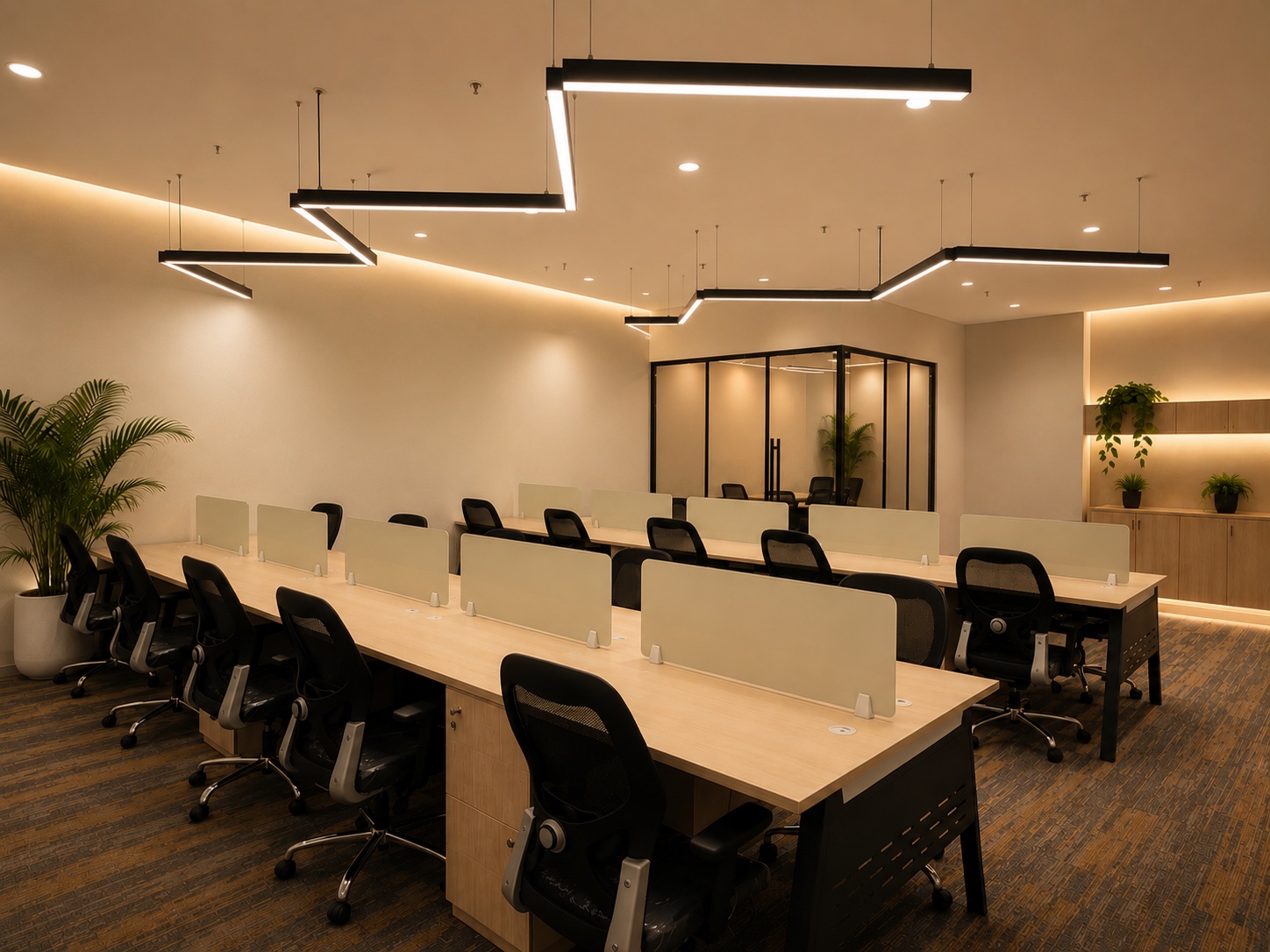
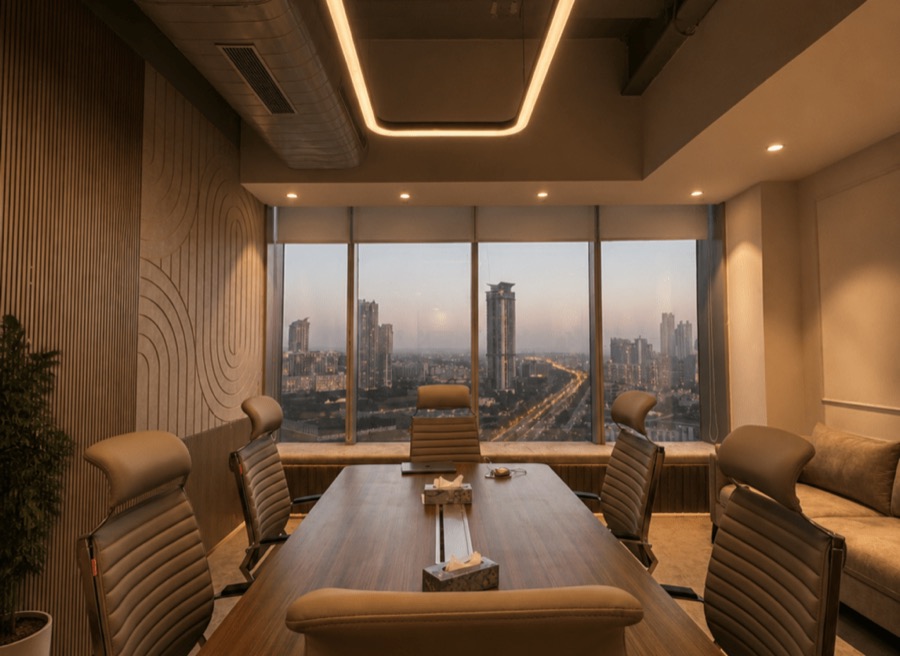
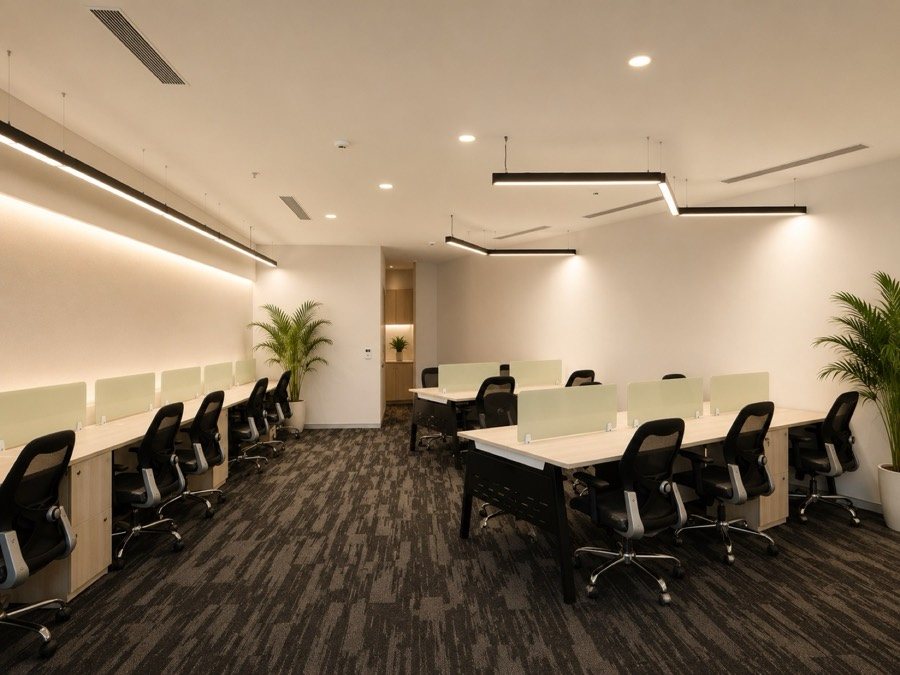
Premium Managed Offices
Key takeaways
- Tour with a written list. The 25 questions here fall into seven groups: building and location, the suite, what the price includes, flexibility and contract, operations, IT and security, and air, water and lighting.
- The most important pricing question is simple: what will my total monthly bill be, including GST and every add-on, for my actual headcount?
- Ask for answers in writing. A verbal promise on a tour is not a contract term.
- Visit at the time your team will actually use the space, ideally a weekday at 11 am or 4 pm, not a quiet Saturday.
- A good operator answers specific questions with specific numbers. Vague answers on price, notice or air quality are the clearest red flag.
- Score every space on the same sheet so the comparison is about evidence, not about which lobby was nicest.
An office tour is a sales presentation. The route is chosen, the lights are set and the best suite is the one you see first. None of that is dishonest, but it means the tour shows you what the operator wants you to notice. The way to turn it into due diligence is to arrive with your own questions.
This is the list we would bring. Twenty-five questions in seven groups, each with a short note on why it matters and the answer that should worry you. Print it, take it to every space on your shortlist and write the answers down. The space that answers best on paper is usually the one that works best in month nine.
The stakes are rising. CBRE’s India Office Figures for Q2 2026 put flex operators at about 45% of Delhi NCR’s office leasing that quarter. More supply means more choice, and more choice means more variation in quality behind similar-looking lobbies.
Before the tour: how to get honest answers
Most of the value of a tour is decided before you walk in. Three habits make the difference.
Three rules for the visit itself
- Go at working hours. Visit on a weekday around 11 am or 4 pm. You will see real lift waits, real meeting room demand and the air quality of a full floor, not an empty one.
- Send your headcount in advance. Ask for a written quote for your actual team size before the visit, so the tour conversation is about that number, not a starting rate.
- Ask for the draft agreement. An operator who will not share its standard terms before you commit is asking you to decide on the lobby.
| Group | Questions | Most important question | Red-flag answer |
|---|---|---|---|
| 1. Building and location | 1–4 | What is the door-to-door commute for my team? | “Everyone drives anyway.” |
| 2. The suite itself | 5–8 | Is this the exact suite I would get? | “Yours will be similar.” |
| 3. What the price includes | 9–12 | What is my all-in monthly bill, with GST? | “It depends on usage.” |
| 4. Flexibility and contract | 13–16 | What does it cost to leave early? | “We’ll sort that out later.” |
| 5. Operations and support | 17–19 | Who fixes things, and how fast? | “Just email the general inbox.” |
| 6. IT and security | 20–22 | Is our network isolated from other tenants? | “Everyone shares the same Wi-Fi.” |
| 7. Air, water and lighting | 23–25 | Can you show me live air quality readings? | “The AC is new, so the air is fine.” |
Group 1: Building and location
The building decides your commute, your clients’ first impression and what happens when something fails outside the suite.
- What is the door-to-door commute for my team? Why it matters: location drives attendance and hiring reach more than any amenity. Map where your people actually live. Red flag: the operator talks about distance to the airport but cannot tell you the nearest metro station.
- How does visitor entry work? Why it matters: a 15-minute lobby queue is the first thing a client experiences. Red flag: no pre-registration for guests.
- What is the backup power arrangement? Why it matters: power cuts still happen, and the question is whether your floor, lifts and air conditioning stay on. Red flag: backup covers lights and sockets only.
- What is the parking position, and is it included? Why it matters: parking is often a separate charge or a separate waiting list. Red flag: “there is usually space.”
Location is also where the corridors in Gurugram differ most. A team that commutes by metro gets a different answer at AIPL Masterpiece on Golf Course Road, where the Sector 53–54 Rapid Metro station abuts the building, or DLF Building 14 in Cyber City, linked by Rapid Metro to the Yellow Line at Sikanderpur, than at M3M IFC on Golf Course Extension Road, which is close to the Sector 55–56 station. Ask the commute question for your team, not for an average one.
Group 2: The suite itself
The show suite is the best suite. Your job is to find out what you are actually getting.
- Is this the exact suite I would get, and if not, can I see it? Why it matters: a corner suite with two walls of glass is not the same product as an internal one. Red flag: “yours will be similar.”
- How many square feet per person does this layout assume? Why it matters: a suite sold for 12 people may be comfortable for nine. Count the desks and imagine them full. Red flag: the operator cannot give a figure.
- Can the layout be customised, and who pays? Why it matters: a manager’s cabin, a phone booth or a different desk arrangement may be essential. Red flag: any change is quoted as a one-off fee with no detail.
- How much meeting room capacity can I count on? Why it matters: a common rule of thumb is one meeting room per 10 to 12 people. In a managed office, ask how many hours are included and how often rooms are fully booked. Red flag: you cannot see the booking calendar for a typical week.
Group 3: What is included in the price
This is where most comparisons go wrong. Two quotes per seat can describe very different bills.
- What is my total monthly bill for my headcount, including GST? Why it matters: renting commercial space and the bundled services are generally taxable at 18% GST in India. Registered businesses can usually claim input tax credit, but cash flow still carries it. Red flag: the quote is a per-seat rate with “plus applicable charges.”
- What costs extra? Why it matters: printing, extra meeting hours, after-hours air conditioning, guest Wi-Fi, parking and dedicated internet lines are common add-ons. Ask for the add-on rate card. Red flag: there is no written rate card.
- Are electricity and air conditioning included at all hours? Why it matters: teams that work with US or European time zones need evenings. Red flag: air conditioning is included only in office hours, with overtime billed separately.
- What is the deposit, and how is it returned? Why it matters: a deposit is cash out of the business for the whole term. Ask how many months it covers and how long the refund takes after exit. Red flag: no written refund timeline.
The cost and ROI argument for managed space rests on these four answers. A managed office competes with a conventional lease by turning fit-out capex, furniture, IT, housekeeping and maintenance into a single operating cost. That only holds if the single cost really is single. Our guide to managed office cost versus a traditional lease in Gurugram shows how to build the like-for-like comparison.
Group 4: Flexibility and contract
The reason to choose managed space is flexibility. Check that the contract actually gives it to you.
- What is the lock-in period, and what happens if we leave inside it? Why it matters: a lock-in commits you to pay for the whole period even if you move out. Red flag: the exit cost is not stated in the draft.
- What notice period applies after the lock-in? Why it matters: notice is the real measure of flexibility once you are past lock-in. Red flag: notice is longer than the lock-in implies, or only runs from a fixed date.
- Can we add or release seats mid-term? Why it matters: growing teams need room to expand without a new contract or a move. Ask whether neighbouring suites can be held or offered first. Red flag: “we will see what is available.”
- How is the fee revised at renewal? Why it matters: a low first-year price with an open renewal is not a low price. Red flag: no escalation figure in writing.
Group 5: Operations and support
You will interact with the operations team far more than with the sales team. Meet them.
- Who is my day-to-day contact, and are they on site? Why it matters: problems are solved faster by a named person on the floor than by a ticket queue. Red flag: support is a general email address.
- What are the response times for common issues? Why it matters: a broken AC unit in May or a dead network port on a client call day needs a time-bound answer. Red flag: no service levels in writing.
- What are the cleaning and maintenance schedules? Why it matters: pantry, washrooms and meeting rooms show quality first. Red flag: the washroom on your floor during a working-hours tour tells you more than the answer does.
Group 6: IT and security
For any team handling client data, this is not a detail.
- Is our network isolated from other tenants? Why it matters: a separate VLAN or a dedicated line is the baseline for most clients’ security questionnaires. Red flag: one shared Wi-Fi network for the whole floor.
- What internet redundancy is there? Why it matters: a single fibre provider is a single point of failure. Ask whether there are two providers and how failover works. Red flag: one line, no failover.
- Who can enter our suite, and is access logged? Why it matters: cleaners, maintenance staff and other tenants all move around a managed floor. Red flag: suite doors use a key that many people hold.
Group 7: Air, water and lighting quality
These are the hardest things to judge on a tour and the easiest to feel after a month. They are also where premium operators separate from the rest.
- Can you show me live air quality readings for this floor? Why it matters: the WHO’s 2021 air quality guidelines set an annual PM2.5 guideline of 5 µg/m³ and a 24-hour level of 15 µg/m³. In a city where outdoor air regularly runs far above that, filtration and fresh-air supply decide what your team breathes indoors. Ask for PM2.5 and CO2 readings, ideally on a display or dashboard. Red flag: “the AC is new, so the air is fine.”
- What drinking water treatment is in place, and how often is it tested? Why it matters: water quality is an easy promise and a harder practice. Red flag: no record of testing or filter changes.
- How is the lighting designed? Why it matters: glare on screens and dim corners wear people down over a working day. Look for daylight at the desks you would use and adjustable artificial light. Red flag: the only bright desks are the ones on the tour.
We have written in more depth on what makes a managed office genuinely premium, and air, water and light are central to the answer. They are also a focus of every QAARYA space, which is why we would rather you ask these questions of us than skip them.
After the tour: scoring and deciding
Write the answers down the same day, on the same sheet for every space. Then score each group from one to five. Three rules make the scores useful.
- Weight the groups to your business. A sales team may weight location and meeting rooms highest. An engineering team handling client data may weight IT and security highest.
- Treat any red flag in groups 3 or 4 as decisive. Unclear price or unclear exit terms are the problems that cost the most money later.
- Get every important answer into the agreement. Inclusions, add-on rates, notice period and service levels should be in writing before you sign.
Finally, compare the shortlist on total cost per occupied seat over the expected term, not on the headline rate. Include the deposit as cash tied up, the add-ons you will realistically use and the cost of a move if you outgrow the suite early. The cheapest headline is often not the cheapest bill.
If you want a broader list of what a good office should offer once the contract is signed, our office amenities checklist covers the facilities side in detail. And if you are touring in Gurugram, bring this list to any QAARYA space. We would rather answer 25 hard questions than one easy one.
Shortlisting managed offices in Gurugram? Bring this list to a tour of QAARYA’s workspaces, or talk to the team on +91 96504 98482.
Frequently asked questions
What questions should I ask when touring a managed office?
Ask about seven areas: the building and commute, the suite itself, what the monthly fee includes, the contract's lock-in and notice terms, day-to-day operations and support, IT and security, and air, water and lighting quality. For each, ask for specific numbers and get the answers in writing.
What are red flags when viewing a managed office?
Red flags include a price that cannot be stated as a single all-in monthly figure, a refusal to share the draft agreement before you commit, vague answers about notice periods and exit costs, shared network infrastructure with no isolation, and no ability to show air quality or maintenance records.
When is the best time to tour an office space?
Tour at the time your team will actually use the space, such as a weekday late morning or late afternoon. That shows real noise levels, lift waits, meeting room demand and air quality under load, which a quiet weekend visit hides.
Is GST charged on managed office fees in India?
Yes. Renting commercial property and the services bundled with a managed office are generally taxable at 18% GST in India. Registered businesses can usually claim input tax credit, so confirm the treatment with your chartered accountant.
How many meeting rooms does a team need in a managed office?
A common rule of thumb is one meeting room per 10 to 12 people, with at least one room able to seat your largest regular meeting. In a managed office, check how many meeting room hours are included in the fee and what extra hours cost.
Should I visit more than one managed office before signing?
Yes. Shortlist two or three spaces, ask each one the same questions and score them on the same sheet. Comparing like for like makes it easier to see differences in total cost, contract terms and quality rather than reacting to the nicest lobby.